
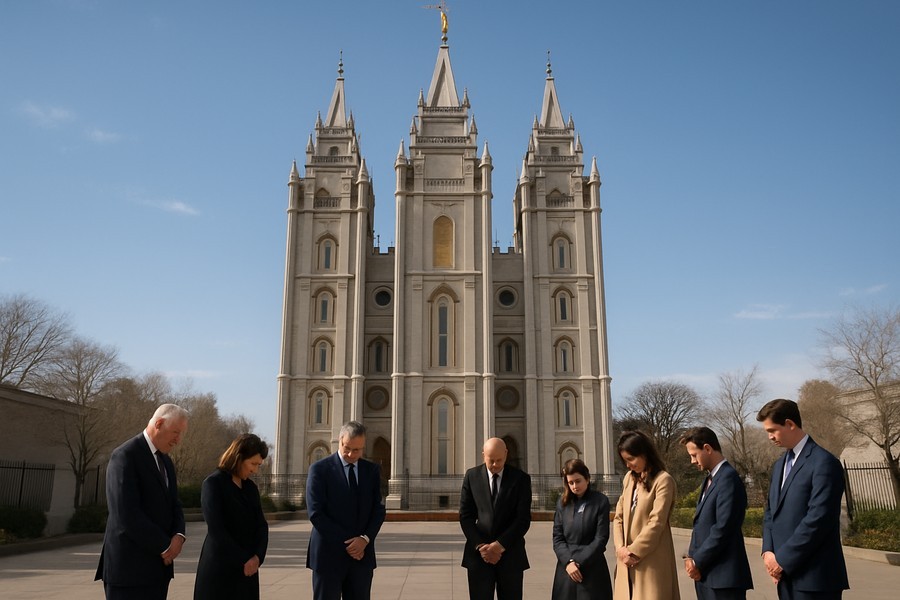
A Prominent Religious Leader Passes Away
At the age of 85, Jeffrey R. Holland, a prominent leader within the Church of Jesus Christ of Latter-day Saints and designated to be its future president, passed away. Holland's demise occurred due to complications related to kidney disease.
Leadership within the Faith
In Salt Lake City, Holland had been at the helm of a governing entity known as the Quorum of the Twelve Apostles. This group plays a crucial role in defining church policies and managing its numerous business ventures. The church, often referred to as the Mormon church, has relied on his leadership for a significant amount of time.
After the current President Dallin H. Oaks, Holland was the member with the longest service in the Quorum of the Twelve, making him the designated successor for the church's leadership, as per the faith's longstanding tradition. The church, under Oaks' presidency, spans a global membership exceeding 17 million.
Following Holland's passing, Henry B. Eyring, one of Oaks' senior advisors, is now next in line to assume the presidency. Eyring is currently 92 years old.
Health Challenges
During the recent holiday season, Holland had been admitted to the hospital due to ongoing health issues. His deteriorating health had been a concern for the church, as evidenced when Oaks did not choose Holland as a counselor in October.
Holland's passing leaves an open seat in the Quorum of the Twelve. In the coming months, Oaks will likely appoint a new apostle from a lower leadership council to fill this vacancy. According to church policy, all apostles are men, reflecting the church's all-male priesthood.
Holland's Life and Legacy
Holland, a native of St. George, Utah, contributed to the field of education administration for many years before transitioning to ecclesiastical leadership. His tenure included serving as the Brigham Young University's ninth president, a flagship institution for the Utah-based faith, from 1980 to 1989. He also served as a commissioner of the church's global education system.
During his leadership, the university made significant strides in improving interfaith relations and even established a branch campus in Jerusalem. Holland was later recognized by the Anti-Defamation League with their "Torch of Liberty" award for his efforts in fostering better understanding between Christian and Jewish communities.
Oaks, who also served as a president of Brigham Young University, expressed his fond memories of over half a century of friendship and collaboration with Holland. He described their relationship as "long and loving."
Holland was known for his dynamic and compelling speeches that blended academic insight with compassion. In 2013, he candidly addressed the issue of supporting those struggling with depression and other mental health conditions, sharing his own experiences of feeling "like a broken vessel."
His 2021 speech, where he urged church members to metaphorically take up arms in defense of the faith's teachings against same-sex marriage, is widely remembered. This speech, often referred to as "the musket fire speech," was included in the required reading for Brigham Young University freshmen in 2024, sparking concerns among LGBTQ+ students and advocates.
Holland is survived by his three children, 13 grandchildren, and numerous great-grandchildren, having been predeceased by his wife, Patricia Terry Holland.