
Recent Court Ruling: A Step Towards Justice
Several Venezuelan nationals who aren't U.S. citizens were sent packing without a fair hearing by a previous government administration. This act was performed under a law known as the Alien Enemies Act. These individuals weren't the only ones affected; there were many others in similar situations.
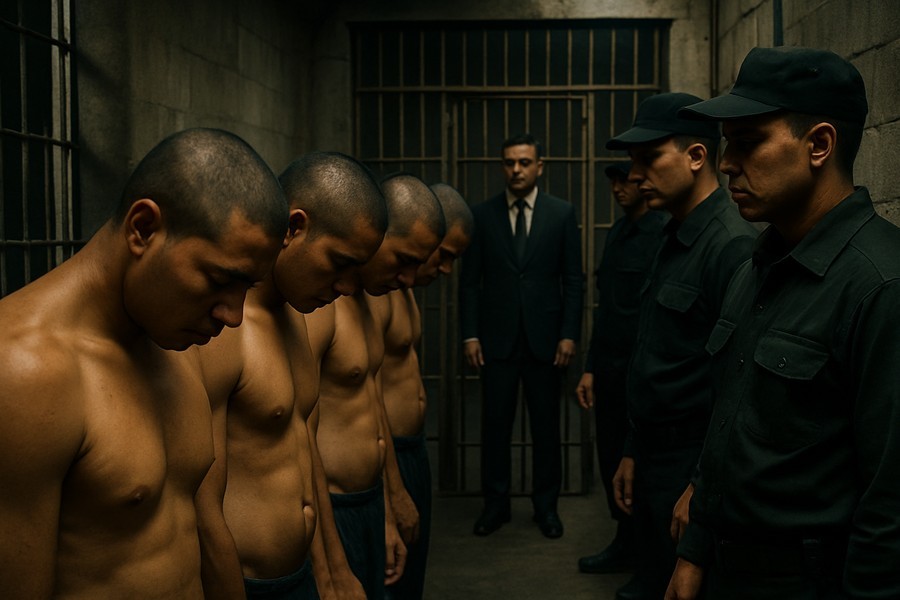
The case was handed to a prominent Judge who ruled that the government should halt the deportation process of these men to a notorious prison in El Salvador. However, the government ignored this directive. Images of these men, hunched and being forced into a line for head shavings before being thrown into cells they were told they would never come out of, shocked and outraged the American public. These images included the then DHS Secretary, standing nonchalantly in the prison, in front of a cell.
Public Outcry and Legal Response
Outraged, Americans demanded justice. They called for a fair hearing, also known as due process. After a ruling from the Supreme Court allowing deportations to continue so long as those being deported were given due process, the Judge ruled that there was reason to believe the government had criminally disobeyed his order. Despite this, the government continued to deport people who had been denied their right to a fair hearing.
The then-president responded by calling for the impeachment of the Judge. Despite several delays, the case moved forward as the court of appeals considered the contempt issue. Eventually, the Judge ruled that the government administration had violated the rights of all the plaintiffs in the case.
Government's Disregard for Due Process
The Judge attempted to offer the government a chance to propose measures that would allow these men to have their fair hearing. However, the government was uninterested in this process and essentially told the court to take a hike. The Judge, hoping for a more productive outcome and in line with the Supreme Court's requirements, ordered the government to make it easier for the plaintiffs to return from the countries they are currently in. Alternatively, they could be allowed to continue their court proceedings from abroad.
Due process is a vital principle that protects our rights. It has proven its importance in situations like the one in Minneapolis, where heavily armed federal agents, intent on meeting quotas set by the White House, arrested people first and asked questions later. These agents illegally detained people, some of whom were legally in the country. Some of these detainees were even American citizens.
The Tragic Incident in Minneapolis
Two American citizens were killed during the occupation of Minneapolis. Their government falsely accused them of being domestic terrorists. It wasn't the only lie. A week after one of the American citizens was killed, but before the other one was, federal agents shot a Venezuelan national, Julio Cesar Sosa-Celis, during what they claimed was a targeted traffic stop. They alleged that Sosa-Celis had resisted arrest and assaulted an officer. They even said that two other people attacked the officer with a snow shovel and broom handle. The officer shot Sosa-Celis in the leg, claiming it was out of self-defense.
However, a spokesperson from DHS has since admitted that the agents involved in the incident appear to have lied about the details of the incident. These agents are currently on leave and an investigation into the event is being conducted. This investigation was only initiated because of the overwhelming evidence of the agents' misconduct that surfaced. This has seemed to be the final straw for the American people.
Holding the Government Accountable
While the Judge's order may seem minor in the grand scheme of things, it is a significant step towards holding the government accountable. It showcases the Judge's patience and persistence in a case that has been ongoing for nearly a year. This order mandates the government to do the right thing. Although the plaintiffs were in this country without legal status and might eventually be deported, that does not negate the government’s obligation to handle their cases correctly.
But that's the problem. We're dealing with a government that isn't interested in affording some people their constitutional rights. It's up to all of us to make sure they do. Peaceful protests, functioning courts, and members of Congress insisting on oversight in immigration facilities all matter. Persistence is key, and we're making progress. We need to continue in this direction. Without our opposition, the government could be doing much worse. We need to be where we are right now.
So, let's stand together in this fight for justice. Your support is greatly appreciated. We're in this together.