
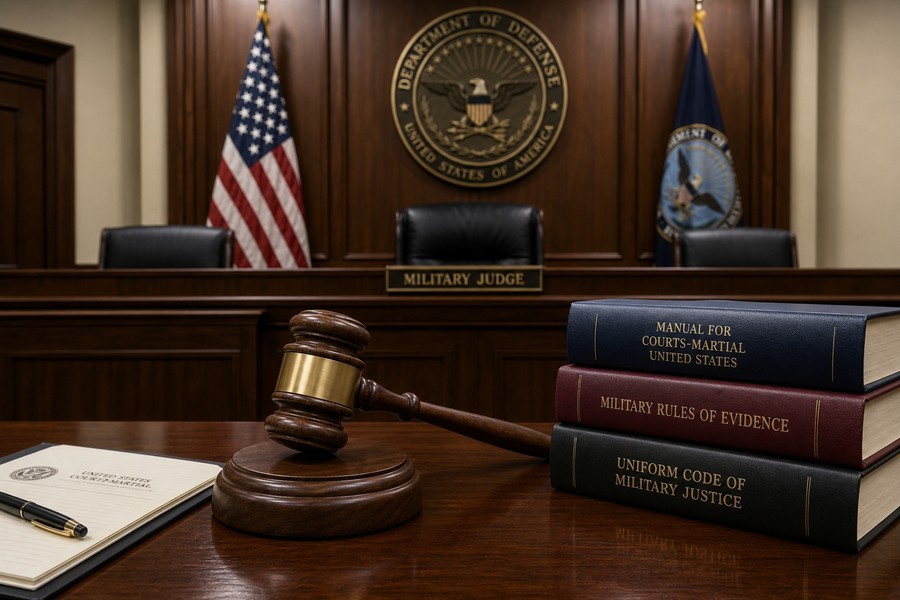
Judge Rules Key Confession in Major Terror Case Cannot Be Used in Trial
A military judge has made a major decision in the case against the man accused of planning the September 11 terrorist attacks. The judge ruled that a confession given by the suspect cannot be used by prosecutors in court. This decision is a significant setback for the government's long-running effort to hold a trial for the suspect and several other defendants.
The suspect, Khalid Sheikh Mohammed, is currently being held at a high-security military prison in Guantanamo Bay, Cuba. He is accused of being the main mastermind behind the tragic plot to hijack passenger planes and crash them into the World Trade Center and the Pentagon. Along with several other men, he has been waiting for a trial for many years because of various legal delays.
Why the Confession Was Thrown Out
The military judge in charge of the case, Lt. Col. Michael Schrama, decided to throw out the statements Mohammed made to federal investigators. The judge found that these statements were not given freely or voluntarily. The decision blocks prosecutors from using any of the answers Mohammed gave during a four-day questioning session that took place at the military prison.
The main reason for the judge's decision goes back to how the suspect was treated before he spoke to federal investigators. Years before that questioning session, the suspect was held in secret custody by a government intelligence agency. During that time, he was subjected to harsh interrogation methods, including waterboarding—a practice that simulates drowning and is widely recognized as a form of torture.
Because of this prior treatment, the judge determined that the suspect was deeply affected when he was questioned later by a different team of investigators. The judge pointed out several key reasons why the confession could not be considered voluntary:
- Fear of abuse: The judge found that the harsh treatment the suspect experienced in the past created a lasting fear. The suspect believed that if he did not answer questions, he would be subjected to severe physical mistreatment again.
- No right to remain silent: The suspect was not given standard warnings explaining that he had the right to remain silent and did not have to speak to the investigators.
- No access to legal help: The suspect was told that he was not allowed to speak with a lawyer during the questioning.
The Impact on the Upcoming Trial
This ruling comes at a critical time. The judge recently set a timeline for the trial of Mohammed and three other defendants, scheduling it to begin in a few years. Removing this confession from the evidence makes the government's case more complicated, as the confession was considered a key piece of information linking the suspect to the planning of the attacks.
The lead prosecutor on the case, Rear Adm. Aaron C. Rugh, indicated that government lawyers are currently reviewing the judge's order. The prosecution team will decide in the near future whether they want to appeal the decision to a higher court in an attempt to get the confession reinstated.
Different Perspectives on the Interrogation
Not everyone agrees with the judge's assessment of the questioning session. A retired federal agent, Frank Pellegrino, who was one of the investigators who interviewed the suspect, expressed his belief that the suspect spoke of his own free will.
The retired agent explained that he made a strong effort to ensure the suspect knew he had a choice. He stated that he told the suspect in the plainest terms possible that he was under no obligation to speak to the investigators. However, the retired agent also acknowledged that the ultimate decision rests with the legal system, which must determine if the interview met all the strict requirements of the law.
Another investigator involved in the case, Brian Antol, has also shared insights about the challenges of gathering evidence under these complex circumstances. The debate over how the government collected this evidence continues to be a central issue as the legal process moves slowly forward.
