
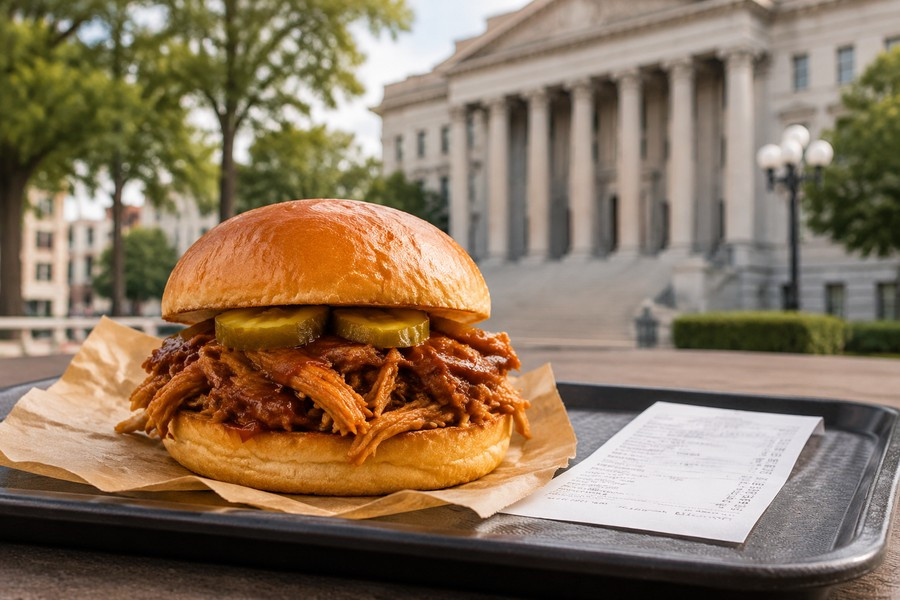
Judge Allows Pork Sandwich Lawsuit to Move Forward
A federal judge has declined to throw out a proposed customer lawsuit over a fast-food pork sandwich. The case claims that the sandwich’s name, shape, advertising, limited availability, and price may lead customers to believe it contains a specific, more costly cut of pork.
What Customers Say
Four customers brought the case in federal court in northern Illinois. They argue that an ordinary customer could see the sandwich’s name and rib-like shape and expect it to contain rib meat. They also say that its advertising and higher price add to that impression.
The customers claim the sandwich instead uses less costly pork parts, such as shoulder. Their lawsuit also names heart, tripe, and stomach as possible ingredients. They argue that customers pay too much when they buy the sandwich believing it contains a more expensive cut.
The judge dismissed some of the customers’ claims. But she said it was too early to accept the company’s argument that no reasonable customer could think the sandwich contains rib meat. The court has not decided whether the customers’ claims are true.
Why the Name and Shape Matter
The judge noted that the company’s website describes the sandwich as containing pork. That wording does not, by itself, settle whether customers could reasonably understand the sandwich’s name to mean it contains rib meat.
Advertising that shows or highlights the meat’s rib-like shape could also matter. The judge said that this kind of advertising may support the customers’ claim that the company meant to mislead buyers. However, the customers still need to provide more proof.
In the court’s view, the customers’ understanding of the sandwich’s name was not clearly unreasonable. That finding allows this part of the case to continue, but it is not a final ruling that the company misled anyone.
The Company Disputes the Claims
The company says the sandwich does not contain heart, tripe, or stomach. It also says it has been open about the sandwich’s ingredients. The company argues that the lawsuit twists the facts and has no merit.
It has also argued that a distinctive product name does not automatically deceive reasonable customers. In the company’s view, customers’ preference for one cut of pork does not make its marketing dishonest.
The sandwich has been sold on and off for many years and is available in some parts of the United States. Its limited availability is one of the details the customers point to as part of the impression they say the product creates.
What Happens Next
The ruling means the lawsuit can move ahead on some claims. It does not establish that the sandwich contains the pork parts named in the complaint, or that customers were actually deceived. The customers must still support their claims with further evidence as the case continues.
A lawyer for the customers said they plan to keep seeking accountability over what they describe as misleading marketing. The company continues to dispute the allegations.
- The judge dismissed some claims but allowed key parts of the case to continue.
- The dispute centers on customer expectations about the sandwich’s name, shape, advertising, and price.
- The company denies using certain pork parts and says its ingredient information has been clear.
- The court has not made a final decision on whether the company misled customers.