
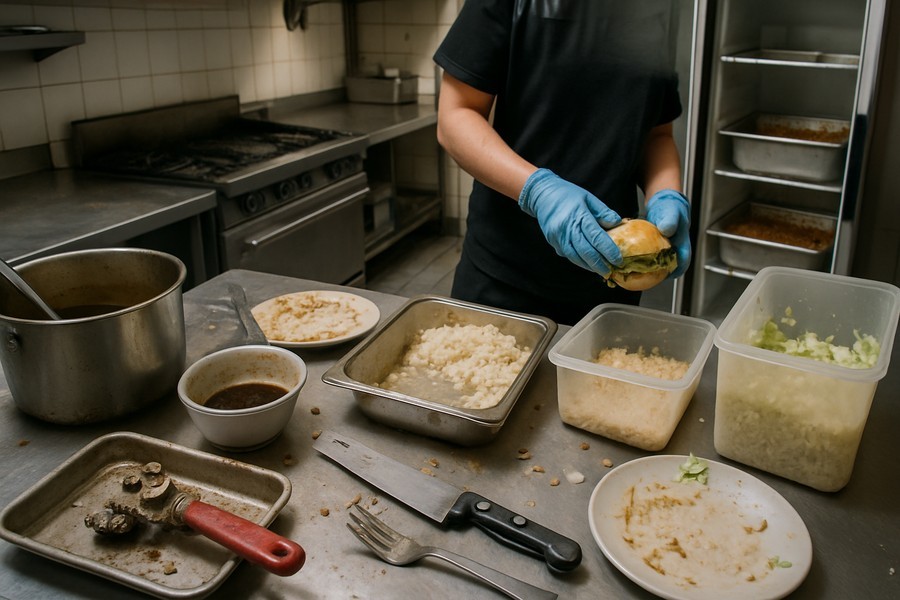
Unveiling Restaurant Health Violations and Their Consequences
Recently, health investigators have uncovered a multitude of violations in local eateries. These violations span from poorly maintained equipment to issues that could lead to insect infestation, and even a lack of management supervision over food safety protocols.
Violations Found
One such restaurant had been found with a total of 16 violations. Among these were improperly cooled food items that could potentially promote bacterial growth. The restaurant was also faulted for storing food in large bulk pans that didn't allow for correct refrigeration. Additionally, they were using a plastic grocery bag for food storage and a writing pen had been found on a cutting board. An employee was also seen using the same gloves to handle raw beef and other food items. Other violations included a lack of labels on toxic items, damaged dishes, and a dirty can opener. The health inspector noted that the number and type of violations suggested a lack of managerial control.
Even more concerning, the restaurant's ceiling tiles over the dry storage area were visibly dirty, with dust and debris accumulation. Wet containers were stacked in a way that hindered proper air drying, and an employee's drink was found on a prep table.
More Violations Detected
Another local seafood joint had 17 violations. The eatery was cited for storing raw crab above ready-to-eat sausage and keeping a container of minced garlic above the recommended cold temperature of 41 degrees. The dishwasher wasn't sanitizing correctly, and there were no food handler certificates available. Furthermore, the facility lacked a certified food manager.
The location also had potential pest entry points due to an improperly installed screen door. Wet cleaning cloths had been found on a prep table, and raw oysters in the freezer were left uncovered. An electrical cord over clean utensils had accumulated dust, and a personal toothbrush was stored above dry rice containers at the frying station.
The Worst Offender
The worst offender was a restaurant with a total of 34 violations. Multiple items in the kitchen were found dirty, including milkshake cups, citrus squeezers, and soda gun nozzles. The drainage line from a soda gun holder was backed up with waste water. They also had food debris on clean dishes, dirty pans stored in food warmers, and several items not in good repair. The inspector noted that management didn't display proper food safety knowledge.
Further inspection revealed an ant hill in the storage area under the stairs, doors propped open during operating hours, and food service items stored on the floor. Single-service portion cups stored inside bulk seasoning containers were being used to dispense product. New, unwrapped tea bags were stored in a nonoriginal box, and two bulk containers, one with flour and one with bread crumbs, were not labeled. Unwanted items were visibly dirty, and the floor around the soda machine by the bar was visibly damaged and holding waste water. Personal items were stored on boxes of soda syrups and food storage areas.
On a Lighter Note
Despite these alarming violations, there were also top-performing establishments that upheld health standards. These included a smokehouse food truck, a sandwich shop, and a nutrition-focused restaurant.