
Strong Early Morning Earthquake Shakes Eastern Japan and Disrupts Travel
A strong earthquake measuring 5.9 magnitude woke up residents in eastern Japan during the early morning hours. The tremor struck at 2:00 a.m. and was centered in the southern part of Ibaraki Prefecture, which is located just north of Tokyo. The underground point where the earthquake started was about 68 kilometers deep. Fortunately, the sudden shaking did not trigger a tsunami, meaning there was no threat of giant ocean waves hitting the coast.
Even though there was no danger of a tsunami, the shaking was strong enough to be felt across a very large part of the country. People living in northeastern and central Japan felt the ground move. An emergency earthquake alert was sent out immediately to warn people as the ground began to shake.
Understanding the Strength of the Shaking
To measure how hard the ground shakes during an earthquake, experts use a special scale that goes from 1 to 7. In several areas, including parts of Ibaraki, Saitama, and Chiba prefectures, the shaking reached a lower 5 on this scale. The same strong shaking was also felt in central Tokyo, specifically in the Adachi Ward, while other neighborhoods in the capital city experienced lighter shaking.
A lower 5 rating on this scale describes shaking that is strong enough to do the following:
- Frighten most people and make them feel the need to hold onto something stable like a wall or heavy furniture.
- Cause loose objects to rattle loudly and fall off shelves.
- Make walking difficult for people who are on their feet when the shaking starts.
Injuries and Local Damage
The earthquake caused minor injuries and some damage to local infrastructure. More than 20 people were injured during the event. The injuries were spread across several regions near the capital city:
- In Saitama Prefecture, a young man and a woman in her 70s were hurt.
- In Kanagawa Prefecture, nine people suffered injuries.
- In Chiba Prefecture, four people were injured.
In addition to these injuries, the shaking caused some minor damage to underground utilities. In Tokyo's Koto Ward, a water pipe broke open. Local workers quickly began checking to see if the cracked pipe was directly caused by the movement of the earthquake.
Train Services Delayed and Halted
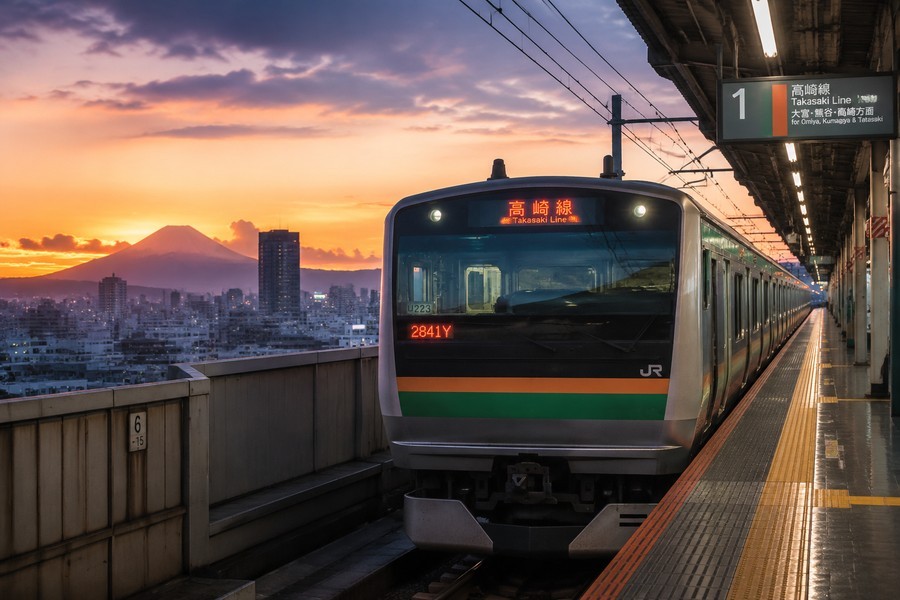
The early morning shaking caused problems for people trying to travel. Several train companies had to delay the start of their morning schedules, while other trains had to run at much slower speeds than usual to ensure passenger safety.
One major train line that connects central Tokyo to a busy international airport in Chiba Prefecture experienced delays but was able to get all trains running normally again by 9:40 a.m. However, some express train services in other directions remained stopped for a longer period while workers checked the tracks for safety.
Safety Status of Nuclear Power Plants
Whenever a large earthquake hits Japan, safety checks are immediately performed on nuclear power facilities. Operators checked several plants in the region to see if the shaking had caused any problems.
No issues or unusual activity were found at the Tokai No. 2 nuclear power plant in Ibaraki Prefecture. Additionally, the Fukushima Daiichi and Fukushima Daini plants, which are located further northeast, were reported to be completely stable with no new damage detected.
Government Response and Warnings for the Week
Following the earthquake, Prime Minister Sanae Takaichi posted a message on social media. The Prime Minister stated that instructions had been given to local officials to quickly find out how much damage had occurred and to make sure the public received helpful and timely information about the situation.
Safety officials are reminding the public that more earthquakes could happen soon. People are being told to stay very alert for the next week, especially over the next two to three days. There is a chance that another earthquake of similar strength could shake the region again, so residents are encouraged to keep heavy objects secured and have emergency plans ready.