
A Deep Insight into the Increasing Immigrant Detention Centers and the Rising Resistance
The present government's extraordinary growth of immigrant detention centers has sparked intense opposition across diverse communities. This backlash comes as the administration aims to dramatically increase the number of immigrants held and deported, a scale unseen in recent American history.
With an influx of $85 billion in fresh funding, of which approximately $45 billion is earmarked for expanding immigrant detention over the next four years, the authorities are swiftly securing buildings across the country. The plan is to repurpose these structures into detention spaces. This strategy also includes extending contracts with local jails and private prison facilities. It is noteworthy that these enforcement agencies now rank as the most funded in the country.
More than 220 detention sites across the country currently hold detainees, as per government data. These locations vary from dedicated detention centers and private prisons to county jails, military bases, and newly converted warehouses. Temporary holding areas, such as staging areas and hospitals, also house detainees. The number of sites continues to grow.
Geographical Spread of Detention Operations
The majority of detention operations are concentrated in the southern United States. The five states of Texas, Florida, Louisiana, Arizona, and Georgia account for just over 60% of the nation's 750,000-plus detention records. Texas tops the list with the most records across 115 facilities.
A year ago, around 37,000 people were in immigration detention across the nation. By the end of January of the following year, this number had more than doubled to over 72,000. The government's goal is to continue expanding detention spaces to keep pace with arrests. The ultimate objective of the Homeland Security Department aims to build bed space for 100,000 immigrants alleged to be in the country illegally. Currently, daily detention facilities house nearly 70,000 immigrants, a level of mass detention not seen since World War II when Japanese Americans and nationals were incarcerated.
Most detained noncitizens are held in a few centers. For example, nearly half of the 60,000-plus records across Arizona were at the Florence Staging Facility. Similarly, 45% of the 93,105 records across Louisiana were at the Alexandria Staging Facility.
Opposition to Detention Expansion
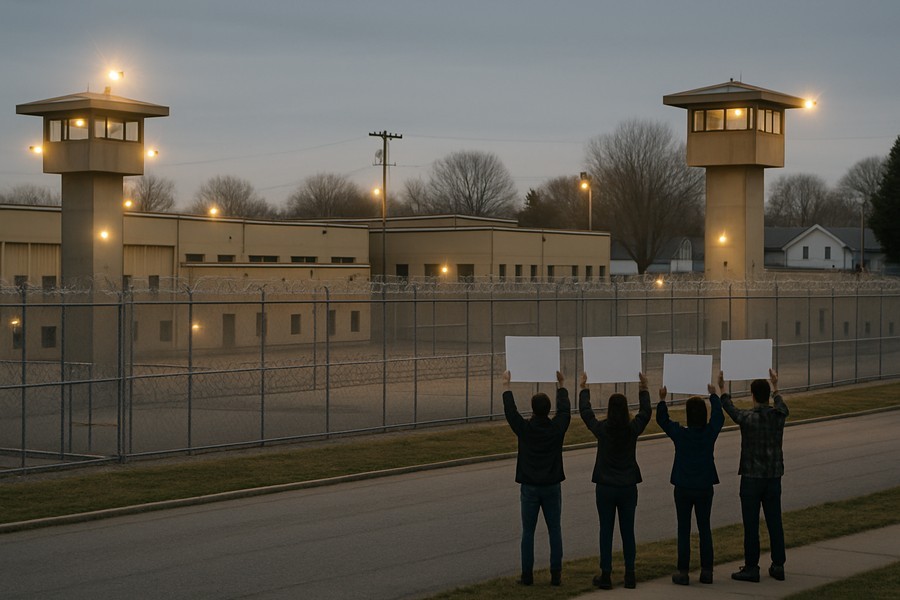
However, there's a rising grassroots opposition to the expansion of detention centers. Residents from Georgia to Texas to Arizona and many towns across the U.S. are pushing back, citing costs and infrastructure worries, as well as zoning, political, and even moral concerns.
Public sentiment has largely turned against the aggressive deportation plans. Recent polling data shows that 65% of Americans believe that immigration law enforcement has "gone too far." This sentiment is an 11-point increase from the previous summer.
In several instances, community uproar has forced the halt of planned detention facilities. For example, a planned facility in the town of Merrimack was stopped due to local protest. Similar backlash was seen in Oklahoma City when local residents learned of plans to convert a vacant warehouse into a facility to process and temporarily house immigrants. Strong opposition forced the authorities to abandon the proposed detention site.
Condition of Detention Centers
Concerns are amplified as reports of overcrowding and lack of food in detention centers across the nation have increased. Numerous detainee deaths are being investigated. Advocates believe that reduced oversight and record numbers of detainees are a recipe for more illness and death in custody.
While the federal level has seen little to no oversight action, local leaders are stepping up. The U.S. Conference of Mayors, a nonpartisan organization representing more than 1,400 mayors of cities with populations over 30,000, recently passed two emergency resolutions. These call for expanding transparency, reining in enforcement tactics, and setting limits on detention expansion.
However, a few communities have cautiously accepted new facilities, focusing on the economic boost and local jobs that these detention centers bring. Despite the ethical and moral costs associated with profiting from people being forcefully separated from their families and deported, some see it as taking advantage of what's on offer.