
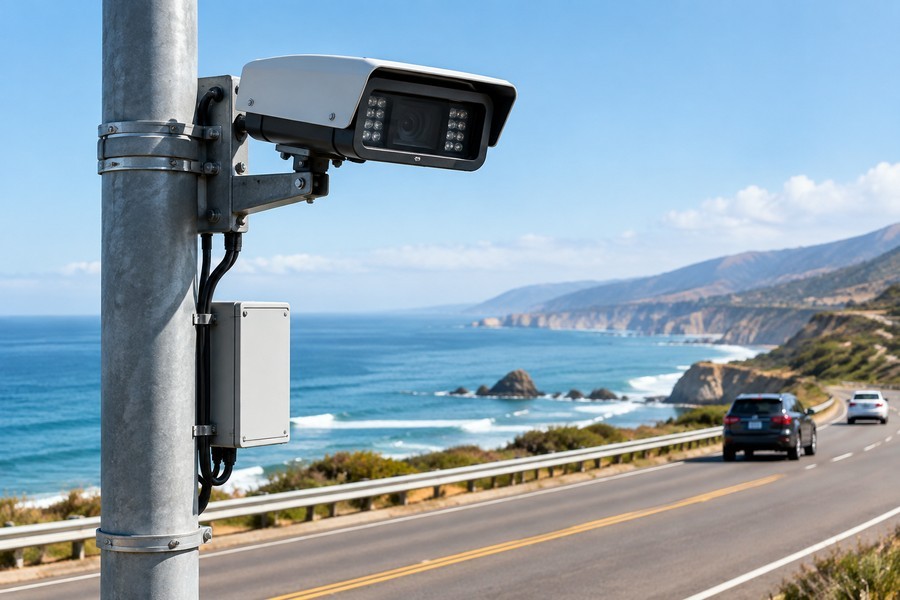
Local Government Moves Forward with License Plate Camera Rules While Pausing Facial Recognition Plans
Local leaders in an island county voted 7-1 to advance a new proposal that puts strict rules on how police use automatic license plate readers. At the same time, the committee decided to delay action on a second proposal regarding facial recognition technology, which local police do not currently use.
The decision came after many local residents attended a public meeting to share their concerns. Most of the residents who spoke asked the government to ban these tracking tools completely. They argued that current laws do not go far enough to protect privacy and that a network of cameras is already watching the community.
Understanding the Two Proposed Laws
The two proposals aim to set guardrails on how local law enforcement can use advanced tracking technology. Here is a breakdown of what each proposal would do:
- The Facial Recognition Proposal: This rule would only allow officers to use facial recognition software during active criminal investigations. Only trained staff would have access to the system. Any matches found by the software would be treated as investigative clues, not as final proof of a person's identity. It would also ban using the software for immigration enforcement, minor traffic tickets, or tracking people based on their race, religion, gender, or participation in peaceful protests.
- The License Plate Reader Proposal: This rule would make it illegal to sell any data collected by license plate readers. It would also require all county contracts with camera companies to block those businesses from using the data for their own purposes.
Under the facial recognition proposal, officers could only bypass the paperwork in extreme emergencies where someone is in immediate danger of serious injury or death. Even then, officers would have to submit the required paperwork within 24 hours of using the tool.
How Police Use the Technology
During the meeting, police representatives explained how these tools are currently used. They confirmed that the department does not use facial recognition technology at this time. If they do use it in the future, they would need a specific case number before performing any search. They also emphasized that a computer match alone would never be enough to arrest someone.
Regarding license plate readers, officers explained that the cameras do not identify the people driving the cars. Instead, the cameras only capture:
- The letters and numbers on the license plate
- A photo of the vehicle
- The specific time and location of the vehicle
The system only flags a vehicle if the license plate matches a list of stolen cars or vehicles involved in active missing person cases. Officers must enter a case number and write down a reason before searching the database. Police representatives also stated that they do not sell any of this data.
Currently, the department has 32 license plate cameras active at busy intersections. The cameras store information on local memory cards. Officers explained that these cameras act as extra eyes on the road, which helps the department deal with ongoing staff shortages.
Community Members Express Serious Privacy Concerns
Many residents spoke out against both proposals, arguing that the laws would actually make the use of tracking tools legal rather than stopping them. Some compared the situation to stories of a society where the government constantly watches every move of its citizens.
One resident pointed out that studies show facial recognition software is often inaccurate, especially for women with darker skin, where error rates can be very high. Others questioned why the county is spending money on surveillance cameras when resources are desperately needed for housing, road repairs, and rebuilding after recent natural disasters. They also pointed to issues in other parts of the country where officers have misused tracking systems for personal reasons.
Some community members also raised concerns about private tech companies running the camera networks. They argued that there is a big difference between solving a crime and constantly tracking everyday people as they live their lives.
Legal Adjustments and Next Steps
The local prosecutor supported the goals of the proposals but suggested some changes to the wording. He recommended using a standard legal term, exigent circumstances, to describe emergency situations where officers can act without a warrant. This term refers to urgent situations where waiting for a warrant could lead to someone getting hurt, evidence being destroyed, or a suspect escaping. The committee agreed to add this change to the license plate proposal.
One committee member voted against the license plate camera proposal, stating that the potential safety benefits are not worth the loss of personal privacy. He suggested a complete ban on using artificial intelligence and cameras in public spaces.
The license plate reader proposal will now move to the full county council for a first vote. The facial recognition proposal has been put on hold so that local leaders and residents can have more time to study the technology and its impact on the community.