
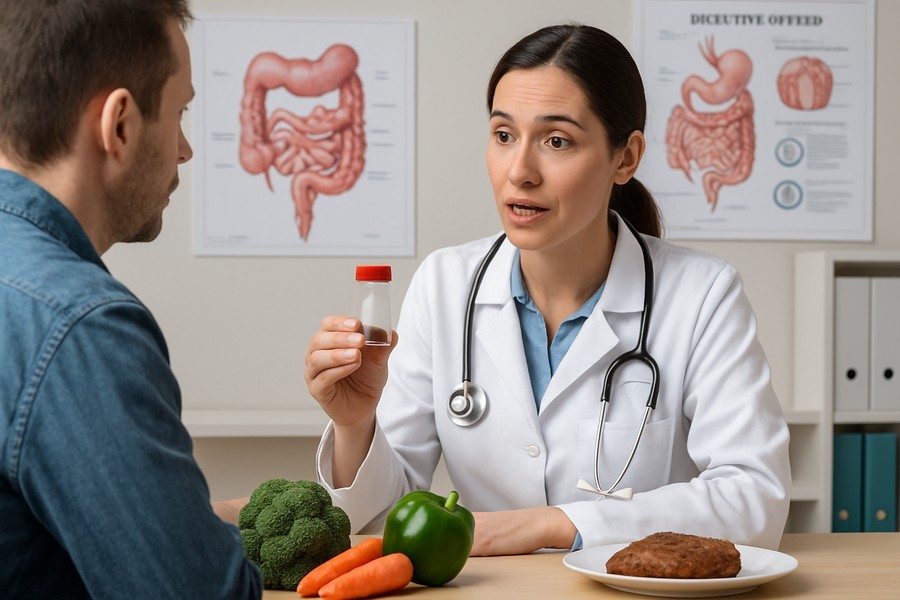
Meat Consumption and Stool Tests Could Provide Early Indicators of Gut Inflammation
Recent research indicates that routine stool tests and dietary habits, particularly meat consumption, could potentially aid in predicting flare-ups of inflammatory bowel disease (IBD), even before symptoms become apparent.
IBD, a chronic condition involving inflammation of the digestive tract, primarily includes Crohn's disease and ulcerative colitis. It is estimated that between 2.4 and 3.1 million people in the United States suffer from this condition. The disease is characterized by unpredictable periods of remission and debilitating flare-ups of symptoms, which may or may not be accompanied by active bowel inflammation.
The role of diet in these flare-ups is complex and until now, strong evidence linking dietary patterns to the risk of flare-ups has been scarce.
The Value of Stool Tests in Predicting IBD Flares
Stool tests, which are non-invasive, are often used to help diagnose IBD. They measure a protein known as calprotectin to indicate gut inflammation and differentiate it from non-inflammatory conditions. This protein can also be used to monitor the activity of the disease and the effectiveness of treatments.
In a recent large-scale study, it was found that increased levels of calprotectin in stool samples could predict symptom-based and clinically confirmed IBD flare-ups up to two years prior to their occurrence, even in the absence of symptoms. This positions the stool test as a potential early warning tool.
The study involved more than 2,600 IBD patients from various health care centers who were in remission between 2016 and 2020. They provided clinical data, including blood tests and stool samples, and completed detailed food frequency questionnaires.
The researchers found that participants with higher levels of calprotectin in their stool samples, even when they didn't show any symptoms, were more likely to experience future flare-ups. In particular, individuals with ulcerative colitis and elevated calprotectin levels had a risk of roughly 34% of experiencing a flare-up within two years, compared to about 11% for those with lower levels.
The Link Between Dietary Habits and IBD
Besides the stool tests, the study also examined habitual dietary patterns. It was discovered that individuals with ulcerative colitis who consumed the most meat had almost double the risk of a flare-up compared to those who ate the least amount of meat. However, this association was not observed in participants with Crohn's disease.
No consistent links were found between flare-up risk and intake of fiber, ultra-processed foods, polyunsaturated fats, or alcohol.
However, it is crucial to note that this study is observational, meaning the researchers cannot definitively say that consuming meat directly causes disease flare-ups.
Personalized Approach to IBD Management
These findings offer fresh insights into how biomarkers and lifestyle factors could be used to tailor IBD care. Monitoring dietary patterns and disease flare-ups could provide a new framework for managing IBD. This would involve using objective biomarkers to detect subclinical inflammation early and identifying specific dietary factors that may help prevent debilitating relapses.
It's critical to communicate that these findings support a nuanced, collaborative framework, rather than enforcing a rigid rule. As diet responses are unique to each individual, it's recommended to experiment with reducing meat intake, particularly processed and red meat, and to monitor symptoms and calprotectin levels over time, instead of enforcing a one-size-fits-all restriction.
These results open the door for future clinical trials to explore whether dietary changes, alongside routine biomarker monitoring, may help to prevent flare-ups, particularly in ulcerative colitis.