
Massive Spending on Artificial Intelligence Shrinks Cash Flow at Major Social Media Giant
A major social media company recently saw its sales grow, but its overall profits from its main apps dropped. The business is spending almost all of the cash it generates on building the physical systems needed for artificial intelligence (AI). This heavy spending has caused some concern among investors who are used to seeing the company save its cash.
Where is the Money Going?
During the second quarter of the year, the company's revenue grew by 28% compared to the same time last year. However, the profit from its main group of social media apps fell to $23.4 billion, down from $25.0 billion in the previous year. This means that while the core business is bringing in more money, it is costing more to run.
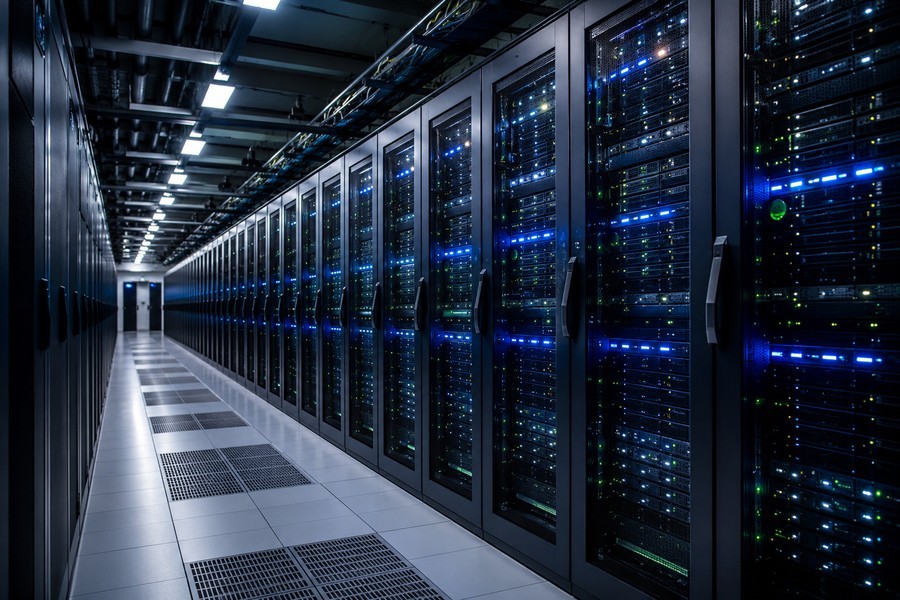
A large portion of the money earned is going toward capital expenditures, which is the money spent on buying and maintaining physical assets. This spending rose to $31.1 billion for the quarter, which is almost double what was spent a year earlier. Because the company generated $31.9 billion from its daily operations, it essentially spent nearly every dollar it made on building its AI infrastructure, including servers, data centers, and advanced computer chips.
The High Cost of Building AI
In the past, the company had to invest in data centers to keep its social media platforms running smoothly for users worldwide. However, the immense computing power needed to train and run modern AI models has greatly increased the level of investment required. This shift has changed the company's financial strategy. Instead of keeping the cash made from its advertising business, the company must now continuously build multi-billion-dollar data centers. This involves:
- Buying land and securing enough electrical power
- Purchasing expensive computer chips
- Running massive cooling systems to keep machines from overheating
- Replacing computer hardware that quickly becomes outdated
Because technology changes so fast, the cost of aging equipment and assets rose by 46% compared to last year, reaching $6.4 billion for the quarter.
How Competitors Handle the Cost
Other major technology rivals have found a way to offset these high costs. They rent out their massive computer infrastructure to other businesses through their own cloud services. This allows them to make money back immediately from their heavy investments. For example, one major competitor recently saw its stock price rise by nearly 2% due to the growth of its cloud business.
The chief executive officer of the social media giant acknowledged that renting out computing power could bring in extra money. He confirmed that the company has plans to enter the cloud business and will share an update soon. He noted that they are already receiving high-priced offers from businesses wanting to rent their computer systems.
The Long-Term Plan: Selling Intelligence
While renting out computer space is a possibility, the chief executive officer views it as a side project rather than the main goal. He believes the real value lies in selling advanced AI services built on top of their computer systems. He explained that it would not be wise to simply sell the raw computing power for a short-term profit. Instead, the company expects to make much higher profits by selling "intelligence" directly to users and businesses.
The company plans to build several new services using this technology, including:
- An advertising system that is 15.7% more effective at helping businesses make sales
- AI assistants that can automatically chat with customers for millions of businesses
- A system that lets other software developers pay to access the company's AI models
- A highly advanced personal assistant designed to help users manage their health, finances, and relationships around the clock
A Shift in Financial Strategy
To fund these massive projects, the company has changed how it manages its money. It took on $24.9 billion in long-term debt during the quarter. It also stopped buying back its own stock, after spending more than $10 billion on stock buybacks the previous year. The chief financial officer explained that the company is intentionally using more debt to pay for these long-lasting infrastructure projects, which are expected to bring in steady income in the future.
The company has raised its spending expectations for the year, now projecting total infrastructure costs to be between $130 billion and $145 billion. After spending $50.9 billion in the first half of the year, the company will need to spend between $39 billion and $47 billion per quarter for the rest of the year. Because they only bring in about $32 billion in cash each quarter, this will likely lead to negative cash flow for the remainder of the year.
When asked about future costs, the chief financial officer declined to give a specific number but stated that the demand for computing power is currently higher than what they can provide. The chief executive officer remains confident in the strategy, stating his belief that investors who support these long-term projects will be well rewarded over time.