
Neighborhoods Fight Back Against Street Cameras Tracking Drivers
A few times every week, a Minnesota resident named Brady walks down to the busiest intersection near his home in the town of Crystal. He carries a long metal pole with a bright yellow sign attached to the end. The tool is actually a roof rake, which is normally used to clear heavy snow off housetops, but Brady uses it for a very different purpose.
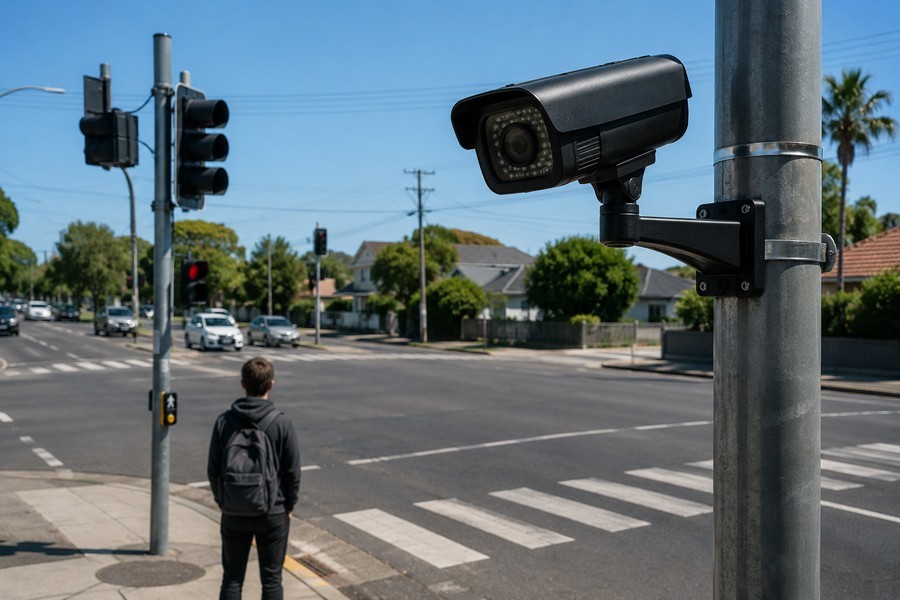
When he reaches the intersection, he stops underneath an automated license plate reader. This camera is designed to scan and record every vehicle that passes by, allowing local police to track car movements. But when Brady is there, the camera cannot see anything. He raises his long pole into the air, blocking the camera lens with his yellow sign. As cars drive past, Brady waves. Many drivers smile, wave back, and honk their horns in support.
Brady explains that he does not want his tax dollars used to fund surveillance equipment right at the end of his block. He was inspired to take action after learning about a man in Florida who used a pool skimmer to block similar cameras. Today, Brady is part of a growing nationwide movement of citizens protesting these automated tracking devices.
How These Street Cameras Track Vehicles
The technology has spread rapidly across the country. More than 5,000 police departments now use these specific automated license plate readers. Nationwide, there are more than 130,000 AI-powered tracking cameras active on American streets.
Every single month, these cameras snap photos of billions of license plates. The system does not just read numbers; it also records details about every car, including:
- The make and model of the vehicle
- The color of the car
- Any unique features or physical alterations
This data allows law enforcement to look back and see exactly where a driver has been over a long period. Technology and law experts point out that these systems easily monitor when people go to work, visit the doctor, or drop their children off at daycare. This gives police the power to look up where any citizen was at almost any given time.
The Debate Over Safety and Personal Privacy
Police officials argue that these cameras are highly valuable tools. They explain that the technology helps officers locate stolen cars, find missing people, and even prevent vehicle thefts before they happen.
However, privacy advocates warn that the rapid growth of this technology, combined with artificial intelligence and digital cloud storage, makes it easy for the system to be abused. There have already been documented cases of misuse, including:
- Officers using the system to stalk former partners
- Departments accessing travel data for immigration enforcement without local approval
- A sheriff's department in Texas using the data to track a woman suspected of seeking an abortion
Critics worry that these systems allow police to conduct massive data searches that sweep up information on thousands of innocent citizens. Furthermore, the technology is not always accurate. One analysis conducted by a police department in California revealed that the cameras flagged the wrong license plate 71% of the time.
Legal experts also question whether these cameras violate constitutional protections against unreasonable searches. They argue that the American legal system is built on the idea that the government cannot monitor citizens as they go about their daily lives unless there is a specific reason to suspect them of a crime.
Changes From the Camera Maker
In response to growing public criticism, the company that manufactures the cameras recently held its annual meeting. The company's chief executive defended the technology, stating that the business does not actually own or sell the collected data. Instead, individual cities have control over how long the information is stored and who can see it.
To help prevent future abuse, the manufacturer recently updated its software. These updates include shortening the recommended time that data is saved and automatically cutting off access for any officers who appear to be using the system improperly. The company executive suggested that citizens who have concerns about the cameras should voice them to their local city councils.
A Growing Wave of Vandalism and Resistance
Many citizens are taking matters into their own hands. Automated tracking cameras have been targeted by vandals in at least 36 states. People have used various methods to disable the devices, such as:
- Stealing the cameras directly from the poles
- Sawing down the metal poles holding the equipment
- Covering the camera lenses with paint or stickers
- Shooting at the devices or crashing vehicles into them
On social media, users frequently share instructional videos showing how to disable the cameras, and online comment sections are often filled with supportive messages for those who damage the equipment. The camera company's chief executive warned that these actions are dangerous and constitute felony offenses.
Despite the warnings, the pushback is getting results. At least 100 cities have decided to turn off their cameras or cancel their contracts with the surveillance companies. Privacy analysts note that opposition to the cameras brings together people from all parts of the political spectrum, including liberals, conservatives, and moderates alike, making the fight against public surveillance a rare nonpartisan issue.