
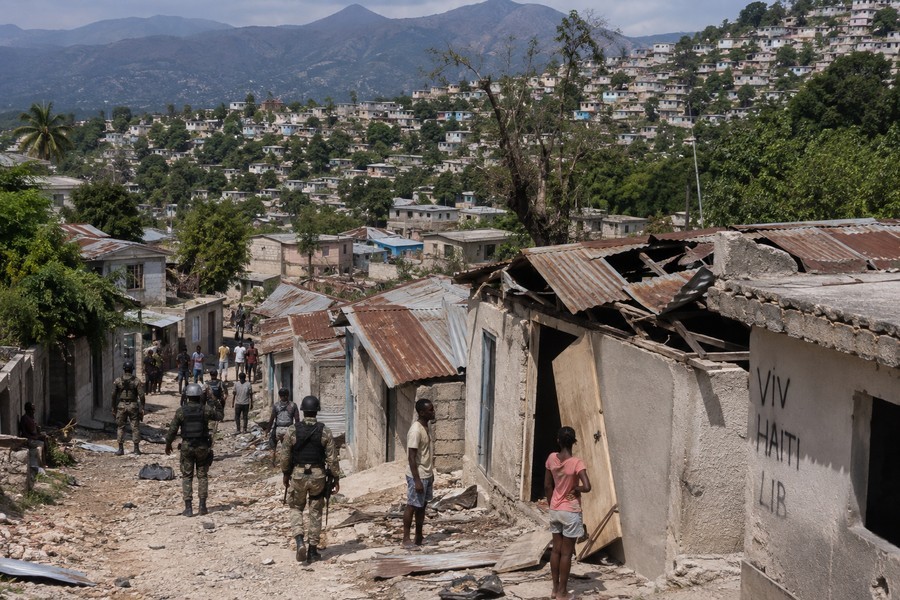
Tragedy in the Hills: Dozens Killed and Kidnapped in Sudden Haitian Gang Raid
A quiet community nestled in the hills above Haiti's capital suffered a devastating assault that left at least 47 people dead and more than 50 others captured. This sudden wave of violence has shattered the local belief that safety was finally returning to the area.
The raid is being recognized as one of the largest mass abductions in the country in recent memory. Now, a local gang leader is using the captives as leverage, threatening to execute them if security forces try to intervene.
A Brutal Attack on a Safe Haven
For months, the mountain town of Kenscoff had seen a significant drop in violence. Security operations had successfully reduced criminal activity in the area by more than half. However, this progress vanished in a single day of intense violence.
During the raid, armed men swept through the town, burning down 25 homes. The loss of life was severe:
- At least 47 people lost their lives in the attack.
- Among the dead were at least five children.
- More than 22 victims were killed inside a church compound where they had run to find safety.
- Two local government workers, including a close relative of the town's mayor, were also killed.
The local mayor, Jean Massillon, expressed deep sorrow over the tragedy. He noted that the cruelty of the attack serves as a painful reminder of the work still needed to bring lasting peace. Despite the horror, he remained hopeful that government forces would eventually rid the town of these armed groups.
Hostages Held Under Deadly Threats
The situation has become even more tense due to a chilling message shared on social media. A gang leader known as "Izo 2" or "Didi" directly threatened the head of the national police force, Vladimir Paraison.
In the video, the gang leader warned that if any of his fighters are harmed by police, he will immediately kill the hostages. The speaker identified himself as a representative of one of the country's most powerful gang leaders, Johnson André, who is also known as "Izo."
Security experts point out that this threat puts the government in a difficult position. If officers do not act, they fail to protect the kidnapped citizens. But if they launch a rescue mission and hostages die, the gangs will blame the state for the tragedy.
Analysts suggest the attack may have been designed to stretch the country's limited security resources. By forcing police to send troops into the hills, the gangs can weaken defenses in other critical areas. The raid also serves as a bold message to the government as the nation prepares for its first general elections in over ten years. The gangs are attempting to show that they can strike whenever and wherever they choose.
Heartbreaking Stories of Survival
Local residents are struggling to cope with the aftermath of the raid. Marc Paul, a 42-year-old resident, shared his harrowing experience of fleeing the violence. He had to run past dead bodies to escape.
The attack tore his family apart. Gang members kidnapped his brother, his stepmother, his stepfather, and two of his cousins. His 16-year-old niece was also captured and assaulted, though she managed to escape and reunite with him. This was not the first time Paul's family faced such terror; they had already lost their home to a different gang raid earlier in the year.
Another family member, 17-year-old Kenson Paul, also managed to slip away from the attackers. He expressed deep worry for his missing relatives, noting that the kidnappers had not yet contacted the family to make demands.
The Strategic Value of the Hills
Kenscoff is highly valued by armed groups because of its geography. Controlling this hillside town allows gangs to surround neighboring upscale areas like Pétion-Ville. It also gives them control over key travel routes that link the capital city to the southern regions of the country.
While security forces have focused most of their energy on reclaiming the center of the capital, criminal groups have shifted their focus to vulnerable rural areas. These countryside towns often lack the police presence needed to fight back.
A Nationwide Crisis of Violence
This recent tragedy reflects a much larger crisis affecting the entire nation. Armed groups currently control about 70 percent of the capital city and large portions of the surrounding countryside.
The scale of the crisis is reflected in these staggering numbers:
- Over 1.5 million people have been forced to flee their homes across the country.
- More than 3,050 people were killed during the first six months of the year.
- Nearly 800 assaults were reported over a recent three-month period, with the vast majority being collective attacks.
- At least 81 kidnappings were officially reported during that same timeframe, though the actual number is believed to be much higher.
Many families choose not to report kidnappings to the authorities. Instead, they try to negotiate directly with the captors to secure a quicker release and avoid retaliation. This has led to a major rise in unreported abductions, even as official reports show kidnappings increasing by more than 40 percent compared to the previous quarter.
In response to the tragedy, the national police chief has ordered an investigation to determine if negligence or cooperation from within the ranks allowed the attack to happen. He has also promised to send specialized security units to the area to fulfill the government's duty to protect its citizens.