
From Spy Satellite to Star Finder: Inside the Next Great Space Observatory
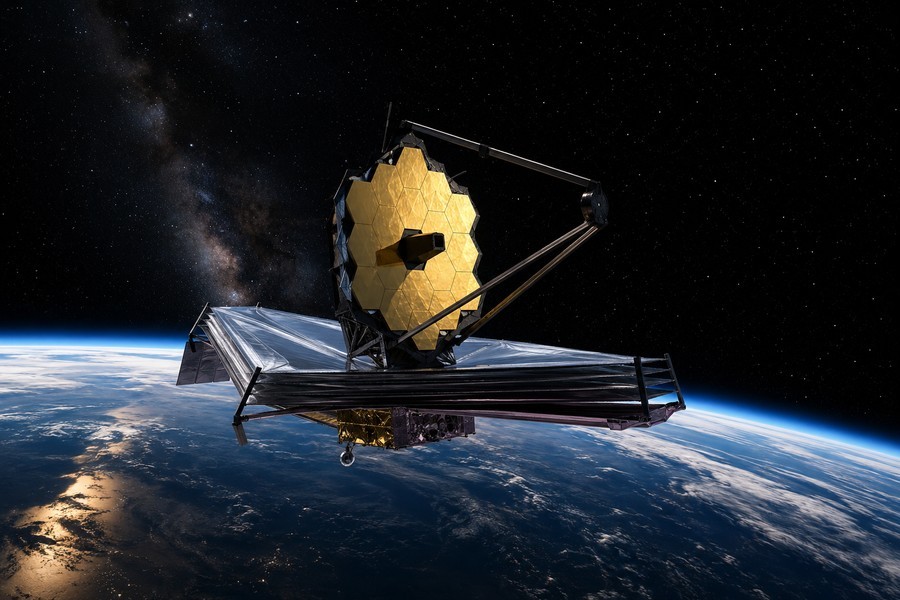
The universe is a vast and mysterious place. It is filled with exploding stars, ancient galaxies, and worlds that we cannot see with the naked eye. Soon, space scientists will have a powerful new tool to help them explore these cosmic secrets. A new space telescope, worth over four billion dollars, is scheduled to launch into space in late August. Named after a pioneering female astronomer who served as the first chief astronomer of the space agency, this new observatory is designed to unlock secrets about how the universe grows and to find new planets orbiting distant stars.
An Unexpected Beginning
The story of this new space telescope began more than a decade ago. At the time, space scientists were planning to build a telescope that could search for a very specific type of exploding star. These cosmic explosions, known as Type 1A supernovas, are incredibly important to science. Because these stars always explode with a similar level of brightness, astronomers can use them as a giant measuring tape to calculate distances across the universe.
By studying these explosions, scientists previously discovered a mysterious force called dark energy. This force is causing the universe to expand faster and faster every day. Understanding this expansion is one of the biggest goals in modern science. However, building a brand-new telescope from scratch is expensive and takes a long time.
While the space agency was working on these plans, they received an unexpected phone call from a government office that manages spy satellites. The intelligence agency explained that they had a high-tech satellite sitting unused in a storage hangar. They asked the space agency if they could use it. Instead of pointing the powerful camera down at Earth to spy on targets, the scientists could point it up at the stars.
The space agency accepted the offer. It took a lot of hard work and major adjustments to change the spy satellite into a scientific tool, but that unused piece of military hardware is now ready to become a premier space observatory.
Testing Our Ideas About the Universe
This new telescope could change the way we understand the cosmos. For a long time, scientists have used a specific mathematical model to explain how the universe behaves. However, in recent years, some measurements have suggested that this model might not be completely correct.
The new observatory is designed to settle this debate. It will gather highly precise data that will either prove our current theories right or show scientists where they need to make changes to their models.
Fast and Wide Views of the Sky
One of the most exciting features of this new telescope is its speed. While it has the same sharpness and ability to see faint details as a famous older space telescope, its design allows it to take pictures of much larger areas of the sky at once. It can capture wide views of space in a fraction of the time.
For example, the new telescope will spend a month mapping the stars in our home galaxy, the Milky Way. To cover that same amount of space, the older space telescope would have to work constantly for an entire century. This speed allows scientists to create massive catalogs of the sky very quickly.
Even better, this information will not be kept secret. The data will be shared with the public right away. This means that a high school student in a small town can look at the images and information at the exact same time as a professor at a top-tier university. Anyone with an internet connection will have the chance to make a discovery.
Hunting for Invisible Worlds
Finding planets outside our solar system is another major goal of the mission. Scientists plan to use a special technique called gravitational microlensing to find these distant worlds. This technique works by watching how the gravity of a planet bends the light of a star behind it, acting like a magnifying glass.
A famous physicist, Albert Einstein, first described this idea nearly a century ago. However, he believed that the technology required to actually see this happen would never exist. Modern technology has proven him wrong, and scientists expect this new telescope to find thousands of new planets using this method.
This technique will allow scientists to find planets that cannot be detected in any other way, including:
- Hidden worlds located near the crowded center of our galaxy.
- Gas giants that are similar in size and temperature to Jupiter and Saturn.
- Ice giants that resemble Uranus and Neptune in the outer parts of solar systems.
- New galaxies that will help map out the overall structure of the universe.
Looking Ahead
The telescope is scheduled for a five-year mission in space. While scientists have specific plans for what they want to study, history shows that the most exciting space discoveries are often the ones that no one saw coming. This new observatory is poised to open a new window on the cosmos, helping us better understand our place in the universe.