
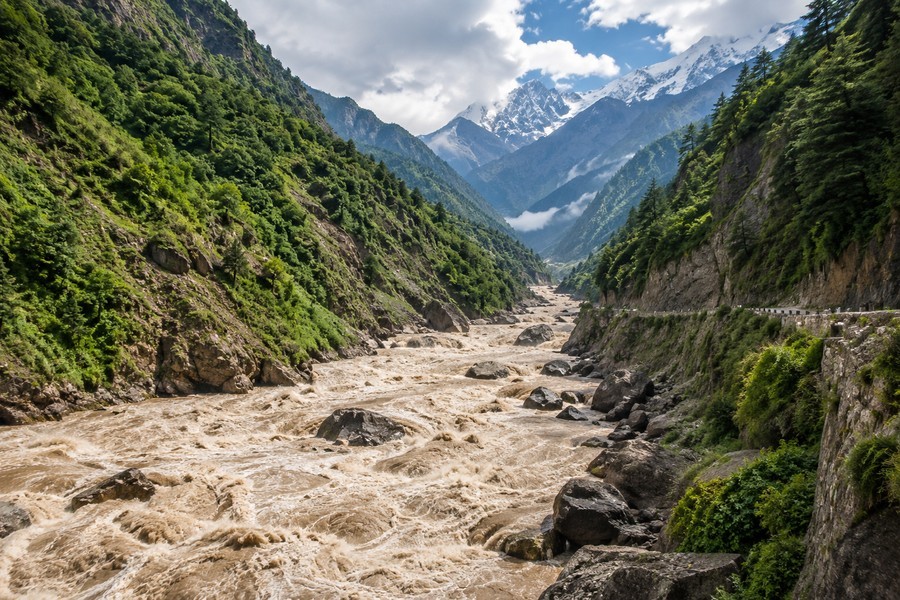
Massive Mountain Floods Leave Hundreds Dead and Thousands Missing Near Border
A sudden and massive flood near the mountainous border of Nepal and China has claimed the lives of at least 734 people. Thousands of others remain missing after a giant wall of water and mud swept through local towns and villages.
Emergency workers are pushing forward with rescue operations, searching for more than 900 workers who were at various construction sites when the disaster struck.
The Cause of the Catastrophe
The disaster began when a massive glacier collapsed high up in the Himalaya mountains. This collapse sent an enormous amount of ice, water, and rock crashing down into local river systems. The sudden rush of water quickly turned into violent flash floods and landslides, burying entire communities along the river banks.
The situation became even more dangerous when piled-up debris created a temporary lake. Rescuers had to pause their search briefly when the water levels in this new lake rose, threatening to cause a second flood. Once the danger was under control, the search resumed. Teams are now using advanced tools like satellites, radar, and drones to watch the water closely. If the debris barrier breaks, emergency workers downstream will have about 30 minutes to escape to high ground.
Hundreds of Workers Trapped in Muddy Tunnels
A major focus of the rescue effort is finding 933 missing workers. These individuals were working at 11 different hydropower projects in the hard-hit mountain valleys. The workers come from several countries, including Nepal, India, South Korea, and China.
Getting to these workers has been incredibly difficult:
- At one large power plant, soldiers managed to rescue 254 people, but many others are still unaccounted for.
- At another site, the main tunnel is completely filled with thick mud, making it impossible for rescuers to enter. Teams are trying to bring in specialized rock-climbing experts to help.
- A joint rescue team of 82 emergency workers is working around the clock to clear mud and rocks from blocked tunnel entrances, despite heavy rain and bad weather.
The Search for Thousands of Missing People
The scale of the tragedy is enormous, with nearly 2,400 people still missing on the Nepalese side of the border. This group includes hundreds of foreign travelers, local guides, and several dozen members of the military and police force who were caught in the path of the flood.
Across the border, the disaster also caused heavy damage. At least 16 people died in a border county, and 261 foreign travelers from 23 different nations are currently missing. These missing travelers include citizens from the United States, the United Kingdom, Canada, Australia, India, and several European nations.
Heavy machinery is being used to clear blocked mountain roads so rescue teams can reach the worst-hit areas. Search crews have already scanned tens of thousands of square yards of debris using search dogs, drones, and special life-detection equipment.
Overwhelmed Hospitals and Rising Costs
Local communities are struggling to handle the sheer number of victims. Local morgues have run out of space to store bodies. Because there are not enough specialized refrigerators to preserve the victims for identification and DNA testing, bodies are being sent to 21 different hospitals across the region. Some victims were carried so far by the rushing waters that their bodies have been found miles away in neighboring India.
The financial impact of the disaster is staggering, with damage estimates already climbing past $4 billion. Miles of roads and crucial bridges have been completely washed away, making it very hard to deliver food, blankets, and medicine to survivors. Because of the extreme danger and the need for specialized skills, local leaders have asked neighboring countries for expert help to speed up the rescue work.
Local residents are devastated by the loss. Many families have lost absolutely everything, including their homes, farms, and loved ones. Some survivors point out that these extreme mountain disasters are becoming more common and dangerous due to global environmental changes.
Global Support and Funding Efforts
Countries and international groups from around the world are sending money and supplies to help with the recovery:
- Emergency funding: International organizations have released millions of dollars in immediate emergency funds, and global charity groups have launched major appeals to raise tens of millions more.
- Direct financial aid: The United Kingdom has pledged $6.8 million, while the United States and Canada have each promised $3.6 million in humanitarian aid. The European Union has also pledged $2.3 million.
- Rescue personnel and equipment: Neighboring countries have sent thousands of rescue workers, heavy-lift helicopters, and specialized drones to drop supplies and equipment directly to the emergency crews on the ground.