
Uncovering the Truth About Neanderthal Smarts
In the mid-1800s, an unusual human fossil was discovered near Düsseldorf, Germany, in a region known as the Neander Valley. This was the first discovery of a Neanderthal, and early analysis of the skull suggested it was of a "low stage of development".
This initial judgment has persisted through time, leading to a widely accepted belief that humans eventually outlived Neanderthals due to our superior intellect. However, recent research by a team of international anthropologists suggests otherwise.
Challenging the Stereotype
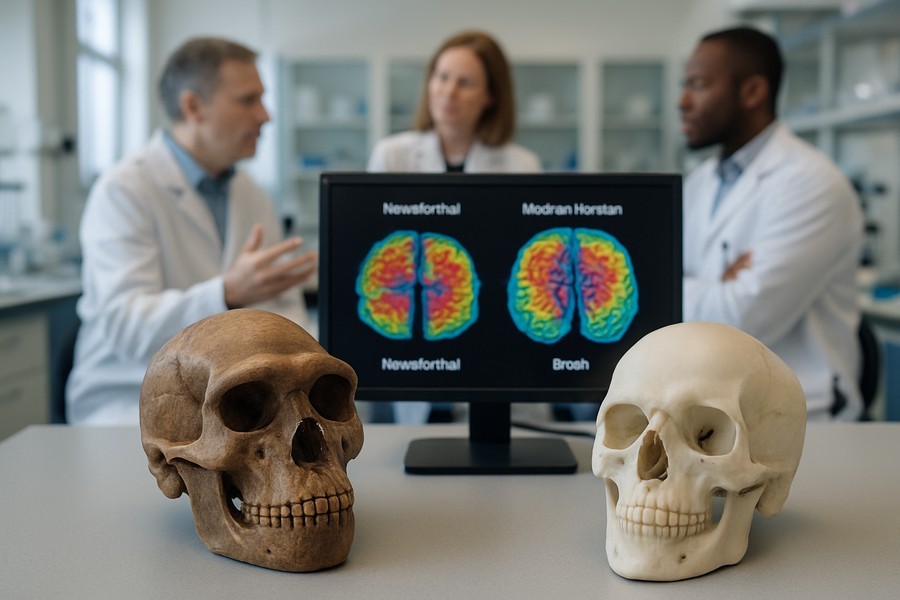
The researchers compared brain scans from two modern human populations, one in the United States and the other in China, with those of Neanderthals. They concluded that the differences in regional brain volume among modern humans are more significant than those between us and Neanderthals.
These findings imply that if the minor variations in Neanderthal brains are deemed to have evolutionary relevance, then the same should be true for the differences found among modern humans. However, there is only a weak correlation, if any, between cognitive ability and brain anatomy among modern humans.
The study authors argue that if we don’t consider the brain volume differences among modern humans as evolutionarily meaningful, we should adopt the same view for Neanderthals. This would challenge the long-held assumption that their brains were less developed than ours.
Neanderthals: More Capable Than Previously Believed
The findings of this research are not isolated. In recent years, other scientists have been accumulating evidence that Neanderthals were actually more intelligent than we once thought, despite the differences in the shape and size of their brains from ours.
There is now a wealth of evidence suggesting that Neanderthals engaged in a variety of sophisticated behaviors and practices. For example, they were likely capable of swimming deep underwater to collect shells, using tools to start fires, concocting medicinal substances, making their own clothes, and even creating abstract art. In many cases, they engaged in these activities before modern humans did.
Furthermore, some studies suggest that Neanderthals may have been capable of speech, similar to humans, based on evidence from their skull structures. These findings challenge the traditional view that Neanderthals were "cognitively challenged".
Reimagining Neanderthals
While Neanderthal skulls can provide valuable insights, they can only tell us so much about the complex brain they once housed. Misinterpretations can also occur. For instance, the stereotype of Neanderthals as hunched, brutish, and ape-like has been refuted by recent studies of their rib cages and hips, which suggest they were actually quite upright.
Today, some scientists propose that Neanderthals didn’t truly go extinct, at least not genetically. Instead, they may have been close enough to modern humans to be considered the same species. It seems likely that we interbred for thousands of years, with Neanderthals ultimately becoming part of our own lineage. This is why many of us carry Neanderthal genes today.
Respecting Our Ancestors
If we continue to perceive Neanderthals as slow, incapable of speech or abstract thought, we are underestimating our own ancestry. In truth, we share much more with them than we often acknowledge. As we dig deeper into our past, we continue to discover that we are more alike than different.