
New Tools Could Help Find Breast Cancer Earlier
Dr. Rachel Brem became interested in cancer care at a young age. When she was 12, her mother was diagnosed with breast cancer and given only six months to live. Early detection helped her mother live far beyond that prediction. That experience shaped Brem’s career and inspired her to work toward better breast cancer screening for women everywhere.
Brem is a board-certified diagnostic radiologist who specializes in breast imaging and treatment procedures. She also started a foundation focused on preventing breast cancer deaths through education, early testing, and fair access to care.
Artificial Intelligence Adds Another Layer of Screening
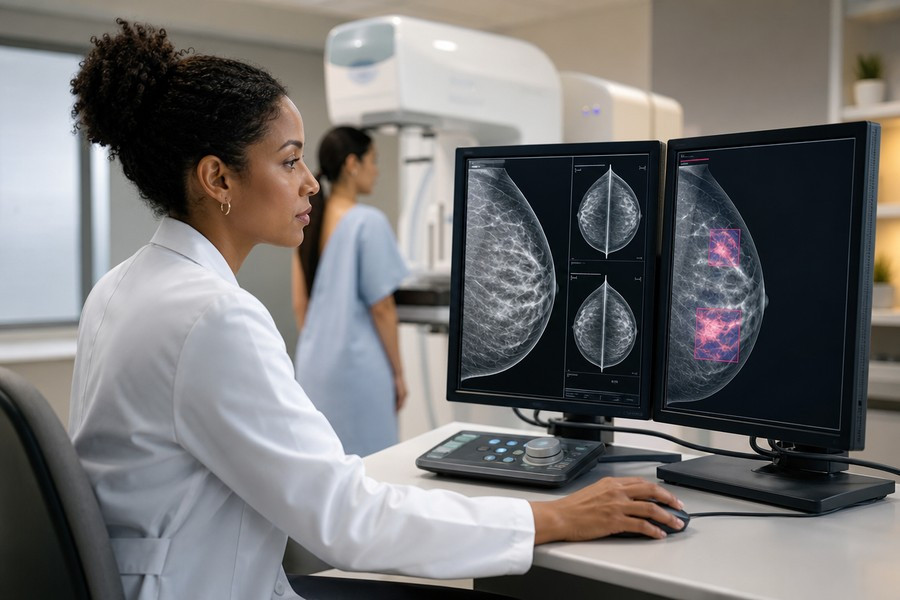
Brem believes artificial intelligence could greatly improve breast cancer detection. She works with medical technology developers on software that reviews mammograms and looks for warning signs that may be difficult for doctors to see.
Research shows that combining mammograms with artificial intelligence may help identify cancer as much as five years earlier in some cases. The technology may also estimate a woman’s future risk of breast cancer, even when no cancer can be seen during the current exam.
This could change how doctors plan care. A woman who appears healthy today might still receive closer follow-up if the software shows that she has a higher risk of developing breast cancer later.
Brem has suggested beginning artificial intelligence-supported screening at age 35. That is younger than the starting age recommended by some medical groups. At the medical center where she works, artificial intelligence has been used with mammograms for more than four years, without adding a cost for patients.
Some artificial intelligence tools have received clearance for breast cancer detection or risk prediction. Even so, use across the country remains limited. Only about one in five medical practices uses artificial intelligence during mammogram reviews. In some locations, patients must pay extra for the service, which can make it harder for people with limited resources to receive it.
Technology May Help Reduce Health Gaps
No test can completely prevent breast cancer. However, Brem believes artificial intelligence could help reduce differences in diagnosis and treatment between groups of women.
Black women die from breast cancer at a rate about 40% higher than White women. Women with fewer financial resources may also have less access to mammograms, follow-up testing, and cancer treatment.
Wider use of artificial intelligence could help find suspicious areas earlier and make screening more consistent. Brem’s foundation has spent many years supporting early detection, public education, and better access to breast health services.
A Painless Breath Test Is Being Studied
Brem is also helping develop a possible breath test for breast cancer. Diseased tissue may release certain chemical compounds that become gases. Scientists are studying whether those gases can be found in a person’s breath and used to decide who needs more testing.
The breath test is still being studied in laboratories and clinical trials. It has not been cleared for routine breast cancer screening.
If it becomes available, the test could offer a simpler experience than a mammogram. It would not require breast compression, needles, or injections. Researchers also hope that one day a single breath sample could be used to check for several health conditions related to women’s health.
When Should Women Begin Mammograms?
Screening advice can differ between medical groups. Some recommend mammograms every other year beginning at age 50. Another major guideline recommends starting every-other-year screening at age 40.
Brem believes women should have a mammogram every year beginning at age 40. She recommends that women with a family history of breast cancer begin at age 35.
Many women delay testing because they feel anxious about receiving bad news. That fear is understandable, but avoiding a mammogram does not remove the risk. It only makes it harder to find cancer early.
Women whose breast cancer is found at an early stage have much better outcomes than those whose cancer is discovered after it has spread. Brem says about 99% of women with early breast cancer survive and continue living healthy lives when they receive proper care.
Dense Breasts May Require More Testing
About half of women have dense breast tissue. Dense tissue can make it harder for a mammogram to show a tumor because both the tissue and the tumor may appear white on the image.
Women with dense breasts may need additional exams, such as:
- Breast ultrasound
- Magnetic resonance imaging
- Contrast-enhanced mammography
Extra testing is not always offered automatically. Brem encourages women with dense breasts to ask their doctors whether more screening is needed. A mammogram alone may not provide a complete picture of breast cancer risk.
Women Can Take Action
Breast cancer can affect women under 40, and younger women should not assume they are too young to be at risk. Cancer rates among younger adults are rising, making awareness and early conversations more important.
Women can ask their doctors when screening should begin, whether family history changes their plan, and whether dense breasts require additional testing. Learning about personal risk can help women make informed choices.
Early detection can make breast cancer treatable, even in younger women. Brem urges women to speak up, ask questions, and push for the care they need. Taking an active role in screening is a basic part of protecting their health.