
New Law Hangs Heavy on Ukraine's Occupied Territory
The city of Mariupol, Ukraine, was under a brutal 86-day siege that resulted in 90 percent of residential buildings being damaged or destroyed. Now, the residents who were fortunate enough to keep their homes are facing a whole new struggle.
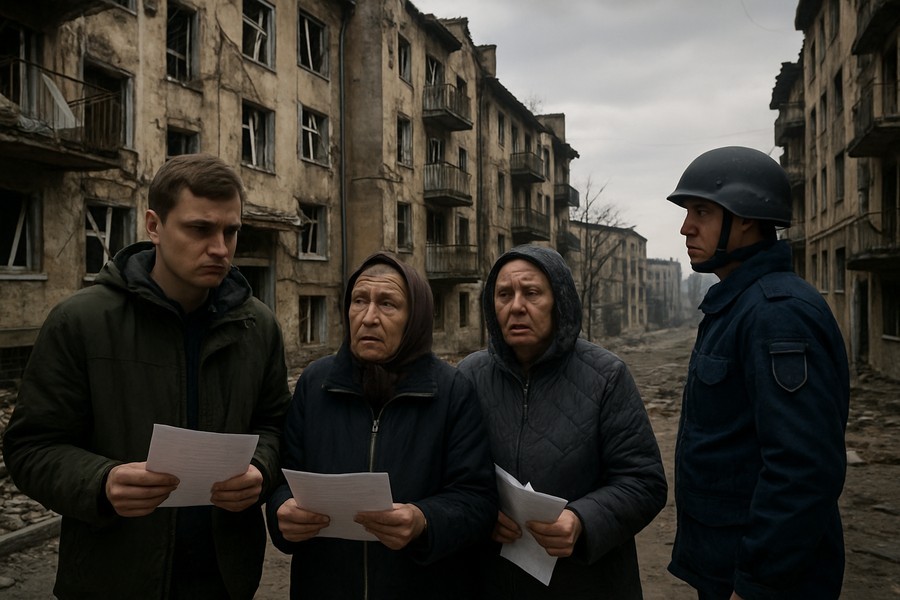
Residents of Mariupol, which has been under Russian control for four years, are now living under the shadow of a new law. The law stipulates that residents must obtain Russian title deeds for their properties. If they fail to do this, their property may be seized by the authorities. This controversial law, human rights defenders argue, is designed to solidify Russian control over the occupied territories and to create uncertainty over Ukraine's future territorial claims.
Challenging New Rules
The new rules which the Ukrainians must follow are seen as intentionally burdensome by human rights activists. There is a growing belief that the goal of these laws is to take houses from Ukrainians and hand them over to Russians moving into the territories. If a wave of evictions takes place, it could worsen an already severe housing crisis. This is a stark contrast to the positive image of Mariupol under Russian rule that has been portrayed.
One resident, Yelena (who has chosen to withhold her last name for safety reasons), has found herself unable to obtain a Russian deed. The property she resides in is registered under her daughter's name. Application for these deeds must be done in person, however, Yelena's daughter, who resides in Poland, was unable to enter Russia. She attempted to travel to Moscow in 2024, with plans to continue to Mariupol but was prevented from doing so at the airport. She was labeled a "security risk" and banned from entering Russia for the next 20 years.
Uncertainty Looms
"As long as my daughter cannot come here, she cannot register this property under the Russian law," Yelena, 53, said in a phone conversation. "That means they could kick me out of my home any time now."
The reasons for her daughter's denied entry remain a mystery. However, Kseniya Kvitka, a researcher at a renowned human rights organization, has stated that it is common for Russia to deny entry to Ukrainians who are looking to address property-related issues.
With this new law, the future of Mariupol's residents remains uncertain. Those who survived the brutal siege and managed to hold on to their homes are now faced with the possibility of losing them due to the intricate legal requirements of a foreign power.
Although the residents of Mariupol are facing an uphill battle, human rights advocates around the world are taking notice and voicing their concerns. The hope is that with international attention and pressure, the situation in this Ukrainian city may yet improve.