
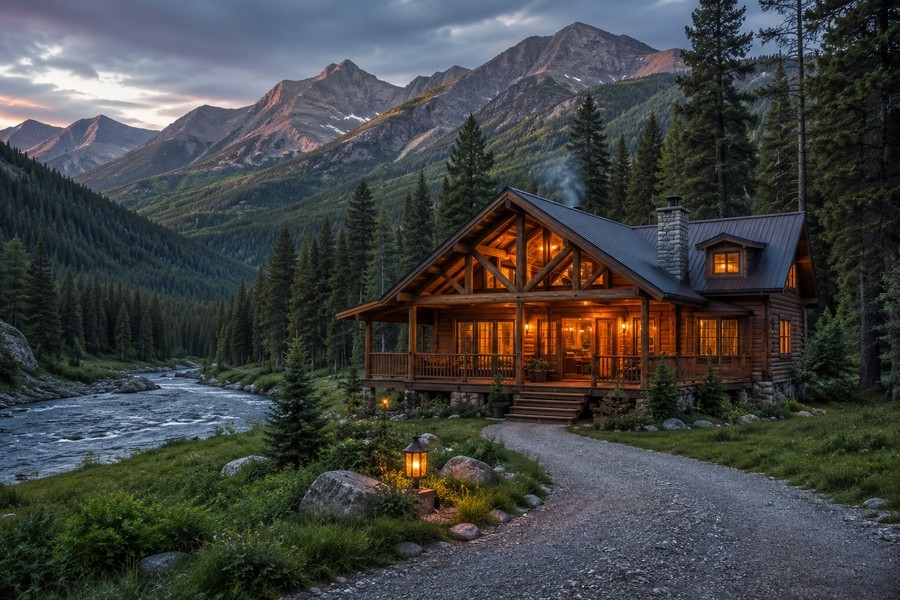
How Short-Term Vacation Rentals Impact the Local Economy and Housing
Short-term vacation rentals have become a major source of income for many families in Montana. A recent study by a university research group shows that these rentals generated more than $755 million in visitor spending over a single year, boosting local businesses and supporting thousands of jobs across the state.
While much of this economic boost is concentrated near popular natural landmarks, communities of all sizes are seeing some benefits. Visitors who choose vacation rentals tend to stay longer and spend their money differently than the average traveler.
Where Visitors Spend Their Money
About 60% of all vacation rental activity takes place in and around Bozeman and Kalispell. These areas serve as gateways to major national parks, making them prime spots for tourists. However, other cities also benefit from these rentals, often hosting business travelers who need a place to stay for work.
The study highlights a unique trend among people who stay in short-term rentals. Compared to typical tourists, these guests usually stay in one place longer and do less driving. Because they are not traveling as far by car, they spend less money on gasoline and more money on lodging and local activities. In fact, out of the $754.5 million spent by these guests, $510.5 million went directly toward their accommodations.
A major booking platform contributed $30,000 to help fund this research, which looked closely at how these rentals affect communities. The findings show that after paying for lodging, guests spent another $243.95 million on other local goods and services, including:
- $79.71 million on arts, entertainment, and recreation
- $61.9 million on dining out and food services
- $31.86 million on grocery and beverage stores
- $31.53 million on gasoline
- $22.39 million on retail shopping
A Major Boost for Families and Jobs
The money spent on lodging often goes directly into the pockets of local households. During the year studied, visitors booked more than 430,000 stays. This level of activity supported several key areas of the state's economy:
- $356 million in direct rental income for property hosts
- 5,559 jobs created or supported across the state
- $277 million in total wages for local workers
- $797 million added to the state's gross domestic product
For many local residents, renting out a spare room or a second property provides a helpful financial cushion. For those who rented out single rooms or shared spaces, the typical monthly income ranged from $586 to $1,648. Researchers noted that hosts often use this extra money to pay for basic needs, such as healthcare or their own housing costs.
The state also benefits from the taxes collected on these rentals. In total, short-term rentals generated $47.6 million in tax revenue. This includes $40.8 million from lodging and tourism taxes, along with $6.7 million from local resort taxes, which are charged in about one-fifth of the rental locations.
Looking at the Local Impact by Region
The economic benefits of these rentals vary by county. The areas with the highest visitor spending include:
- Flathead County: $207 million
- Gallatin County: $152.2 million
- Madison County: $85.8 million
- Park County: $64.3 million
Even regions with less tourism saw positive results. In the central and eastern parts of the state, visitors booked over 40,000 nights. This smaller amount of activity still supported an estimated 112 jobs, brought in $4.3 million in wages, and added $12 million to the local economy.
The Conversation Around Housing Affordability
While the economic benefits are clear, short-term rentals can also cause debate. Many communities are currently facing challenges with high housing costs and a lack of affordable options. Some residents worry that vacation rentals take homes away from long-term renters and homebuyers.
There are now more than 21,000 properties listed on popular rental websites in the state, run by about 8,000 different hosts. However, housing experts suggest that vacation rentals are only one part of a much larger issue.
In one high-cost resort town, a local housing director shared that registered short-term rentals make up about 7% to 8% of all housing units. At the same time, nearly 20% of the homes in that town are classified as "dark homes," which means they are owned by people who only use them seasonally. The director noted that these second homes actually have a larger impact on housing prices and availability than vacation rentals do. While banning short-term rentals might free up a few properties, it would not solve the wider problem of affordable housing.
Without the option to rent properties on a short-term basis, some owners would keep their homes empty for most of the year. Others might choose to offer medium-term rentals for guests staying between one and six months. A state business leader concluded that these rentals are a vital part of the tourism market, helping more visitors experience the state while supporting local families and businesses.