
Comparing Two Power Giants: The Choice Between a Traditional and a Hybrid Energy Company
As the world's thirst for electricity continues to grow, the focus is shifting towards cleaner energy options. Power companies aren't just dull investment opportunities anymore; there's substantial growth potential throughout the entire energy sector. Two companies that are poised to make the most out of these opportunities have distinct business models.
A Daring Bet on the Unregulated Power Market
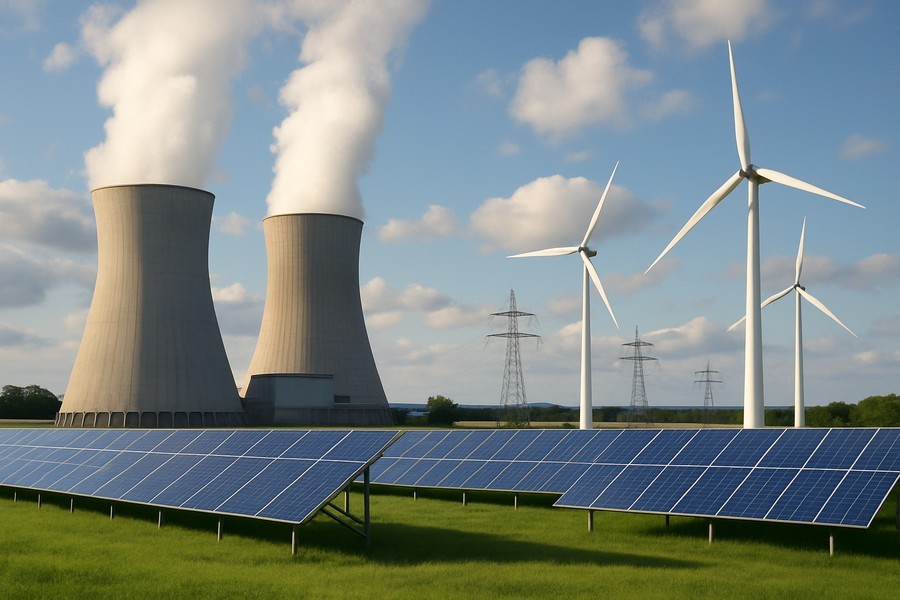
The first company owns a significant number of nuclear power plants and has recently expanded into natural gas electricity generation. These energy sources are more environmentally friendly than coal. However, the real twist is that this company operates without regulation, selling its electricity on the open market. While it relies on long-term contracts, the prices it sets can fluctuate based on demand. With high demand expected in the foreseeable future, this company is set to thrive.
Investors might find this company appealing due to its exposure to nuclear power or its unregulated business model. It's a bold choice within the utility sector. The company's stock has seen a 40% increase over the past year, but it's also seen a 20% drop from its highest point within the past 52 weeks. It's not a cheap investment, but it's less expensive than it was at its peak.
A Safer Investment with a Dual Approach
The second company comes across as a more feasible option for those seeking a steady income from their investments. This company has consistently increased its dividend for several years, offering an attractive yield of 2.6%, significantly higher than the 0.5% yield of the first company. This business is less risky, primarily due to its extensive regulated electricity operations in a state that sees a steady influx of new residents, ensuring steady growth.
But this isn't just a safe bet. The company has a growth component, too. Apart from its regulated operations, it's built one of the world's largest solar and wind power businesses. As clean energy becomes a more sought-after power option, this combination of a regulated utility and a clean energy behemoth is predicted to support a 6% annual dividend growth over the next few years.
Which Powerhouse is Right for You?
Both companies have attractive features. If you're a bold investor, you might find the first company more enticing. But if you're a conservative investor who values steady income, the second company could be a better fit. Regardless, both companies are in a strong position to capitalize on the growing demand for electricity.