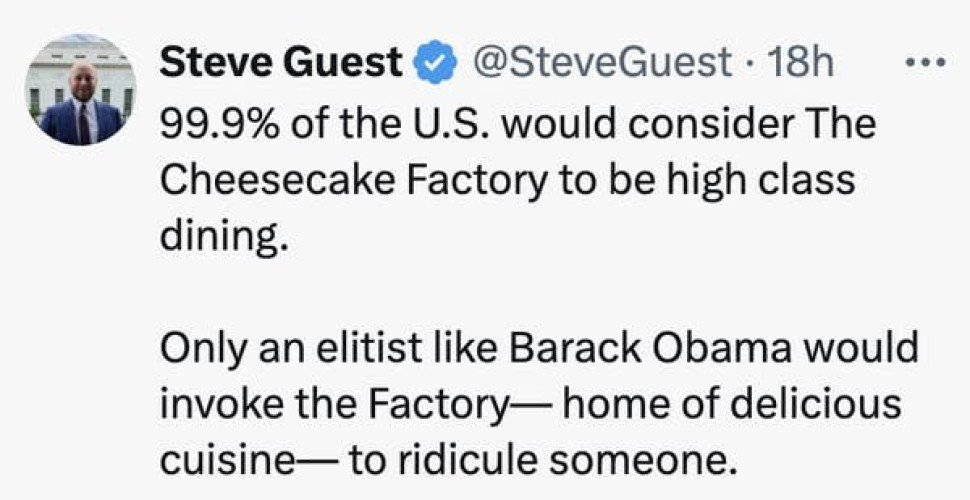
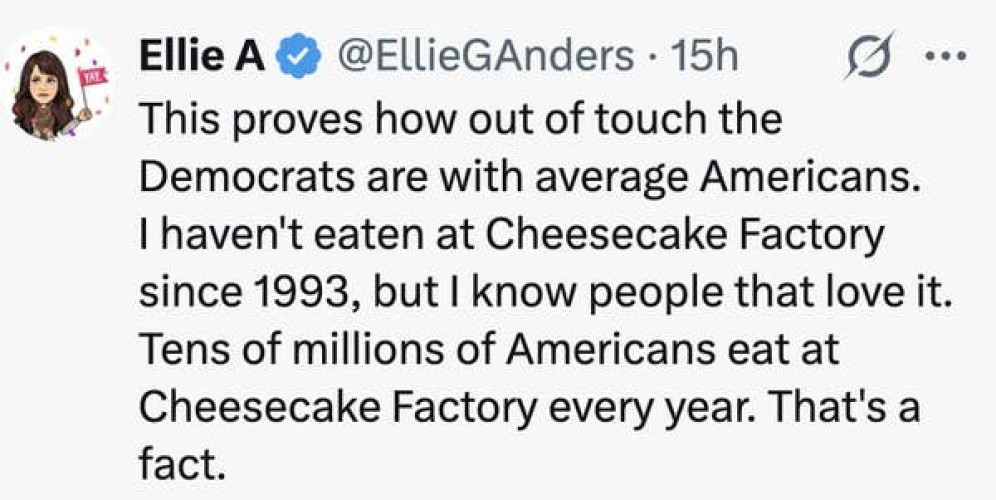
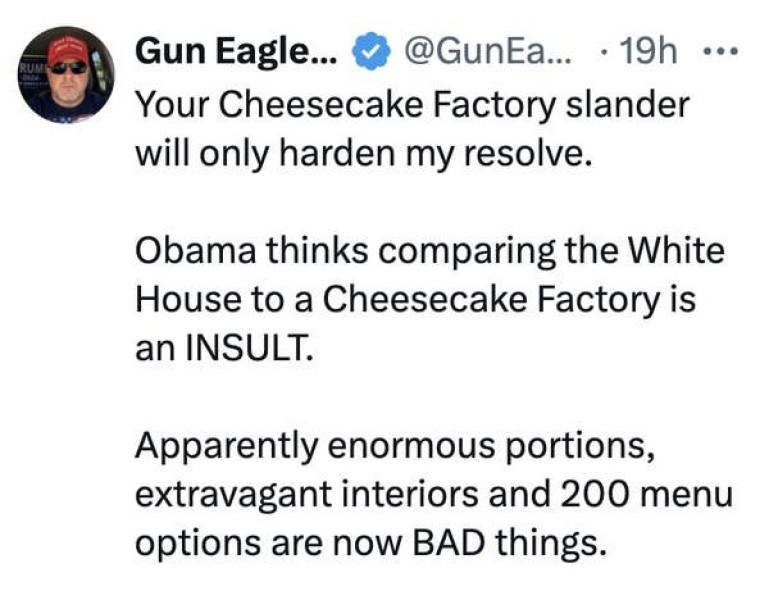
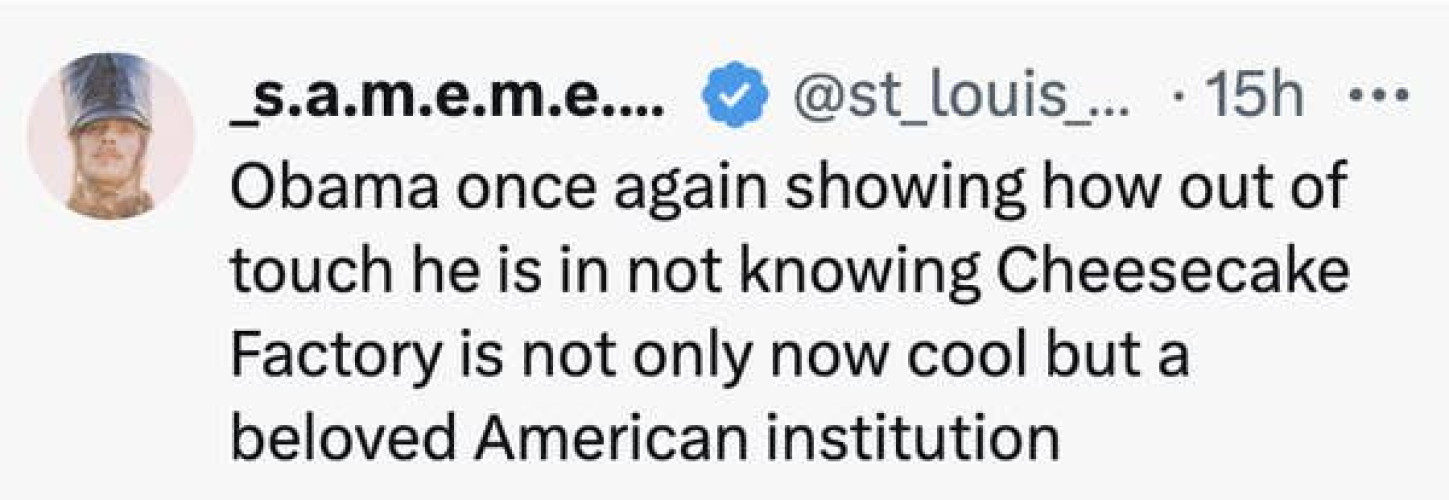
Barack Obama compared Donald Trump’s White House to “Saddam Hussein opened up a Cheesecake Factory,” and somehow that sentence turned a chain restaurant into a full-blown MAGA battlefield. Yes, seriously: somewhere between the giant menu, the brown bread, and the 250-calorie dressing options, America apparently found its next political crisis.
The joke is so specific that it almost paints itself. You can see it immediately: Saddam Hussein, dictator of Iraq, wandering through the White House with a stack of Cheesecake Factory menus, deciding which chandeliers match the avocado egg rolls. It is not a normal comparison. It is not subtle. It is also exactly the kind of image that gets stuck in your head and refuses to leave.


The Joke That Started It All
Obama’s line was aimed at the way Trump’s White House has been made to look and feel. His description was blunt: “He’s got the White House looking like Saddam Hussein opened up a Cheesecake Factory.”
That is the whole missile. No lengthy setup. No complicated policy argument. Just Saddam Hussein, a famous fast-casual restaurant, and the White House somehow mashed together into one deeply cursed interior-design vision.
And honestly, the bizarre pairing is what makes it work. If Obama had said the White House looked like a hotel lobby, nobody would have cared. If he had said it looked like an expensive steakhouse, people might have nodded and moved on. But Saddam Hussein opening a Cheesecake Factory? That is the kind of phrase that makes people stop mid-scroll and think, “Wait. What does that even look like?”
Suddenly, Cheesecake Factory Is Political
The strangest part is that Cheesecake Factory did absolutely nothing to deserve being dragged into this. It was just sitting there, minding its own business, offering enormous portions and a menu long enough to qualify as a short novel.
Then Obama said the name, and suddenly ordering chicken pasta became a statement. The restaurant, known for oversized plates, elaborate desserts, dark wood, dramatic decor, and a menu that seems to contain every food ever invented, was now being treated like a symbol in a political argument.
Not the Cheesecake Factory becoming a political battleground.
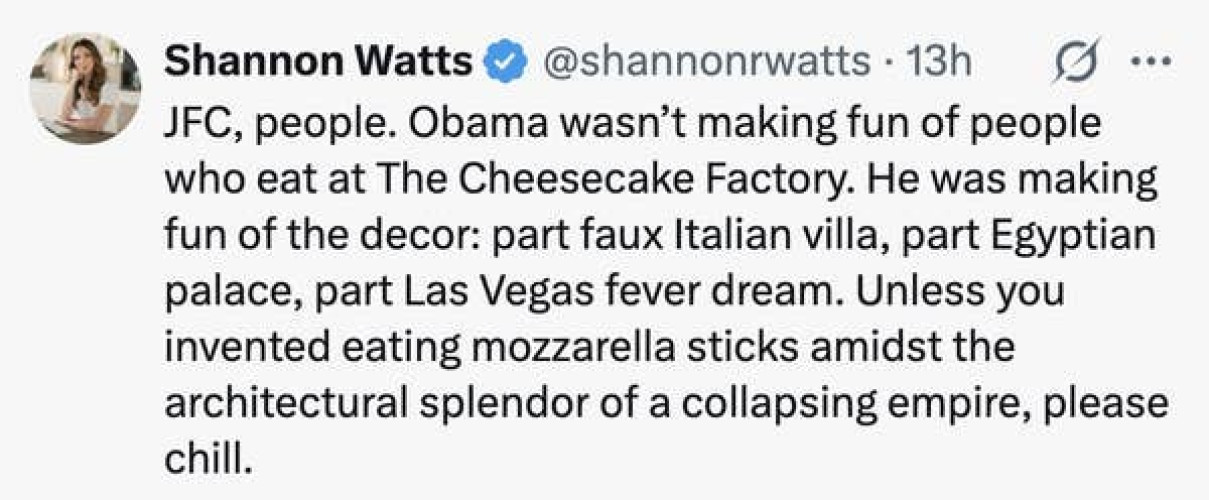
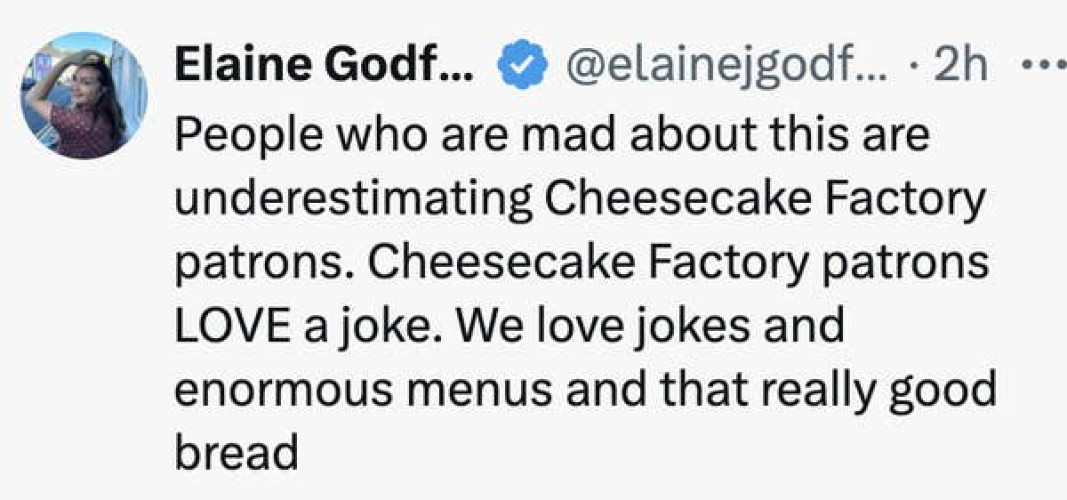
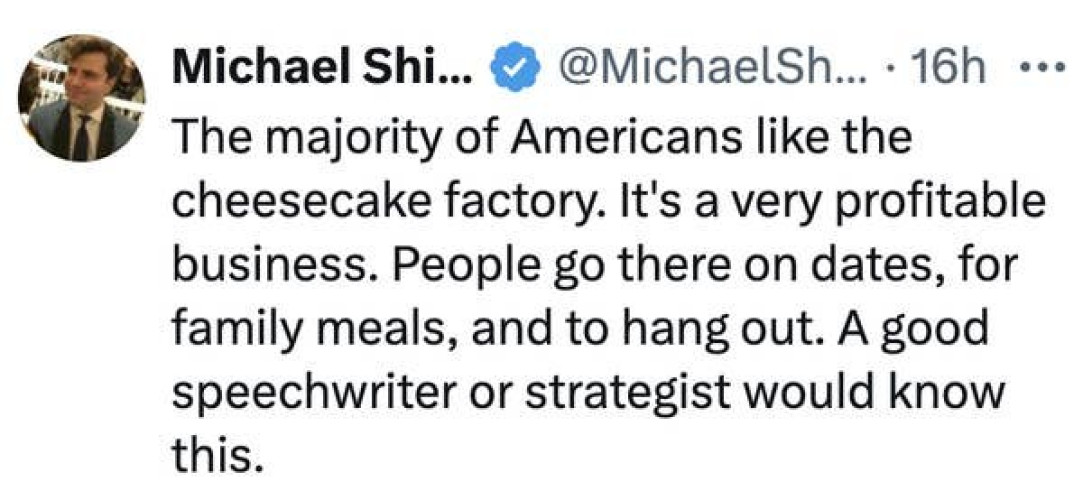
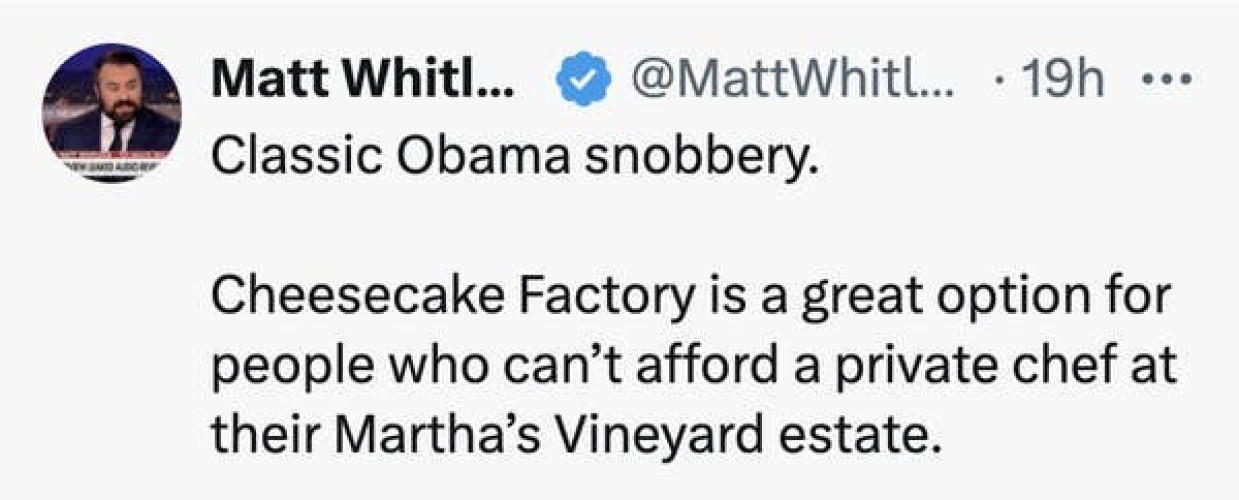
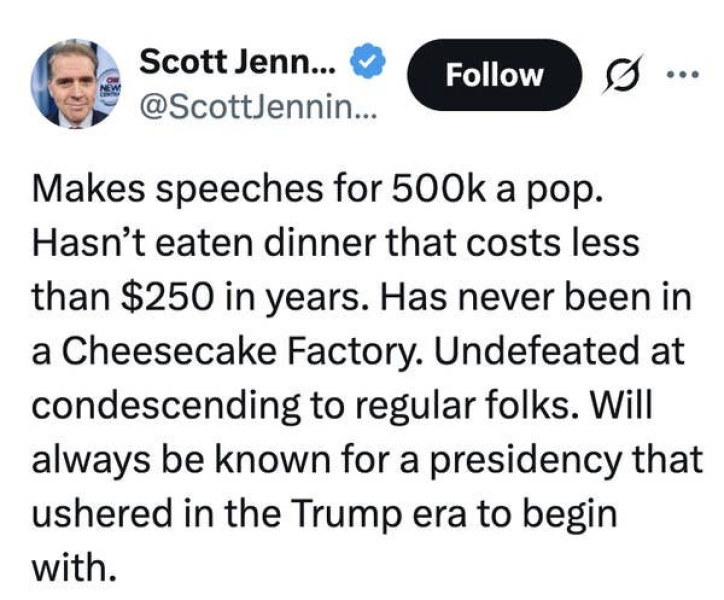
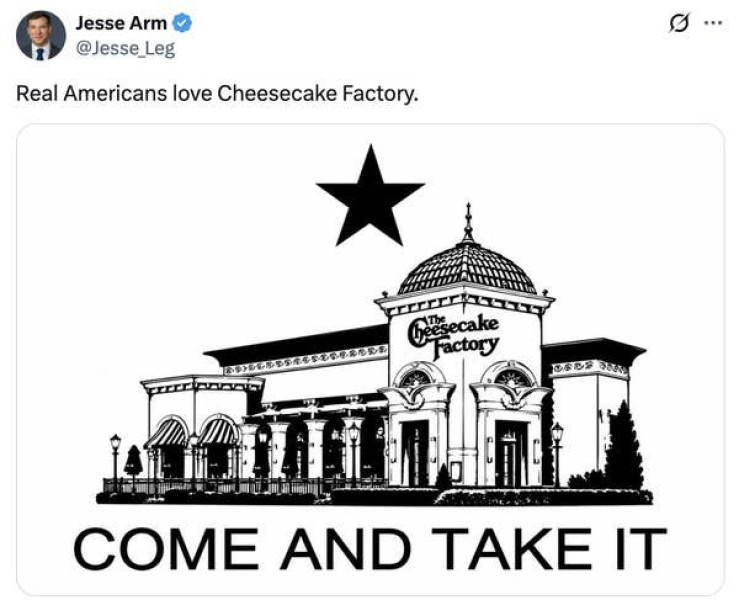
That sentence sounds ridiculous because the entire situation is ridiculous. Yet this is where the MAGA reaction apparently landed: not simply on whether Obama’s joke was fair, but on the fact that Cheesecake Factory had been used as part of the punchline. The restaurant became collateral damage in a fight over Donald Trump, Barack Obama, the White House, and the aesthetics of power.
Picture the Interior
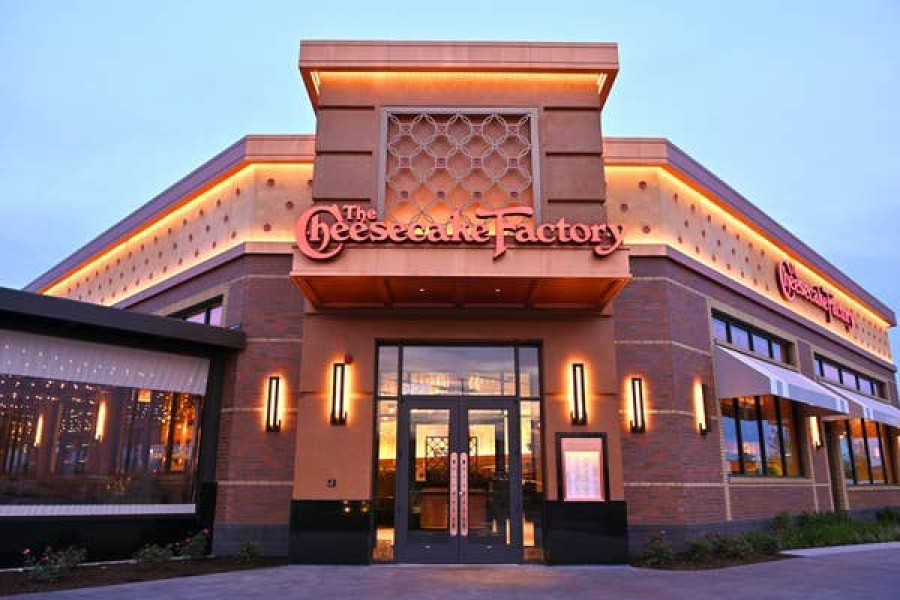
To understand why the line is so effective, imagine the visual collision. Saddam Hussein brings authoritarian grandeur, excessive portraits, intimidating marble, and the general feeling that someone is always watching. Cheesecake Factory brings towering cheesecakes, giant salads, decorative plates, and enough ornamental trim to make a normal dining room feel like it is trying very hard to impress you.
Put those two things together and you get a building that does not merely look expensive. It looks like it has something to prove.
There is probably gold somewhere. There are definitely too many patterns. The lighting is dramatic for no obvious reason. Every surface seems determined to announce that it cost money. A person enters expecting a government building and instead gets handed a menu with 250 items and asked whether they want brown bread.
That is the mental image Obama’s joke creates, and once it is there, it is almost impossible to delete. You can argue about politics. You can argue about Donald Trump. You can argue about Barack Obama. But the imaginary Saddam Hussein Cheesecake Factory has already taken over the room.
MAGA’s Unexpected Problem
The reaction became especially strange because the joke was not really about cheesecake. It was about presentation, excess, and the feeling that the White House had been turned into something theatrical and overdone.
But jokes do not always land where the person telling them aims. Instead of staying focused on the larger point, the response spiraled toward the restaurant itself. Suddenly, people were debating whether Cheesecake Factory was being insulted, whether the comparison made sense, and whether Obama had crossed some invisible line by connecting a beloved chain restaurant to Saddam Hussein.
It is a very modern kind of political meltdown: everyone is furious, but the object at the center of the argument is a place where you can order a burger, four kinds of pasta, a slice of chocolate cake, and probably enough leftovers to feed your family for three days.
The Menu Is Practically a Supporting Character
There is another reason this comparison is so funny: Cheesecake Factory is already famous for being a lot. The menu is famously huge. The portions are famously generous. The restaurant decor is famously dramatic. Even the name promises a level of excess that most restaurants would avoid.
Nobody hears “Cheesecake Factory” and imagines clean lines, quiet restraint, or a minimalist Scandinavian dining room. You expect spectacle. You expect a menu that requires concentration. You expect to need a few minutes just to decide whether you are in the mood for Italian, Mexican, American, seafood, brunch, or dessert before dinner.
So when Obama added Saddam Hussein to that recipe, he did not need to explain the visual. The audience supplies it automatically. It is dictatorship meets dinner theater, with cheesecake waiting at the end.
Obama Knew Exactly What He Was Doing
Barack Obama has always been capable of delivering a line with a calm expression and letting the audience deal with the explosion afterward. This joke has that quality. It is casual on the surface, but the image is so strange and so sharp that it keeps getting funnier the more you examine it.
There is no attempt to make the comparison sound polished. Obama did not reach for a dignified metaphor. He did not say the White House looked “ornate” or “overly lavish.” He chose a dictator and a restaurant chain and trusted everyone to understand the mood.
That is why it traveled so quickly. It is easy to repeat. It has recognizable names. It contains a built-in picture. And it leaves just enough room for people to argue about whether it is clever, cruel, accurate, or completely unhinged.
America’s Most Unexpected Lesson
Ultimately, this whole episode teaches us something important: political arguments can now break out over literally anything. A speech, a photograph, a sign, a fast-food restaurant, a dessert menu. Nothing is too ordinary to become a symbol, and nothing is too silly to trigger a serious reaction.
One minute, people are discussing the White House. The next, they are defending Cheesecake Factory from being dragged into a comparison involving Saddam Hussein. Somewhere, someone is probably insisting that the restaurant has been unfairly treated. Somewhere else, someone is trying to explain what exactly the White House would order for dessert.
And that may be the funniest part. The original joke was about Donald Trump’s White House, but the lasting image belongs to a fictional restaurant run by Saddam Hussein. It has an enormous menu, questionable taste, extremely confident decor, and a cheesecake list longer than most political platforms.
God bless America, where even a restaurant chain can become the front line of a political war.
Was Obama’s Cheesecake Factory comparison hilarious, completely over the top, or so bizarre that it somehow became perfect? Would you have laughed, argued, or immediately started designing the menu?
The joke is so specific that it almost paints itself. You can see it immediately: Saddam Hussein, dictator of Iraq, wandering through the White House with a stack of Cheesecake Factory menus, deciding which chandeliers match the avocado egg rolls. It is not a normal comparison. It is not subtle. It is also exactly the kind of image that gets stuck in your head and refuses to leave.
The Joke That Started It All
Obama’s line was aimed at the way Trump’s White House has been made to look and feel. His description was blunt: “He’s got the White House looking like Saddam Hussein opened up a Cheesecake Factory.”
That is the whole missile. No lengthy setup. No complicated policy argument. Just Saddam Hussein, a famous fast-casual restaurant, and the White House somehow mashed together into one deeply cursed interior-design vision.
And honestly, the bizarre pairing is what makes it work. If Obama had said the White House looked like a hotel lobby, nobody would have cared. If he had said it looked like an expensive steakhouse, people might have nodded and moved on. But Saddam Hussein opening a Cheesecake Factory? That is the kind of phrase that makes people stop mid-scroll and think, “Wait. What does that even look like?”
Suddenly, Cheesecake Factory Is Political
The strangest part is that Cheesecake Factory did absolutely nothing to deserve being dragged into this. It was just sitting there, minding its own business, offering enormous portions and a menu long enough to qualify as a short novel.
Then Obama said the name, and suddenly ordering chicken pasta became a statement. The restaurant, known for oversized plates, elaborate desserts, dark wood, dramatic decor, and a menu that seems to contain every food ever invented, was now being treated like a symbol in a political argument.
Not the Cheesecake Factory becoming a political battleground.
That sentence sounds ridiculous because the entire situation is ridiculous. Yet this is where the MAGA reaction apparently landed: not simply on whether Obama’s joke was fair, but on the fact that Cheesecake Factory had been used as part of the punchline. The restaurant became collateral damage in a fight over Donald Trump, Barack Obama, the White House, and the aesthetics of power.
Picture the Interior
To understand why the line is so effective, imagine the visual collision. Saddam Hussein brings authoritarian grandeur, excessive portraits, intimidating marble, and the general feeling that someone is always watching. Cheesecake Factory brings towering cheesecakes, giant salads, decorative plates, and enough ornamental trim to make a normal dining room feel like it is trying very hard to impress you.
Put those two things together and you get a building that does not merely look expensive. It looks like it has something to prove.
There is probably gold somewhere. There are definitely too many patterns. The lighting is dramatic for no obvious reason. Every surface seems determined to announce that it cost money. A person enters expecting a government building and instead gets handed a menu with 250 items and asked whether they want brown bread.
That is the mental image Obama’s joke creates, and once it is there, it is almost impossible to delete. You can argue about politics. You can argue about Donald Trump. You can argue about Barack Obama. But the imaginary Saddam Hussein Cheesecake Factory has already taken over the room.
MAGA’s Unexpected Problem
The reaction became especially strange because the joke was not really about cheesecake. It was about presentation, excess, and the feeling that the White House had been turned into something theatrical and overdone.
But jokes do not always land where the person telling them aims. Instead of staying focused on the larger point, the response spiraled toward the restaurant itself. Suddenly, people were debating whether Cheesecake Factory was being insulted, whether the comparison made sense, and whether Obama had crossed some invisible line by connecting a beloved chain restaurant to Saddam Hussein.
It is a very modern kind of political meltdown: everyone is furious, but the object at the center of the argument is a place where you can order a burger, four kinds of pasta, a slice of chocolate cake, and probably enough leftovers to feed your family for three days.
The Menu Is Practically a Supporting Character
There is another reason this comparison is so funny: Cheesecake Factory is already famous for being a lot. The menu is famously huge. The portions are famously generous. The restaurant decor is famously dramatic. Even the name promises a level of excess that most restaurants would avoid.
Nobody hears “Cheesecake Factory” and imagines clean lines, quiet restraint, or a minimalist Scandinavian dining room. You expect spectacle. You expect a menu that requires concentration. You expect to need a few minutes just to decide whether you are in the mood for Italian, Mexican, American, seafood, brunch, or dessert before dinner.
So when Obama added Saddam Hussein to that recipe, he did not need to explain the visual. The audience supplies it automatically. It is dictatorship meets dinner theater, with cheesecake waiting at the end.
Obama Knew Exactly What He Was Doing
Barack Obama has always been capable of delivering a line with a calm expression and letting the audience deal with the explosion afterward. This joke has that quality. It is casual on the surface, but the image is so strange and so sharp that it keeps getting funnier the more you examine it.
There is no attempt to make the comparison sound polished. Obama did not reach for a dignified metaphor. He did not say the White House looked “ornate” or “overly lavish.” He chose a dictator and a restaurant chain and trusted everyone to understand the mood.
That is why it traveled so quickly. It is easy to repeat. It has recognizable names. It contains a built-in picture. And it leaves just enough room for people to argue about whether it is clever, cruel, accurate, or completely unhinged.
America’s Most Unexpected Lesson
Ultimately, this whole episode teaches us something important: political arguments can now break out over literally anything. A speech, a photograph, a sign, a fast-food restaurant, a dessert menu. Nothing is too ordinary to become a symbol, and nothing is too silly to trigger a serious reaction.
One minute, people are discussing the White House. The next, they are defending Cheesecake Factory from being dragged into a comparison involving Saddam Hussein. Somewhere, someone is probably insisting that the restaurant has been unfairly treated. Somewhere else, someone is trying to explain what exactly the White House would order for dessert.
And that may be the funniest part. The original joke was about Donald Trump’s White House, but the lasting image belongs to a fictional restaurant run by Saddam Hussein. It has an enormous menu, questionable taste, extremely confident decor, and a cheesecake list longer than most political platforms.
God bless America, where even a restaurant chain can become the front line of a political war.
Was Obama’s Cheesecake Factory comparison hilarious, completely over the top, or so bizarre that it somehow became perfect? Would you have laughed, argued, or immediately started designing the menu?