
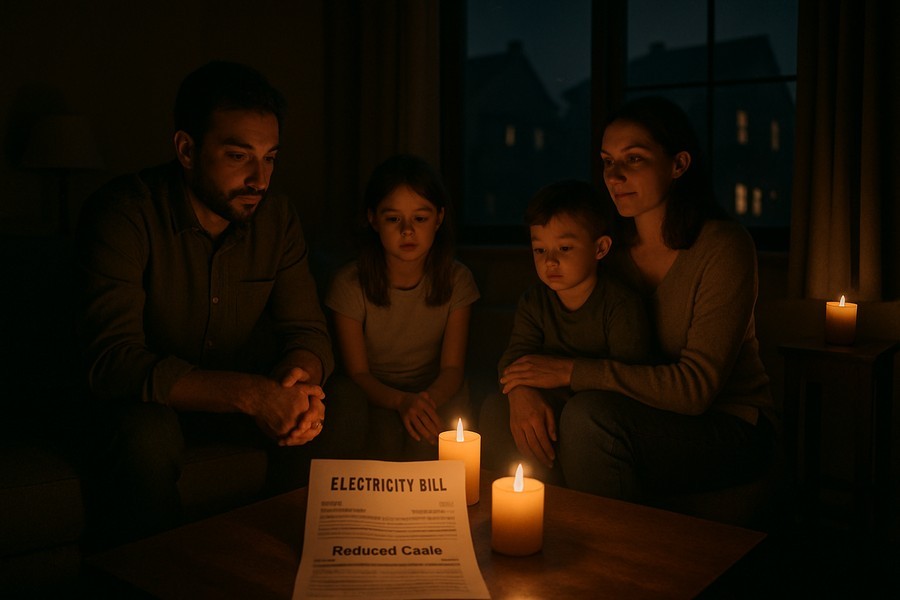
Energy Company Head Suggests Lower Bills in Exchange for Infrequent Power Outages
The leader of a major energy provider has recently made a surprising suggestion: some customers would potentially agree to occasional power outages if it meant their energy bills were significantly reduced.
It's been a year since the largest electrical blackout in Europe that left millions in Spain and Portugal without access to transportation, ATMs, phone and internet services. The head of this energy company suggests that expensive upgrades to the power grid, which are resulting in higher household bills, may not be necessary or desired by all consumers.
Lower Bills or Guaranteed Power?
The CEO suggests that many households, particularly in Spain where the company has a growing consumer base, would say they're okay with an occasional blackout if their electricity costs were 25% lower. He clarified that he is not promoting blackouts, but that if you were to ask customers if they would accept less reliable power in return for lower charges, a significant number would say yes.
The CEO believes that people today would be less upset about a power outage than they would have been in the past, given that they can continue to use their laptops and other battery-powered devices during an outage. He noted that the cost of home batteries, which can provide an additional power source during an outage, has dropped significantly, making them an affordable option for many households.
The Challenge of Clean Power
The CEO made these remarks during a discussion on the challenges of running a clean power system, such as the one in Spain, which relies heavily on renewable energy sources. The blackout that occurred in Spain and Portugal a year ago resulted in at least six deaths, including two people who couldn't operate their medical equipment.
He suggested that the main challenge in running a clean power system is controlling the cost of network investments. The company has expressed concerns about costly grid investments that could become unnecessary as new technologies emerge.
The Impact of High Energy Costs
Meanwhile, the average dual fuel bill is predicted to rise to almost £2,000 a year starting in July, while households are already struggling with record high debts. This increase in energy bills is due not only to the rising market price of gas, driven by conflicts in the Middle East, but also to the cost of improving power lines and networks.
The cost of these grid upgrades, which are funded through energy bills, has jumped from around £254 a year to £457 under the current cap. The company urges for more flexibility, warning that ignoring this factor could lead to overbuilding and increased costs for decades.
Renewable Energy: A Blessing or a Curse?
While initial criticism of renewable energy blamed Spain's reliance on wind and solar power for the blackout, an official report indicated that multiple factors were at play. This included issues with conventional power plants, renewables, and the power network.
Another energy expert at the same event stated that significant investments in the power grid are still needed to transmit electricity from its generation point to where people live. He anticipates a major shift in how households use electricity that doesn't involve blackouts.
As the debate between cost and reliability continues, consumers are left to weigh their own priorities. Would they accept an occasional blackout for a lower energy bill? Or is the assurance of uninterrupted power worth the cost?