
Debunking Stubborn Misconceptions about Vaccines
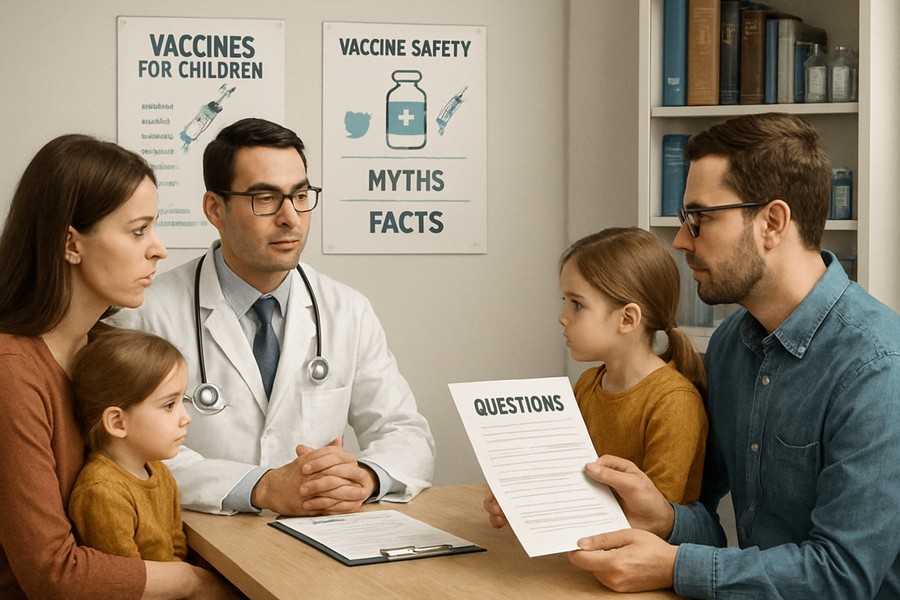
It's a common sight in medical offices all over the nation. Parents come in armed with a list of queries inspired by social media and well-intentioned friends. The topics seem scientific, the language borrowed from immunology, and the queries are backed by real studies. Yet, the conclusions are incorrect.
These parents are not ignorant but are victims of a complex network of misinformation that takes advantage of their natural parental instincts to protect their children and demand evidence. The issue is not that they are asking questions, but the problem lies in the false answers they are receiving.
The situation is further complicated by the fact that the head of the health department, known for promoting vaccine skepticism, has cut down the number of recommended childhood vaccines by a third. The resurgence of diseases previously eradicated from the United States, like measles, is testament to the severity of the situation. The stakes have never been higher, and the environment of information has never been more contaminated.
Common Myths about Vaccines
The following myths are not fringe theories. They are common misconceptions that I encounter frequently in both my clinical practice and public discourse. Each of these myths has been thoroughly investigated and debunked. However, they persist because false information travels faster than truth and these myths play upon genuine human fears.
Myth #1: 'Vaccines are not tested properly'
This claim manifests in various forms. Some say that vaccines were never tested against placebos or that vaccinated kids have never been compared with unvaccinated ones. Others claim that safety was only monitored for a few days. The common thread in all these claims is the narrowing of the definition of "evidence" to an unreachable standard and then declaring that this standard has not been met.
Such claims often confuse the entirety of scientific evidence with regulatory paperwork. Critics who claim a vaccine was "never tested against a placebo" usually refer to specific commercial approval filings that used an active comparator instead of saline as a placebo. They conveniently overlook foundational trials that established the safety of these vaccines. These trials were conducted before the current product's licensure, in different countries, and were published in peer-reviewed journals.
Myth #2: 'Vaccinated children and unvaccinated children have never been compared'
This claim is easily debunked. A study in Denmark involving more than half a million children directly compared autism rates between children vaccinated or not with the MMR vaccine. Another study from Germany compared over 17,000 children, finding no significant differences in allergies, ADHD, or epilepsy between vaccinated and unvaccinated groups. The only notable difference was that unvaccinated children had higher rates of vaccine-preventable diseases.
When presented with this evidence, critics often change their demands. They expect a single trial with a saline placebo, years of follow-up, and statistical power to detect rare events. However, no single trial can simultaneously meet all these requirements. By imposing such impossible standards, they are constructing a position that cannot be challenged.
Myth #3: 'The ingredients in vaccines are toxic'
Aluminum, Thimerosal, Formaldehyde - these names may sound alarming in isolation. However, toxicity depends on dosage, and the doses in vaccines are nowhere near the levels that cause harm. For instance, children receive approximately 4.4 milligrams of aluminum from vaccines by six months of age. For comparison, formula-fed infants ingest about 38 milligrams of aluminum in their first six months from formula alone.
Thimerosal, a mercury-containing preservative, was removed from childhood vaccines in the United States as a precautionary measure, and autism rates did not decrease as a result. Formaldehyde is used in some vaccines but is also part of normal metabolism. Everyone has formaldehyde detectable in their blood, and the level in circulation is approximately ten times higher than what any vaccine contains.
Myth #4: 'Too many vaccines too soon'
Parents often feel overwhelmed by the number of vaccines their children receive and assume a greater biological burden. However, what matters to the immune system is not the number of injections but the number of antigens - the proteins and molecules that immune cells recognize and respond to. A century ago, a single smallpox vaccine contained about 200 antigens. Today, the entire pediatric schedule exposes children to about 165 antigens total. That's a 95% reduction in antigenic load despite an increase in the number of diseases prevented.
The immune system is capable of dealing with thousands of antigens daily through environmental exposures. A few hundred additional antigens from vaccines pose no significant challenge.
Stay tuned as we debunk more common vaccine myths in the next article.