
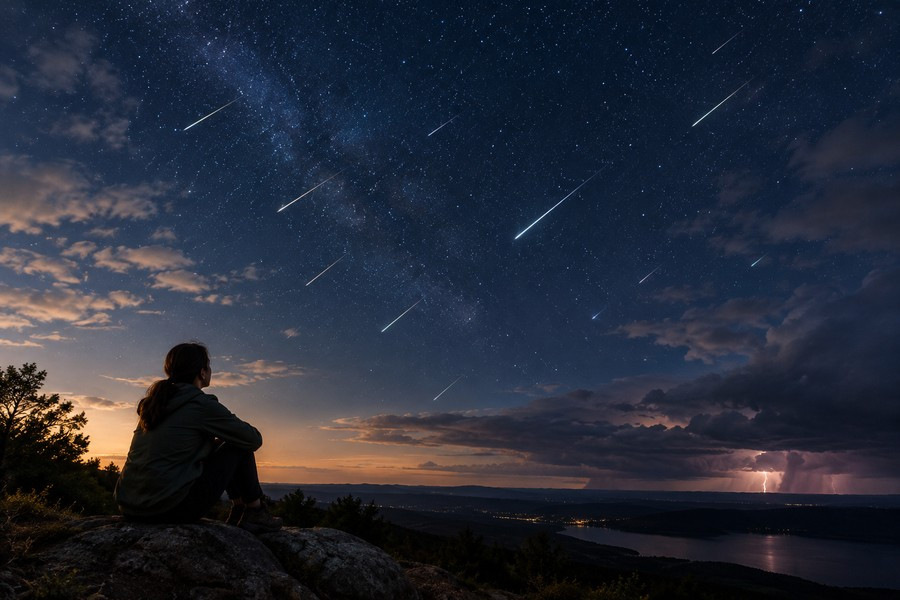
Where to Watch the Orionid Meteor Shower
The Orionid meteor shower reaches its busiest point this week. In many parts of the country, the sky may be clear enough for a good view. But clouds, rain, and storms could block the show in some areas.
The best chance to see the meteors will be from midnight until dawn. The shower is expected to peak Wednesday night and continue into the early hours of Thursday. Watching will mean staying up late or getting up before sunrise.
What Makes the Orionids Stand Out
Orionid meteors are known for being bright and fast. They race across the sky at about 41 miles per second. Some leave a glowing streak behind them, called a “train.” These trails may stay visible for several seconds or even a few minutes.
Clear skies are important, but they are not guaranteed. Conditions will vary across the country, and some areas could see clouds or stormy weather during the peak hours.
Sky Conditions Across the Country
Much of the central and eastern United States is expected to have clear skies early Thursday morning. That could give many people in those regions a chance to watch the meteors.
The outlook is less promising in parts of the Rockies and Southwest. Thick clouds may cover the Four Corners area, where several dark-sky parks are usually good places to see stars and meteors. This time, cloud cover could make viewing difficult.
Some parts of California, Oregon, and Washington may also have cloudy skies. There may be clear pockets along the West Coast, so local conditions will matter.
Storms Could Affect Western States
Clouds are not the only concern in the West. Moisture moving into the region could bring rain and storms. Flooding may be a risk on Wednesday and Thursday, making it hard or unsafe to spend time outside in some places.
Parts of California, Nevada, and the Four Corners region may have especially poor conditions for watching the shower. Anyone in those areas should consider both the sky and the weather on the ground before making plans.
East Coast Forecast Could Change
Much of the Mid-Atlantic and Northeast currently has a clearer outlook. However, a strong coastal storm is expected to develop offshore and remain in the area through the middle and later part of the week.
The storm’s path could push clouds inland. For now, the greatest chance of cloud cover is expected near New York City and in parts of New England. If the system shifts, the viewing outlook could change for nearby areas too.
How to Make the Most of the Show
If your local sky is clear, a few simple steps can make the viewing experience more comfortable:
- Choose a spot far from city lights and other bright sources.
- Bring a blanket, sleeping bag, or lawn chair so you can watch comfortably.
- Lie back with your feet pointing southeast.
- Give your eyes about 30 minutes to adjust to the darkness.
- Be patient. The shower can continue for hours, and meteors may appear at different times.
Check your local forecast before heading out. A dark location and clear sky offer the best chance to see the Orionids, but clouds or storms may change the plan in some regions.