
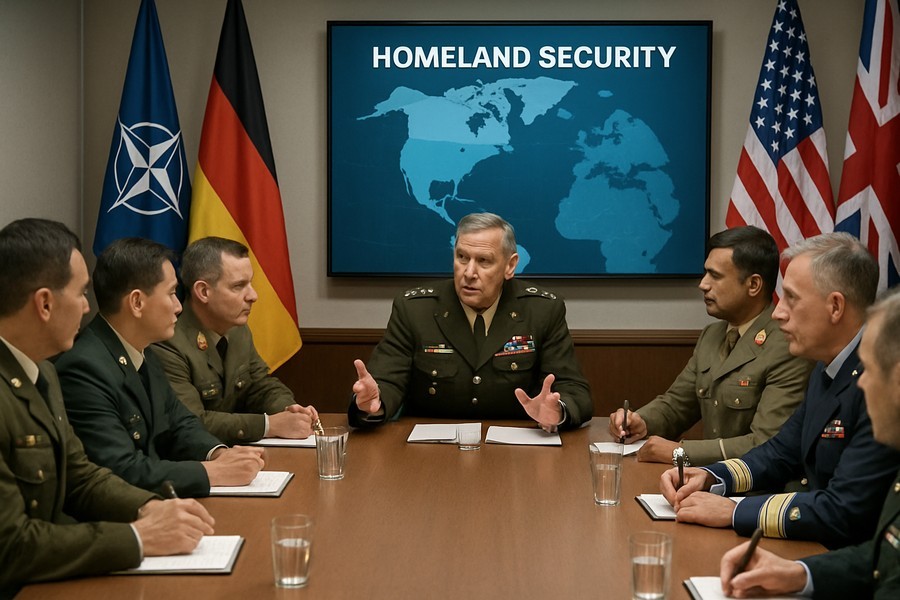
A Shift in Defense Priorities: Focus on Homeland Security
The United States plans on taking a different approach when it comes to supporting its allies, moving towards a more restricted assistance model. This change reflects the recent changes in the National Defense Strategy.
America First: The New Defense Strategy
The change in strategy indicates a significant shift in the United States' security priorities. The focus is now on ensuring the safety of the American homeland and the Western Hemisphere, instead of focusing primarily on China.
Prior versions of this strategy, which gets an update every four years, regarded China as the primary defense concern. However, the latest strategy suggests dealing with China through strength rather than confrontation.
President's Call for Shared Responsibility
This new direction aligns with recent statements by the President, who has been advocating for allies to shoulder more of the burden in dealing with threats from countries like Russia and North Korea.
The latest 34-page report follows a prior National Security Strategy report. That document suggested that Europe faced potential collapse and didn't view Russia as a direct threat to the U.S. Russia's response to that report was that it aligned with their own views.
Changes from Previous Strategy
In contrast, the 2018 strategy identified China and Russia as the main threats to U.S. security. Now, the strategy urges allies to step up their efforts, suggesting they have been too comfortable allowing the U.S. to fund their defense. However, it assures that this shift doesn't mean the U.S. is turning towards isolationism.
Instead, it suggests a focused and strategic approach to managing threats. The report indicates that U.S. interests have not been adequately considered in the past, and the nation does not wish to mix those interests with the rest of the world, particularly when the threat to an American is not the same as to someone else in the world.
The updated strategy expects allies, especially Europe, to lead efforts against threats that might not be severe to the U.S., but are more critical to them.
Current Threats and Responses
Russia, known for its invasion of Ukraine a few years ago, is described as a manageable threat to NATO's eastern members. The self-governing island of Taiwan, claimed by China, is not mentioned in this version of the strategy. However, the strategy emphasizes that the U.S. will not allow dominance over it or its allies by any entity, including China.
Last year, the U.S. sold a significant amount of arms to Taiwan, which triggered China to conduct military exercises around the island.
North Korea: A More Limited Role
The strategy also introduces a more restrained role for U.S. deterrence of North Korea, suggesting that South Korea is capable of taking primary responsibility for this task.
In the past year, the U.S. has taken actions like seizing Venezuelan President Nicolás Maduro, conducting strikes against alleged drug boats in the eastern Pacific and Caribbean, and pressuring U.S. allies to acquire Greenland.
Access to Key Areas
The strategy reassures that the U.S. military and commercial entities will maintain access to important regions, especially the Panama Canal, Gulf of America, and Greenland.
A New Approach: Realism Over Idealism
The strategy indicates that the approach of the current administration will differ significantly from past post-Cold War strategies. The new strategy will replace grandiose plans with a more pragmatic approach.
