
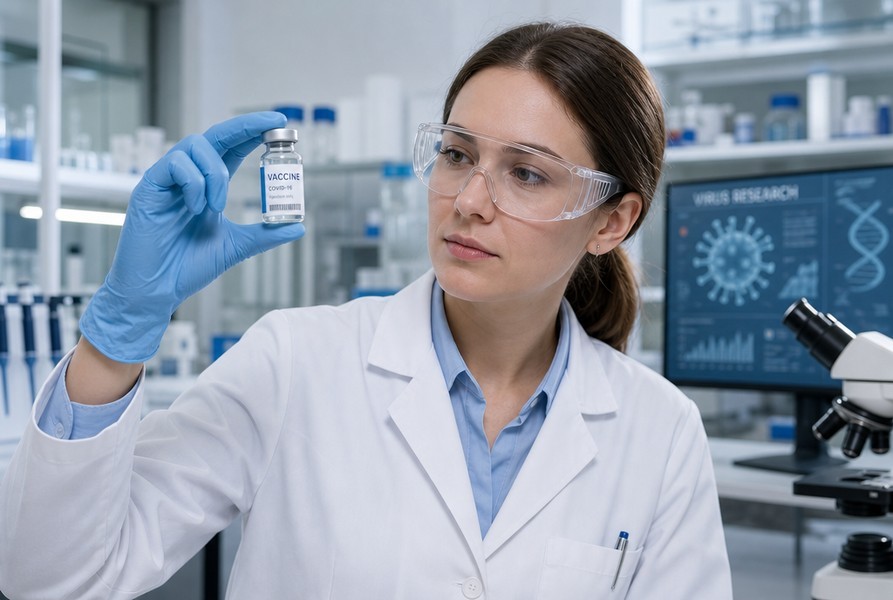
New Hope in the Fight Against Ebola as Testing Begins on a Next-Generation Vaccine
A new medical trial has officially started to test an experimental vaccine designed to fight a rare and deadly strain of the Ebola virus. This specific version of the virus is currently spreading in the eastern part of the Democratic Republic of the Congo, causing a severe public health emergency. Scientists hope this new vaccine will provide a powerful tool to help stop the spread of the disease and save lives in the future.
The first group of volunteers has already received the experimental vaccine in Canada. This initial study is a crucial first step in a long process to determine if the vaccine is both safe and effective for human use.
Using Proven Technology to Fight a New Threat
The experimental vaccine is built using a modern medical technology known as mRNA technology. This is the exact same genetic platform that scientists used to quickly develop highly effective vaccines during the recent global coronavirus pandemic. Instead of using a weakened or dead virus to trigger an immune response, this technology gives the body instructions on how to make a harmless piece of the virus. The immune system then learns to recognize and fight the real virus if the person is ever exposed to it.
Researchers are hopeful that this technology will work just as well against this specific type of Ebola as it did against other major health threats. Because the technology is highly adaptable, scientists can design and produce these vaccines much faster than traditional methods allowed in the past.
What Happens During the First Phase of Testing?
Before any new medicine can be given to the general public, it must go through several strict testing phases. The current study is a Phase 1 clinical trial, which is designed to answer basic but vital questions about the vaccine.
- Safety First: The primary goal of this phase is to make sure the vaccine does not cause dangerous side effects in humans.
- Tolerability: Researchers will monitor how well the human body handles the vaccine and look for common mild reactions, like soreness or a low fever.
- Small Group Testing: About 80 healthy volunteers are participating in this initial stage of the study.
If this first phase is successful and shows that the vaccine is safe, researchers will move on to larger studies, known as Phase 2 and Phase 3 trials. These later stages will test the vaccine on thousands of people to prove whether it actually prevents infection. Because of these strict safety steps, it will still take many months, or potentially several years, before the vaccine can be officially approved and distributed to the public.
The Urgent Need for a Solution
The current situation in Central Africa highlights why this research is so important. The specific strain of the virus active in the region is highly dangerous, and there are currently no approved vaccines available to treat or prevent it. This leaves doctors and health workers with very few tools to protect people living in the affected areas.
The impact of the current outbreak has been devastating:
- More than 3,700 people have fallen ill during this outbreak.
- Over 1,600 people have lost their lives to the disease.
- This has become the second-largest outbreak of this virus in recorded history.
Health experts note that this particular outbreak is spreading much faster than previous epidemics, including the massive crisis that affected West Africa between 2014 and 2016. Because the virus is moving so quickly, finding an effective vaccine has become an urgent global priority.
A Team Effort to Stop the Virus
Developing a new vaccine requires a massive amount of coordination and funding. This project is a collaborative effort between the biotechnology company that created the vaccine and a global non-profit health partnership dedicated to preventing epidemics. To support this vital work, the health partnership has committed up to $50 million to fund the early laboratory testing and this first human clinical trial.
Leaders from both organizations have expressed optimism about the start of the trial. The head of the vaccine development company called the first vaccinations a major milestone, noting that finding a defense against this specific virus strain is absolutely critical. They expressed deep gratitude to the study participants, researchers, and government health agencies who made the trial possible.
The leader of the global health partnership emphasized that every single day is critical when dealing with a fast-moving epidemic. They noted that having another vaccine candidate enter human trials gives health workers a much better chance of eventually finding a safe, reliable way to protect vulnerable communities and bring the deadly outbreak to an end.