
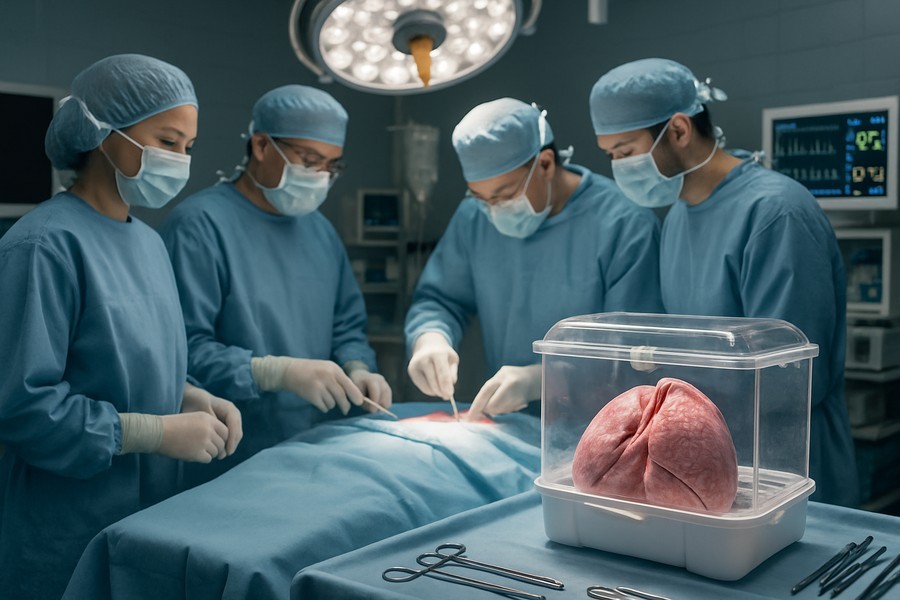
Unprecedented Achievement: Human Receives Pig Lung in Groundbreaking Experiment
For the first time ever, scientists have successfully transplanted a pig's lung into a human body. This marks a significant milestone in the field of xenotransplantation, which involves transferring organs from one species to another. Despite the eventual organ rejection, the procedure offers a glimmer of hope for future advancements in this medical technique.
The Experiment
The groundbreaking experiment took place in China, where a group of scientists used a genetically modified pig lung. The recipient was a man, declared brain-dead following a brain hemorrhage. His family consented to the procedure in writing. The transplant functioned effectively for nine days before the patient's body rejected it. This rejection was expected and provided the scientists with valuable insights for future procedures.
Xenotransplantation: A Potential Solution to Organ Shortage
There is a growing need for organ donors worldwide. Xenotransplantation, particularly using pig organs, has been explored as a potential solution to this problem. The pig organs, after genetic modification, are not meant to be permanent replacements but temporary 'life-bridges' until a human donor organ becomes available. Past trials using pig kidneys and livers have shown promise. However, the procedure still requires further research and development.
The Challenge of Lung Transplantation
Scientists led by surgeon Jianxing He confronted the unique challenges lungs present. Unlike other organs, lungs are exposed to the outside air and, therefore, face a higher risk of infection. They need to be a robust first line of defense against airborne pathogens and particles, calling for a complex immune response. The main aim of the experiment was not to achieve a successful long-term transplant. Instead, the scientists aimed to understand how the human immune system would react to a transplanted pig organ.
The Procedure
The pig used in the experiment was a Bama miniature pig, subjected to six CRISPR gene edits to minimize the patient's immune and inflammatory responses. The left lung of this pig was carefully placed into the patient's chest cavity and connected to their airways, arteries, and veins. The patient was also given several immunosuppressants, adjusted based on the observed changes in his body.
Results and Future Implications
The initial response was encouraging, with no signs of immediate hyperacute rejection. However, severe swelling was observed 24 hours post-transplant, likely due to the restoration of blood flow to the transplant area. On the third and sixth days, antibody-mediated rejection led to further tissue damage, resulting in primary graft dysfunction, a severe lung injury that often occurs within 72 hours of a transplant. This condition is the leading cause of death among lung transplant patients.
Despite these challenges, the experiment was deemed a success in that it demonstrated the possibility of transplanting a pig lung into a human while avoiding the dangers of hyperacute rejection. The researchers highlighted the need for further efforts to refine immunosuppressive regimens, enhance lung preservation strategies, and evaluate long-term graft function. The breakthrough experiment provides valuable insights into the physiological, immunological, and genetic barriers that need to be overcome for the success of future xenotransplantations.
