
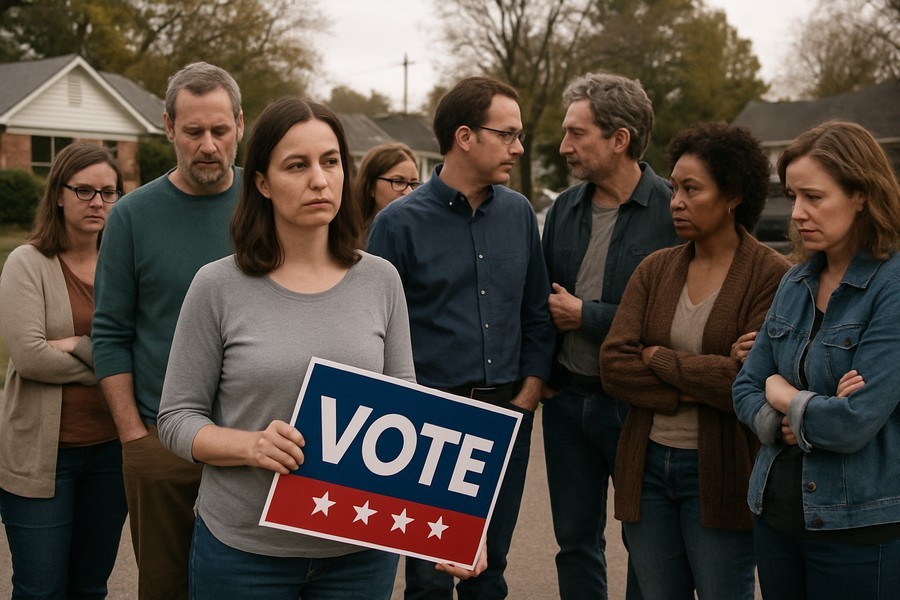
A Shift in Loyalty: Voters Rethinking Their Support for Previous President
There is a noticeable shift in the sentiment of voters who previously backed the former President, as recent turmoil over the Iran war continues to cause a decline in his approval ratings. This change in attitude seems to indicate a group that is often discussed but rarely seen: voters who now have doubts about their choice.
It's been clear for a while that a section of voters who backed the former President were not entirely sure about their decision. Recent surveys suggest that these doubts are growing into something more substantial.
The Evidence of Voting Regret
A recent poll conducted by a popular university in Massachusetts provides the most compelling evidence of this trend. Instead of directly asking participants if they regret voting for the former president, this survey offered more nuanced options such as "some concerns," "mixed feelings," and "some regrets."
Back in April, 74% of voters who had backed the former President dismissed these options and declared they were "very confident" in their choice. However, that percentage has now dropped to 62%.
Meanwhile, 38% of these voters chose a less certain option, double the 19% of voters who backed Kamala Harris and felt the same way. Additionally, 21% said they were still "confident" in their vote but had "some concerns."
The percentage of voters who refrained from expressing confidence in their vote — and admitted they had "mixed feelings" — has risen from 8% in April to 17% now.
Only 5% confessed they regret their vote and would change their decision if possible. However, this number seems to downplay the actual level of regret. For instance, if given the opportunity to change their vote from the 2024 election, only 84% of these voters said they would make the same choice. This is in stark contrast to the 91% of Harris voters who would stick to their decision.
Reading Between the Lines
While some might hesitate to label it as "regret," it's evident that 16% of these voters would choose differently if given the chance. Another survey conducted around the same time supports this conclusion and offers a more comprehensive picture of voter regret.
This survey found that 13% of the former President's voters either "strongly" (5%) or "somewhat" (8%) regretted their vote — double the number of Harris voters who felt the same way. Regret was particularly high among voters under 30 years old (17%) and Hispanics (16%).
To put it in perspective, the percentage of these voters expressing regret is twice the percentage of Harris voters, and also twice the percentage of the former President's voters who expressed the same sentiment in polls conducted last year.
The Potential Impact on Future Elections
These surveys suggest that between 1 in 8 and 1 in 6 of the former President's voters now regret their 2024 votes. If these percentages decided to abandon the GOP in the 2026 midterm elections, it could potentially lead to a significant victory for Democrats.
There's also evidence that the former President's base is beginning to waver in their support for him. Despite many self-proclaimed supporters backing the Iran war, it's evident that a considerable number of voters in his base do not.
Several voters who backed the former President in the 2024 elections now disapprove of him on several key issues. These are significant portions of his voter base who disapprove of him on some of the central issues he campaigned on. Whether these voters technically use the word "regret" is somewhat irrelevant at this point.
Further underlining this shift in sentiment, the approval rating among working-class White voters — a demographic that the former President had significant success with — has dropped substantially. While 63% approved of him in a poll conducted in February, that figure has now fallen to just 49%.