
Devastating 7.4 Magnitude Earthquake Strikes Colombia, Triggering National Emergency
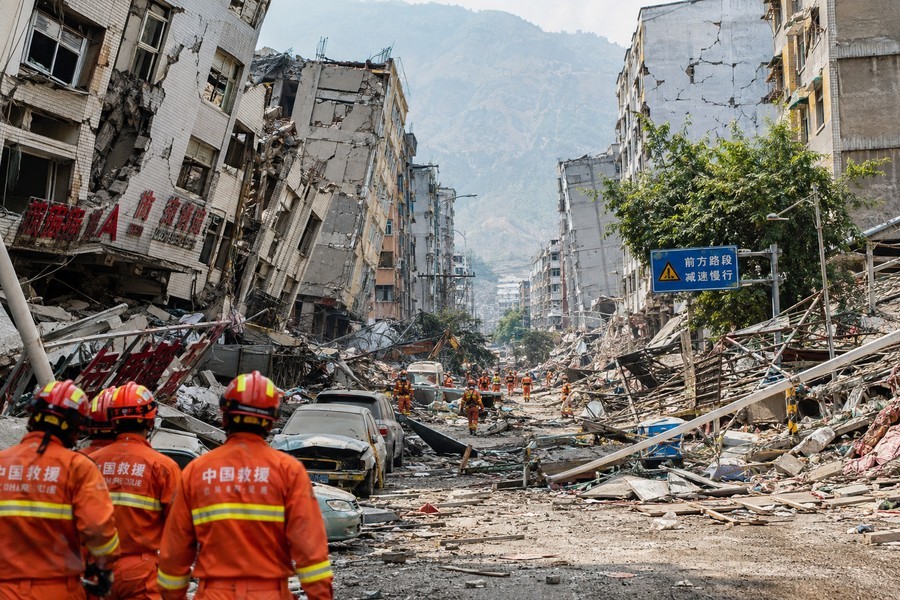
A powerful 7.4 magnitude earthquake has struck Colombia, causing widespread destruction across several major cities and remote mountain areas. The massive tremor collapsed buildings, trapped residents under rubble, and forced thousands to flee into the streets. In response to the widespread destruction, the country's recently inaugurated President, Abelardo de la Espriella, quickly declared a state of national disaster.
Rising Death Toll and Severe Damage in Urban Areas
Rescue teams are working around the clock as the loss of life continues to rise. At least 175 people have been confirmed dead across major cities. The hardest-hit urban areas face severe damage:
- Cali: This city has recorded 95 deaths, 949 injuries, and 239 people trapped beneath collapsed structures. Another 188 residents remain missing.
- Pereira: At least 55 people lost their lives in this city, which sits in the heart of the country's coffee-growing region.
- Quibdó and Manizales: These cities reported nine and five deaths, respectively.
Across the nation, five capital cities are currently under a red alert. The earthquake caused at least 86 buildings to completely collapse, while roughly 5,000 other structures suffered damage. Transportation has also been severely disrupted, with seven airports suspending operations. In one dramatic rescue in Pereira, emergency workers successfully freed 16 people who had been trapped in an aerial cable car system for six hours.
Terrifying Moments of Survival
For those who lived through the tremor, the experience was unforgettable. In Pereira, one resident, Liliana Perez Ocampo, had to quickly escape her home with her family. With local phone lines down, she faced terrifying hours of silence, not knowing if her young children at school were safe. Today, her family is homeless because their house is too damaged to enter.
In Medellín, Gabriel Mónaco was on the 25th floor of a high-rise when the shaking began. He described the violent movement of his bed as terrifying. He and his wife ran to safety in their bathroom during the two-and-a-half-minute tremor. Fortunately, his building was built with modern earthquake-resistant technology, which saved it from collapsing, unlike many older buildings in the area.
In the capital city of Bogotá, residents also felt the intense shaking. Martha Sepúlveda, who lives on the first floor, struggled to open her apartment door but managed to wheel her mother to safety outside. Another resident in the same neighborhood, Carlos Restrepo, described the fear that buildings would fall on top of them, expressing deep concern for his relatives living in Cali. Meanwhile, in Cali, survivors gathered near the ruins of a damaged church to pray and support one another.
Remote Communities Cut Off From Help
The epicenter of the earthquake was located near San José del Palmar in the Chocó department, a mountainous and economically vulnerable region. Because of the rugged terrain, many areas are only accessible by boat or plane, making rescue efforts extremely difficult.
In the Wounaan Indigenous Reserve of Buenavista, located in Chocó, local leader Victor Chamapuro shared that the community is in desperate need of assistance. The powerful shaking flattened all of their timber and metal-roofed homes, leaving families to sleep outdoors. One community member was injured, and the village is pleading for food and medicine. Reaching this remote reserve requires a challenging five-hour boat ride from the port city of Buenaventura, meaning emergency aid has not yet arrived.
Global Aid and the Threat of Hunger
International support is beginning to arrive to help with the recovery. The United States has pledged $15.5 million to fund emergency shelter, food, and safety assessments, while also assisting American tourists in the region.
The European Union has activated its satellite imaging system to help rescue teams locate survivors and map the damage. The European Union is also sending financial aid through the Red Cross and helping European citizens evacuate if their home countries do not have local embassies.
From the Vatican, Pope Leo XIV sent a message of condolence to the families of the victims. He offered prayers for those who died and expressed deep gratitude to the rescue teams working under dangerous conditions.
However, humanitarian experts warn that saving lives is only the first step. Nils Grede, a director for an international food assistance program, emphasized that food shortages will quickly become a major crisis. He pointed out that a similar disaster in neighboring Venezuela just two months earlier—where twin earthquakes killed over 6,000 people—demonstrated how quickly a lack of food can impact survivors.
The Science of the Colombian Shakes
Earthquakes are a known hazard in western Colombia because of the local geology. Geologist Julio Fierro Morales explained that the region sits on a subduction zone, where one of the Earth's tectonic plates slides beneath another. Specifically, the Nazca Plate in the Pacific Ocean is sinking under the South American Plate.
This specific event occurred at a depth of more than 100 kilometers (about 62 miles). Experts note this is very different from the recent deadly earthquakes in Venezuela. Those tremors were much shallower—less than 20 kilometers deep—and were caused by plates grinding sideways against each other rather than sinking.
This 7.4 magnitude earthquake is the strongest to hit Colombia in ten years. The area has experienced two aftershocks so far, measuring 2.8 and 4.8 in magnitude. Historically, this region has suffered from severe seismic activity before:
- In the late 1970s, a 7.2 magnitude earthquake in the same area killed dozens of people and injured hundreds.
- In the late 1990s, another devastating earthquake in the coffee-growing region claimed nearly 1,200 lives.