
President Donald Trump has responded angrily to reports that attendance at some of his recent political rallies appeared lower and calmer than in the past. The coverage focused on empty sections at events in Alabama and Ohio, describing the gatherings as more modest and less intense than the packed rallies that helped define his political rise. Trump rejected that description, defended the size and energy of his crowds, and warned that voters could deliver a major surprise in the midterm elections.
Reports Point to Smaller Sections
Trump has long placed great importance on the size of his political gatherings. His rallies are often built around large arenas, enthusiastic supporters, extended lines, and the expectation that every available seat will be filled. Reports from two recent events, however, described visible open areas inside the venues. The coverage did not claim that Trump had stopped attracting supporters. Instead, it said that he still drew large crowds, while noting that attendance did not appear as overwhelming as it had at some earlier events.
At the Alabama rally, reporters observed broad sections of empty seats. At the Ohio event, several parts of an upper seating level were reportedly unoccupied by the time Trump finished speaking. The Ohio gathering also included an uncomfortable moment involving gubernatorial candidate Vivek Ramaswamy. These details contributed to the broader description of rallies that remained significant but appeared less crowded and more subdued than the political events associated with Trump’s earlier campaigns.
The report was written by a journalist who had attended Trump rallies on and off for nearly a decade. That experience formed part of the comparison between his earlier events and the latest gatherings. The article acknowledged that people still waited for hours to see Trump and that he continued to attract substantial support. Its central point was that the scale and atmosphere seemed different in some locations, especially when compared with the standing-room-only crowds of the past.
Trump Rejects the Crowd-Size Claims
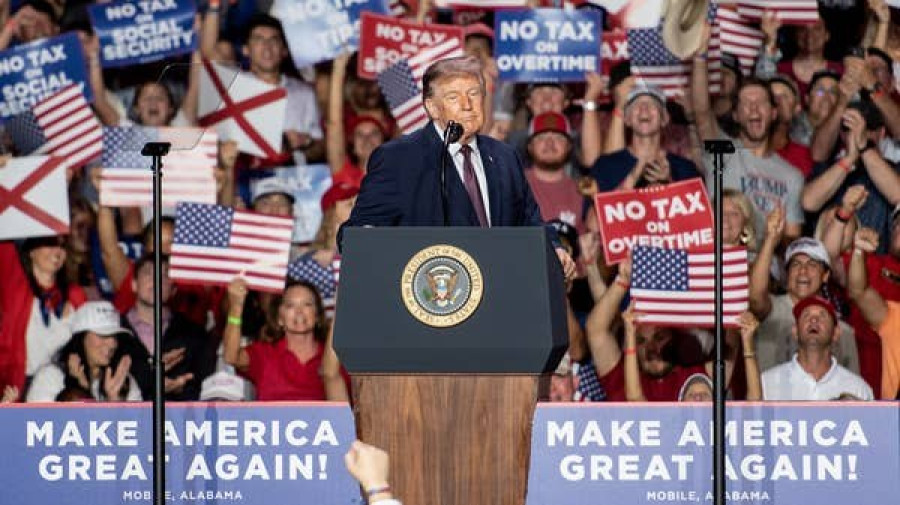
Trump responded by arguing that the apparent empty seats did not represent a lack of interest. He said that thousands of people had been unable to enter the Ohio venue because the arena was completely full. Trump explained that supporters seated in upper sections often move toward the main floor during his speeches, creating visible open spaces above while making the central area more crowded.
He described this movement as a regular part of his rallies and insisted that it should not be interpreted as declining attendance. Trump maintained that his events were still sold out and that their energy was stronger than ever. His explanation focused on how people moved through the arena rather than on whether every seat remained occupied throughout the full program.
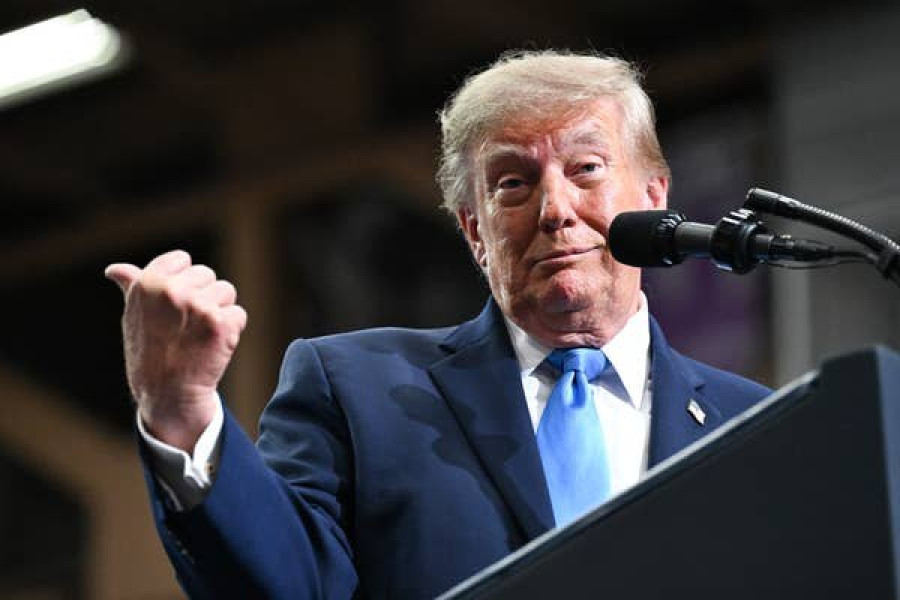
Trump also attacked the newspaper that published the report. In a series of posts, he accused the publication and other media organizations of dishonesty and claimed that their coverage harmed the country. He went so far as to say that the newspaper “should be arrested” over its reporting on rally attendance. The statement extended his criticism beyond a disagreement about crowd estimates and turned it into a broader accusation against the news media.
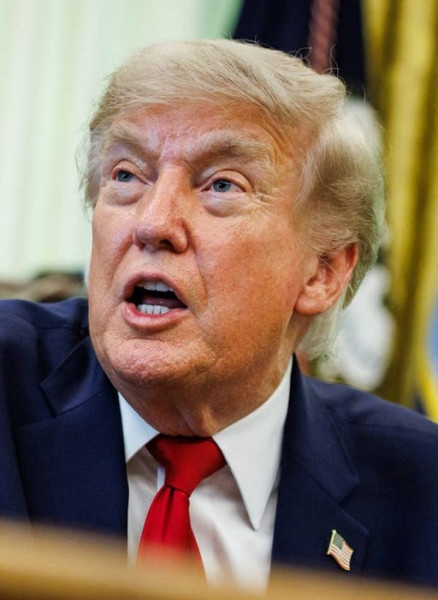
A Continuing Dispute Over Political Momentum
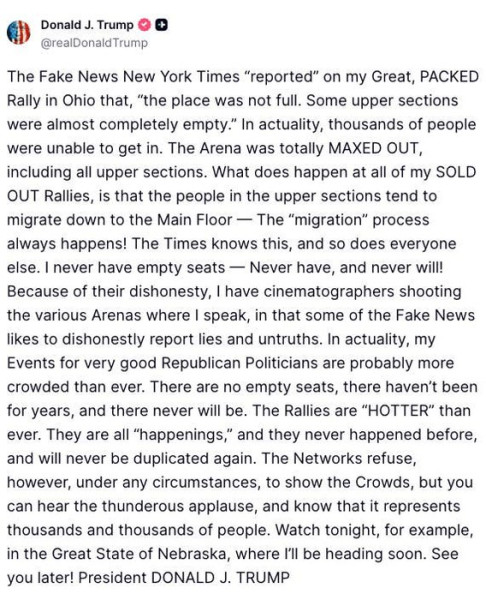
Trump continued discussing the issue the following morning, indicating that the reports had remained a source of frustration. He described his rallies and the enthusiasm surrounding them as extraordinary. He also claimed that Republican candidates were gaining ground in multiple races and argued that media organizations knew about this progress but were unwilling to report it honestly.
Trump presented the rally coverage as part of a larger political argument. In his view, the crowds demonstrated that his supporters remained energized and that Republicans were in a stronger position than some coverage suggested. He said Democrats had not expected this level of support and thanked television networks that aired his rallies in full. He also claimed those broadcasts were receiving strong ratings.
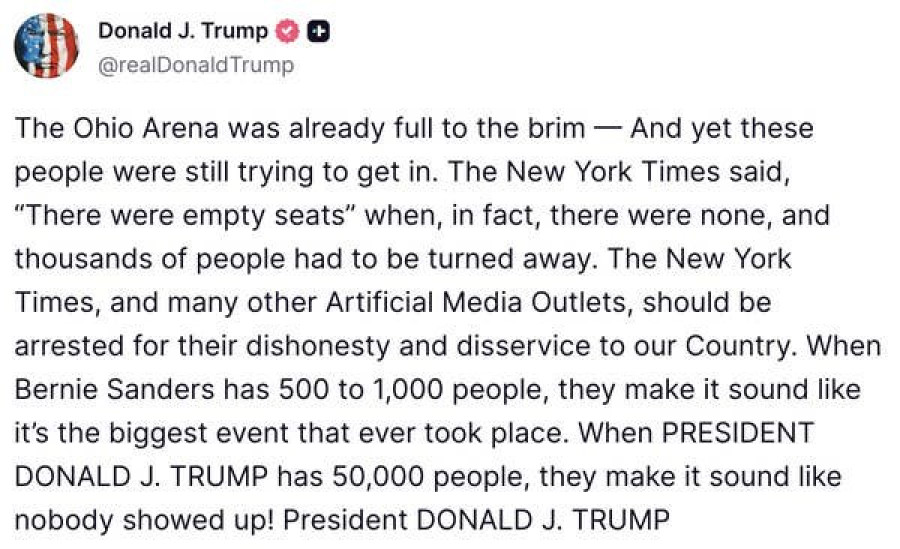
Trump then raised the possibility of a “midterm surprise.” He did not explain exactly what he expected to happen or identify which races he believed would change. The phrase appeared to refer to possible Republican gains, based on his claims that candidates were “flipping” races across the country. Whether that prediction would come true remained uncertain, but the statement gave the crowd-size dispute a wider electoral meaning.
Criticism Extends to a Conservative Network
Trump’s complaints were not limited to the newspaper that reported on the rallies. He also criticized a right-leaning television network for failing to show his events in the way he believed they deserved. His frustration appeared to involve the network’s decision not to provide significant coverage of the rallies the morning after they took place.
The dispute may have been made more uncomfortable by news that Trump’s former press secretary would join the network as an on-air contributor. Even with that connection, Trump argued that the network was not supporting him or the broader movement associated with his political base. He claimed that other broadcasters were showing the rallies and that his supporters were watching those outlets instead.
Trump accused the network of promoting Democrats rather than Republicans and his own movement. He said the network had lost its direction and no longer represented the audience he expected it to serve. His final message on the subject was brief but emphatic: he declared that his rallies were once again saving the Republican Party.
Other Reports Describe a Similar Pattern
The newspaper’s account was not the only report to question whether Trump was drawing the same level of attendance that powered his earlier political success. An investigation published through an independent political newsletter also concluded that Trump was attracting fewer supporters than during the period when he first rose to the White House. That analysis relied on reporting from local news organizations and another major newspaper.
These reports did not suggest that Trump’s rallies had become small or irrelevant. Instead, they described a possible decline when the current events were compared with the enormous crowds that had become a familiar feature of his political campaigns. The difference may be especially noticeable in large venues, where even a substantial audience can leave upper sections visibly unoccupied.
The disagreement reflects two different ways of judging a rally. One approach looks at the total number of people who attend and whether the venue reaches capacity. The other examines how full the arena appears at the end of the speech, when some attendees may have moved closer to the stage or left early. Trump emphasizes the first measure, while the reports focused more closely on what could be seen in specific sections.
What the Dispute Reveals
The argument over attendance is about more than empty seats. For Trump, large crowds are evidence of continued loyalty, political strength, and momentum for Republican candidates. For news organizations examining the events, changes in crowd size and energy may offer clues about the level of enthusiasm surrounding his movement. Because the two sides are measuring different aspects of the rallies, they reach sharply different conclusions from the same gatherings.
Trump’s repeated responses show that he considers crowd size an important part of his public image. He rejected the idea that his rallies are becoming less powerful and connected the events to his prediction of unexpected midterm results. Reports from multiple sources, however, described some recent crowds as smaller or calmer than those seen during his earlier campaigns. The debate will likely continue as future rallies provide more evidence about the strength of his support.
Reports Point to Smaller Sections
Trump has long placed great importance on the size of his political gatherings. His rallies are often built around large arenas, enthusiastic supporters, extended lines, and the expectation that every available seat will be filled. Reports from two recent events, however, described visible open areas inside the venues. The coverage did not claim that Trump had stopped attracting supporters. Instead, it said that he still drew large crowds, while noting that attendance did not appear as overwhelming as it had at some earlier events.
At the Alabama rally, reporters observed broad sections of empty seats. At the Ohio event, several parts of an upper seating level were reportedly unoccupied by the time Trump finished speaking. The Ohio gathering also included an uncomfortable moment involving gubernatorial candidate Vivek Ramaswamy. These details contributed to the broader description of rallies that remained significant but appeared less crowded and more subdued than the political events associated with Trump’s earlier campaigns.
The report was written by a journalist who had attended Trump rallies on and off for nearly a decade. That experience formed part of the comparison between his earlier events and the latest gatherings. The article acknowledged that people still waited for hours to see Trump and that he continued to attract substantial support. Its central point was that the scale and atmosphere seemed different in some locations, especially when compared with the standing-room-only crowds of the past.
Trump Rejects the Crowd-Size Claims
Trump responded by arguing that the apparent empty seats did not represent a lack of interest. He said that thousands of people had been unable to enter the Ohio venue because the arena was completely full. Trump explained that supporters seated in upper sections often move toward the main floor during his speeches, creating visible open spaces above while making the central area more crowded.
He described this movement as a regular part of his rallies and insisted that it should not be interpreted as declining attendance. Trump maintained that his events were still sold out and that their energy was stronger than ever. His explanation focused on how people moved through the arena rather than on whether every seat remained occupied throughout the full program.
Trump also attacked the newspaper that published the report. In a series of posts, he accused the publication and other media organizations of dishonesty and claimed that their coverage harmed the country. He went so far as to say that the newspaper “should be arrested” over its reporting on rally attendance. The statement extended his criticism beyond a disagreement about crowd estimates and turned it into a broader accusation against the news media.
A Continuing Dispute Over Political Momentum
Trump continued discussing the issue the following morning, indicating that the reports had remained a source of frustration. He described his rallies and the enthusiasm surrounding them as extraordinary. He also claimed that Republican candidates were gaining ground in multiple races and argued that media organizations knew about this progress but were unwilling to report it honestly.
Trump presented the rally coverage as part of a larger political argument. In his view, the crowds demonstrated that his supporters remained energized and that Republicans were in a stronger position than some coverage suggested. He said Democrats had not expected this level of support and thanked television networks that aired his rallies in full. He also claimed those broadcasts were receiving strong ratings.
Trump then raised the possibility of a “midterm surprise.” He did not explain exactly what he expected to happen or identify which races he believed would change. The phrase appeared to refer to possible Republican gains, based on his claims that candidates were “flipping” races across the country. Whether that prediction would come true remained uncertain, but the statement gave the crowd-size dispute a wider electoral meaning.
Criticism Extends to a Conservative Network
Trump’s complaints were not limited to the newspaper that reported on the rallies. He also criticized a right-leaning television network for failing to show his events in the way he believed they deserved. His frustration appeared to involve the network’s decision not to provide significant coverage of the rallies the morning after they took place.
The dispute may have been made more uncomfortable by news that Trump’s former press secretary would join the network as an on-air contributor. Even with that connection, Trump argued that the network was not supporting him or the broader movement associated with his political base. He claimed that other broadcasters were showing the rallies and that his supporters were watching those outlets instead.
Trump accused the network of promoting Democrats rather than Republicans and his own movement. He said the network had lost its direction and no longer represented the audience he expected it to serve. His final message on the subject was brief but emphatic: he declared that his rallies were once again saving the Republican Party.
Other Reports Describe a Similar Pattern
The newspaper’s account was not the only report to question whether Trump was drawing the same level of attendance that powered his earlier political success. An investigation published through an independent political newsletter also concluded that Trump was attracting fewer supporters than during the period when he first rose to the White House. That analysis relied on reporting from local news organizations and another major newspaper.
These reports did not suggest that Trump’s rallies had become small or irrelevant. Instead, they described a possible decline when the current events were compared with the enormous crowds that had become a familiar feature of his political campaigns. The difference may be especially noticeable in large venues, where even a substantial audience can leave upper sections visibly unoccupied.
The disagreement reflects two different ways of judging a rally. One approach looks at the total number of people who attend and whether the venue reaches capacity. The other examines how full the arena appears at the end of the speech, when some attendees may have moved closer to the stage or left early. Trump emphasizes the first measure, while the reports focused more closely on what could be seen in specific sections.
What the Dispute Reveals
The argument over attendance is about more than empty seats. For Trump, large crowds are evidence of continued loyalty, political strength, and momentum for Republican candidates. For news organizations examining the events, changes in crowd size and energy may offer clues about the level of enthusiasm surrounding his movement. Because the two sides are measuring different aspects of the rallies, they reach sharply different conclusions from the same gatherings.
Trump’s repeated responses show that he considers crowd size an important part of his public image. He rejected the idea that his rallies are becoming less powerful and connected the events to his prediction of unexpected midterm results. Reports from multiple sources, however, described some recent crowds as smaller or calmer than those seen during his earlier campaigns. The debate will likely continue as future rallies provide more evidence about the strength of his support.