
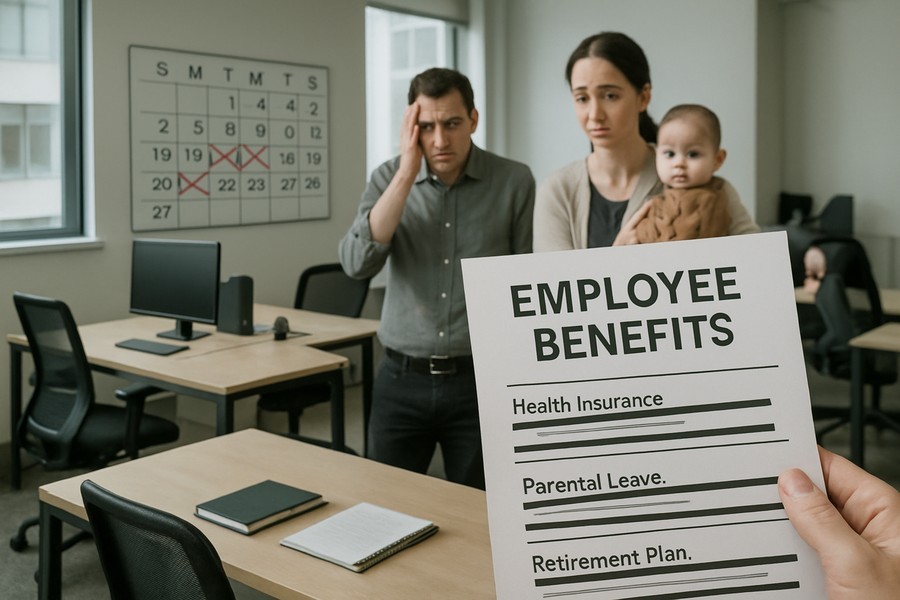
Workplace Perks Being Slashed: A Growing Trend?
There's a new trend emerging in the business world, and it's not one that employees are likely to be happy about. Some major companies are starting to cut back on employee benefits, including paid time off, parental leave, and pension plans. This could be an early indication of a bigger shift in workplace culture.
Notable Changes
Two major companies have recently decreased their offerings of paid parental leave, a benefit that is highly popular among employees. One company reduced their paid leave for new parents from 22-24 weeks to just 18 weeks, while another company is planning similar reductions for certain groups of workers in the near future. Additionally, the latter company also plans to cut back on paid time off, pension plans, and funding for in vitro fertilization for some workers.
These changes are significant because paid parental leave, vacation time, and disability leave are among the most valued benefits for employees, according to a survey of full-time U.S. workers. While many employers don't offer any paid parental leave, the majority of survey respondents saw paid leave as a crucial benefit.
Impact on Employees
Reducing paid time off can be particularly difficult for employees who have caregiving responsibilities. On top of this, many employers are prioritizing measurable results over employee loyalty, raising performance expectations, and monitoring workers' digital usage. Perks that were common during the pandemic, like gym discounts, are being scaled back, in-office work is becoming more common, and layoffs are still occurring.
Meanwhile, job growth has been slow, and many workers are choosing to stay where they are. This means that workers are not in a good position to resist cuts to their benefits. As one insurance advisor put it, workers simply "don't have the leverage they did a few years ago."
Companies Cutting Costs
With workers less able to push back, companies may choose to cut employee benefits as a way to control costs. If companies believe they can increase their profitability by getting rid of some benefits, they're likely to do so. However, this can have negative consequences. Even if employees are unlikely to quit because of the tight job market, they might put less effort into their work, leading to a drop in productivity. According to a recent study, employee engagement worldwide has been declining for the last two years, reaching its lowest level since 2020.
Future Implications
If the trend of cutting benefits continues, it could become harder for companies to retain their best employees in the future. Furthermore, their reputations could suffer. Benefits are a key factor for job seekers when deciding between different companies, so reducing them could make a company less attractive to potential employees.