
A Tiny Giant: How a Rare Baby Whale Shark Is Helping Solve an Ocean Mystery
How can a fish as big as a school bus stay hidden from human eyes when it is born? For a long time, no one knew where baby whale sharks started their lives. Now, a rare sighting of a tiny newborn is helping researchers understand where these massive ocean creatures begin their journey.
In a quiet, mostly enclosed bay in Southeast Asia, local fishers work at night. They use floating wooden platforms and bright lights to attract small fish and squid into their nets. During one early morning shift, just before sunrise, the fishers noticed something unusual in their nets. They filmed a small, dark fish covered in bright white spots.
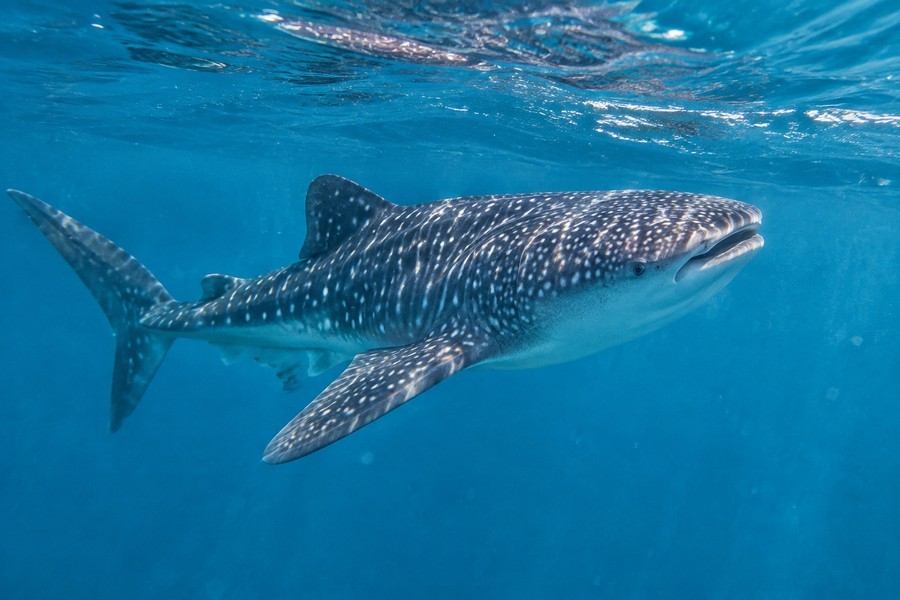
This was not just any fish. It was a baby whale shark. While adult whale sharks are the largest fish in the sea, this little one was only about five feet long. Experts believe the pup was only about four months old. This was an exciting moment because finding a whale shark this small is incredibly rare. In fact, it was the first newborn of this species ever recorded in the area, and one of only a few dozen ever seen worldwide.
Why the Discovery Is a Big Deal
Whale sharks are gentle giants that can grow to be the size of a bus and weigh as much as several elephants. They travel alone across the open ocean, which makes them very difficult to study. Even though scientists have tracked them moving thousands of miles across the globe, some basic facts about them remain a secret. For example, no human has ever seen whale sharks mate or give birth.
This baby shark provides a major clue. The bay where it was found is filled with food like tiny krill, thanks to nearby mangrove forests. The sheltered waters also protect young sharks from larger predators, like blue sharks. This suggests the bay might serve as a natural nursery where mother sharks give birth or where young pups go to grow safely.
What We Know About How Whale Sharks Are Born
Most of what is known about how these giant fish reproduce comes from a single female shark studied by researchers decades ago. When scientists examined her, they made several important discoveries:
- They give birth to live young: The female had hundreds of eggs and developed pups inside her body. This proved that whale shark eggs hatch inside the mother before the babies are born.
- They can have many babies at once: Scientists found over 300 young sharks inside this single mother, which is the highest number ever seen in any shark species.
- They can store sperm: Genetic tests showed that all the babies had the same father, even though they were at different stages of growth. This means mother sharks can save sperm to fertilize their eggs over time.
Hiding in the Deep Ocean
Finding these tiny babies is very difficult, but researchers have noticed a pattern. Many of the few baby whale sharks ever found were spotted in parts of the ocean with very low oxygen levels.
While low oxygen sounds dangerous, it might actually be a clever survival strategy. Many large predators, such as marlins and larger sharks, cannot survive in these low-oxygen areas and stay away. This creates a safe zone where baby whale sharks can hide. At the same time, tiny drifting organisms like plankton often get trapped near these zones, giving the young pups an easy supply of food.
Working Together to Protect the Giants
Whale shark populations have dropped significantly over the past few decades, and they are now considered an endangered species. In the past, hundreds of these sharks were hunted every year. Today, they face modern threats like climate change, shipping traffic, and accidental fishing.
To help them survive, conservationists are working closely with local fishing communities. Many fishers who once feared these animals are now helping to protect them. Researchers have tagged dozens of whale sharks in the bay and found that most of them stay in the area year-round because of the abundant food.
There are now plans to create a special marine protected area in the bay. By keeping these habitats safe, conservationists hope to give the youngest whale sharks a chance to grow up and roam the oceans for decades to come.