
U.S. Inflation Skyrockets Amidst Fuel Price Hike
In recent times, skyrocketing fuel prices have been a major contributor to the surge in U.S. inflation. This has led to a significant increase in consumer prices, marking the highest rise in almost four years. This surge has largely been attributed to the ongoing conflict in the Middle East, which has caused fuel prices to soar.
Despite a moderate rise in inflation, excluding the unpredictable food and energy components, experts warn that this is just the beginning. The data from March only reveals the immediate impact of the oil price shock. Therefore, the seemingly harmless core inflation readings do not provide reassurance for officials and economists. They continue to anticipate that the central bank will maintain interest rates, with no reductions expected this year.
Impact on the Economy
The economic stability is being threatened by this unexpected inflation hit, triggered by the Middle Eastern conflict. History shows that each major recession since the 1970s has been preceded by an energy price shock. If consumers were already worried about the cost of living, they might need to brace themselves for worse.
In March, the Consumer Price Index (CPI) witnessed a 0.9% jump, marking the most significant increase since a similar situation occurred in response to the Russia-Ukraine war. This is a stark contrast to the 0.3% rise in consumer prices observed in February.
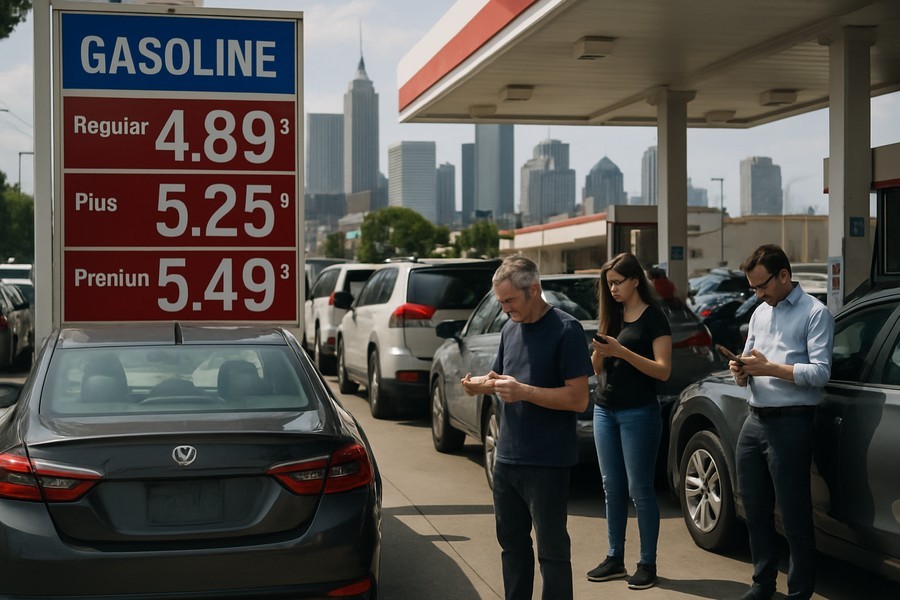
The record-breaking 21.2% increase in gasoline prices accounts for nearly three-quarters of the monthly CPI increase. Diesel and other motor fuels experienced an even greater rise of 30.8%, the highest since the inception of tracking these metrics. This has been triggered by a surge in global crude oil prices, which have climbed over 30%, due to the ongoing conflict. The average retail gasoline price has exceeded $4 a gallon for the first time in over three years, despite a recent announcement of a two-week ceasefire.
Future Projections
From February to March, the CPI advanced from 2.4% to 3.3%. Experts had predicted this acceleration, but there are concerns that a prolonged conflict could negatively affect the labor market. This is especially likely if household spending reduces in response to high prices.
March's surge highlights the financial difficulties consumers face. Promises to lower prices, made during the last presidential election, are being tested. Food prices remained steady after rising 0.4% in February.
The CPI, excluding volatile food and energy components, rose by 0.2% in March, matching the increase observed in February. This was due to increased costs in rents, airline fares, and household furnishings, offset by a drop in the prices of used cars and trucks. The core CPI saw a year-on-year increase of 2.6%. This moderate rise, following a 2.5% increase in February, is not comforting for officials, with an acceleration expected in the coming month as the secondary effects of the oil price shock take effect.
Long-Term Impact
In the upcoming months, experts predict the Middle East conflict will inflate core prices due to the rising costs of jet fuel, which will lead to higher airline fares, and diesel, which will escalate the cost of road-transported goods. Prices of goods like plastics and fertilizer are also predicted to rise.
Increasing inflation has led some economists to believe that the central bank will not lower borrowing costs this year. This belief was reinforced by the recent policy meeting where an increasing number of policymakers felt that rate hikes might be necessary.
The benchmark overnight interest rate remains in the 3.50%-3.75% range. However, some economists suggest that if labor market conditions worsen, there might be a possibility of a rate cut. They also argue that if consumers start to cut back due to increasing gasoline prices, it could make it difficult for businesses to pass on the higher costs resulting from oil prices.
