
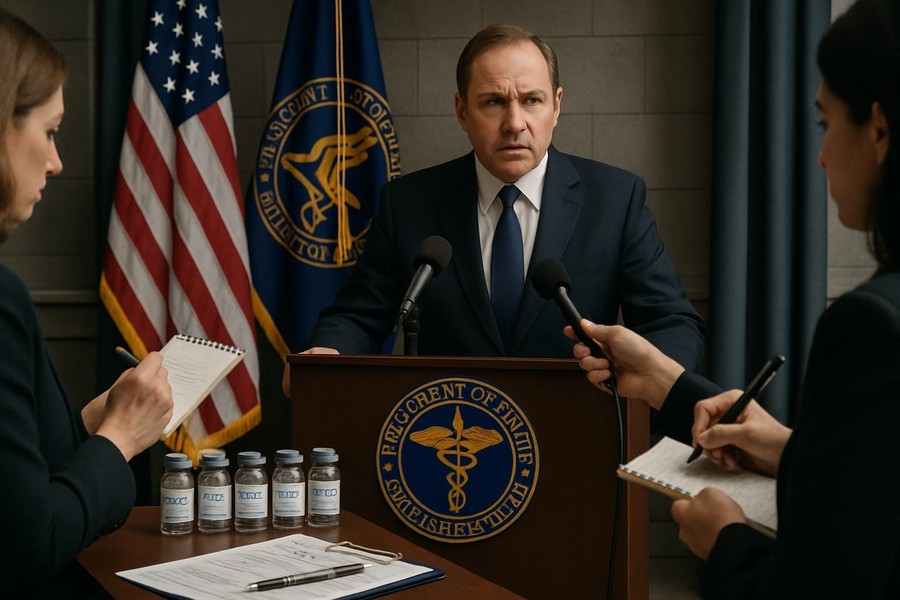
Unkept Pledges by the Nation's Health Chief
Despite assurances made prior to assuming his role, the head of the country's health department has failed to keep many of his commitments. This has particularly affected the country's approach to vaccinations, which was a controversial topic during his confirmation process.
Public Commitments and Private Guarantees
The individual at the center of these concerns managed to get approved as the head of the national health department after a tight vote in the Senate. His confirmation came with numerous public and private assurances regarding his approach to vaccine funding and recommendations.
Assurances on Childhood Vaccines
One of the key promises made during his confirmation process revolved around childhood vaccines. He asserted, time and again, that he was in full support of childhood vaccines, even pointing out that his own children were vaccinated. Despite these assertions, he faced accusations of intending to benefit financially from potential future policies that could make it easier to sue vaccine manufacturers.
These accusations were dismissed by the health head, who reiterated his support for vaccines and the current childhood vaccination schedule.
Keeping the Status Quo
Another promise made during the confirmation process was to maintain existing vaccine recommendations. This came after a senator from Louisiana, who was also a doctor specializing in liver diseases and a strong vaccination advocate, questioned the health head's stance on vaccines. The senator later expressed confidence that the proposed health head would keep the recommendations as they were.
However, a few months into his term, the health head dismissed all the existing members of the vaccine advisory panel and replaced them with new ones, some of whom, like him, had reservations about certain vaccines. The panel's recommendations underwent significant changes shortly thereafter.
Changes in Vaccine Recommendations
As a result of these changes, seven vaccines previously recommended for all children were removed from the standard list. These vaccines, which were estimated to have prevented thousands of deaths and millions of illnesses, were now only recommended for children at high risk of serious illness or after consultation between doctors and parents.
In response to queries about the health head's actions on vaccines, a spokesperson for the health department stated that the health head was fulfilling his commitments, including maintaining specific language on the health department's website and adopting the recommendations of the vaccine advisory panel.
Cuts in Vaccine Funding
Despite promising not to undermine vaccine funding, not long after taking up his new role, the health head oversaw the withdrawal of billions of dollars in grants that were being used to fund vaccination programs. He also ordered the cancellation of a significant amount of funding for vaccine research.
The Autism Controversy
The health head also assured that the health department's website would not remove statements explaining that vaccines do not cause autism. Technically, he kept this promise. The website still maintains that vaccines do not cause autism.
However, new statements have since appeared on the same webpage, without any basis, casting doubt on vaccine safety. Despite extensive scientific research that has repeatedly found no link between vaccines and autism, the webpage now misleadingly suggests that such a link may exist.
It's worth remembering that a controversial study in 1998, which linked the measles, mumps, and rubella vaccine to autism, was later retracted for being fraudulent. However, it had already caused a significant drop in U.S. vaccination rates over the decade it took to retract it.