
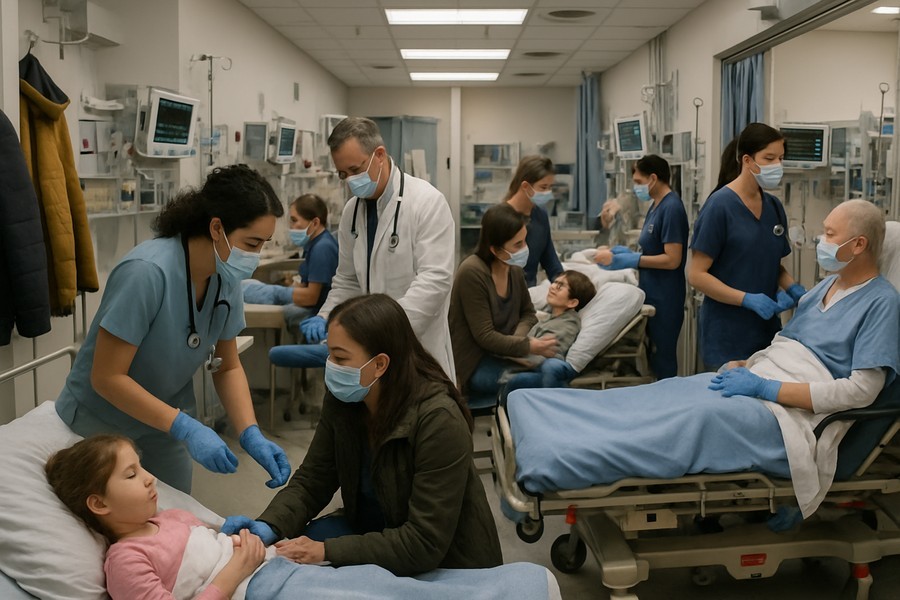
Soaring Cases of Respiratory Illness in New Jersey
A contagious respiratory disease, known as Respiratory Syncytial Virus (RSV), is rapidly spreading across the country. The virus is especially prevalent in certain areas including New Jersey.
The Impact of RSV
RSV resembles a common cold in most individuals, exhibiting mild symptoms. However, certain groups of people, such as infants, older adults, and those with weakened immune systems, can experience severe illness due to the virus. It is a leading cause of illness and hospitalization among children.
Typically, the RSV season in the United States begins in the fall and peaks during winter.
RSV Cases in New Jersey
Recent data reveals a growing number of emergency room visits and hospital admissions in New Jersey due to RSV, starting from early October. Over half of the counties in New Jersey are currently experiencing a high number of ER visits for RSV.
Nationally, RSV accounts for 0.5% of all emergency department visits, while in New Jersey, it represents 0.7% of all visits.
As of the end of January, RSV has resulted in 304 hospitalizations across the state. The most affected groups are children under four and adults aged 65 and older.
Infant Hospitalizations Due to RSV
Every year, two to three out of every 100 infants under six months are hospitalized due to RSV. While most children with the virus exhibit mild symptoms, those born premature or with certain medical conditions are at a higher risk of severe illness.
RSV claims the lives of 100-300 children annually.
Preventing Severe RSV in Infants
For the prevention of severe RSV in infants, a vaccine for pregnant women or an antibody given to the baby is recommended. Most infants will not require both.
The antibody, unlike a traditional vaccine, consists of monoclonal antibodies that help prevent severe RSV disease in infants and some young children. Available options include two types: clesrovimab and nirsevimab.
These products are recommended for infants younger than eight months, especially those born during or entering their first RSV season.
Who Should Be Vaccinated Against RSV?
Public health experts also suggest vaccination for certain groups, including:
- Individuals aged 50 to 74 with chronic heart or lung disease, certain other chronic medical conditions, and residents of nursing homes or other long-term care facilities
- All individuals aged 75 and older
As of the end of 2025, RSV vaccination coverage was 43.4% among adults aged 75 years and older, and 30.6% among those aged 50–74 years at high risk of severe disease.