
Emerging Threats in the Digital Age
Modern warfare techniques are fast evolving, with nations employing strategies that span beyond traditional military means. A prime example of this is the rising use of hybrid warfare, which includes surveillance, cyber-attacks, and psychological operations.
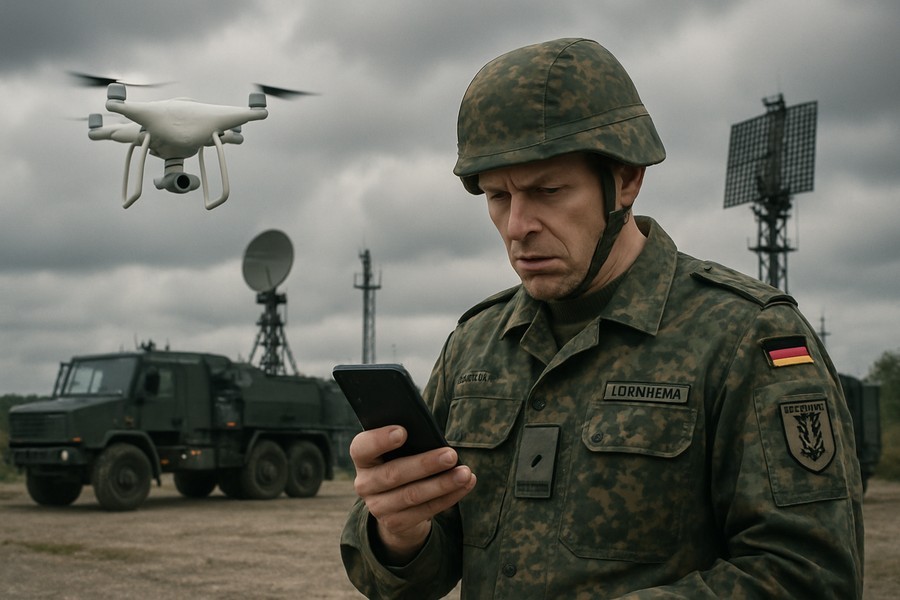
A case in point is a German soldier stationed in Lithuania, who received a call replaying his own conversation from a few hours earlier. This eerie experience is one of the many instances of hybrid warfare tactics at play, aimed at intimidating and unsettling military personnel.
Europe Faces Hybrid Warfare Challenges
European defense forces are grappling with similar challenges, with hybrid warfare becoming an increasingly common occurrence. Apart from phone surveillance, other tactics include the use of drones for spying on sensitive defense systems and military training operations.
Another incident of note happened during a military exercise in Lithuania when a reconnaissance aircraft from a neighboring country was detected. This occurrence was labeled as a clear threat by the country's top military officials.
Hybrid Warfare and Airspace Intrusions
Hybrid warfare also includes airspace violations, which are often seen as provocations. For instance, two fighter jets from a neighboring country briefly entered Lithuanian airspace, a move that was widely criticized.
Due to the close geographical proximity of Baltic states to certain countries, the airspace over these regions is particularly sensitive and constantly monitored and protected by NATO. These countries rely on the support of other nations, such as Germany, Spain, and the UK, for policing their airspace, as they do not have their own fighter jets.
The 'Little Green Men' Phenomenon
Another facet of hybrid warfare is the use of unmarked soldiers to instigate fear and unrest. This tactic became particularly infamous during the annexation of Crimea in 2014, when unidentified soldiers, known as "little green men", appeared on the peninsula. Similar incidents have been reported in other parts of Europe as well, stirring fear and uncertainty.
The primary challenge with hybrid warfare is its classification within international law. It often falls into a legal grey area where it's unclear when an action amounts to an attack and what the appropriate response should be.
Need For Clearer Laws and Regulations
Under Article 2(4) of the UN Charter, states are prohibited from using force against each other. Traditional military attacks clearly fall under this provision. However, hybrid warfare activities do not automatically qualify as an "armed attack", which would allow a state to exercise its right to self-defense under Article 51 of the UN Charter.
Each case of hybrid warfare must be evaluated individually, with different areas of law applied depending on the nature and severity of the incident. The general principle of non-interference in the internal affairs of other states remains applicable. With hybrid warfare becoming more prevalent, the need for clearer regulations and laws is becoming more urgent.