
Uncovering the Mysteries of Space and Life on Earth
Ground-breaking scientific discoveries have emerged this week, revealing intriguing aspects of human biology and space exploration. One of the most startling findings involves the complexities surrounding human reproduction in zero gravity conditions.
A recent study has shown that the lack of gravity can drastically affect sperm navigation, fertilization, and embryo development. This could spell trouble for future plans of space colonization. However, the adaptability of human beings, touted as one of the defining traits of our species, might just help us tackle this challenge.
Striking Space Developments
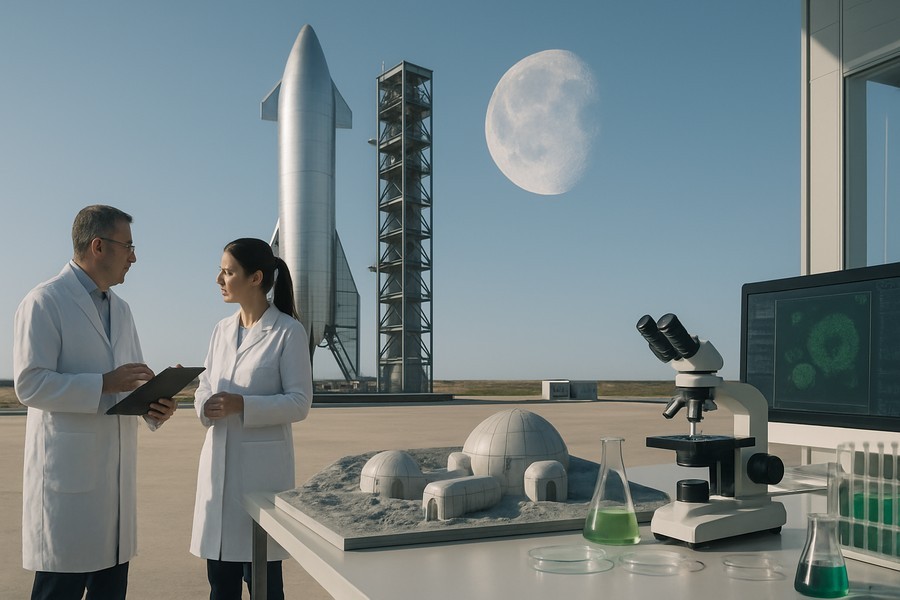
Big plans are being made for the moon. The head of the space exploration agency recently unveiled ambitious plans for a $20 billion permanent base on the moon. This base will be established using parts originally intended for a lunar orbit space station, which has now been canceled. The plans also include a nuclear-powered spacecraft intended for a Mars mission.
These bold lunar base plans, which involve the use of drones and robotic landers to set up a nuclear power station on the moon by 2036, seem to be driven by a desire to stay ahead in the ongoing space race. The feasibility of these plans will be tested soon as a moon rocket gears up for a launch before an end-of-April deadline.
Unusual Biological Discoveries
Other fascinating biological discoveries this week include the role of gut viruses in preventing blood sugar spikes and the physical reaction of the eyes in people with synesthesia. Additionally, there's a puzzling phenomenon that is quite common among cannabis users - the overwhelming hunger known as "the munchies".
War's Impact on Climate
The ongoing conflict in Iran has had a devastating impact on the environment. The destruction caused in the initial two weeks of the conflict has released a massive amount of carbon dioxide. This destruction, primarily of buildings that will need to be cleared and rebuilt, has led to the depletion of the global carbon budget at a faster rate than the combined carbon emission of 84 countries. The aftermath of the war is expected to exacerbate the climate impact as countries scramble to cushion against fuel and fertilizer shocks due to Iran's blockade of the Strait of Hormuz.
More Earth and Space News
Other noteworthy developments include a Chinese lander revealing a large radiation 'cavity' between the Earth and the moon, an anomaly in Mars' mantle possibly triggering volcanic eruptions, and a meteorite crashing through a Texas home's roof. On Earth, a race is on to save Australia's 'zombie tree' from a fast-spreading fungal disease, and new research suggests that drought could fuel the rise of antibiotic-resistant superbugs as climate change worsens.
Other Scientific Discoveries
This week also saw revelations about brain aging being linked to a loss of control over gene regulation, a Roman mosaic depicting a topless woman fighting a leopard, the discovery of a 1,000-year-old altar and human sacrifices from the Toltec Empire, and AI compressing billions of years of evolution into seconds to create 'Lego-like robots' that can recover even when they lose limbs.
Monitoring Earth's Biosphere
DNA, shed by all living things, is present in the environment and can provide invaluable insights about the changes happening on Earth. By tracing this genetic material, scientists could potentially detect species, map food webs, and chart biodiversity without tracking a single organism. However, the task of analyzing this ambient DNA is overwhelming and requires significant scientific breakthroughs.
For those interested in a longer read over the weekend, there are numerous analyses, crosswords, and opinion pieces published this week on a wide range of topics like the metaverse, America's national bird, fossil fuel economy, and more.