
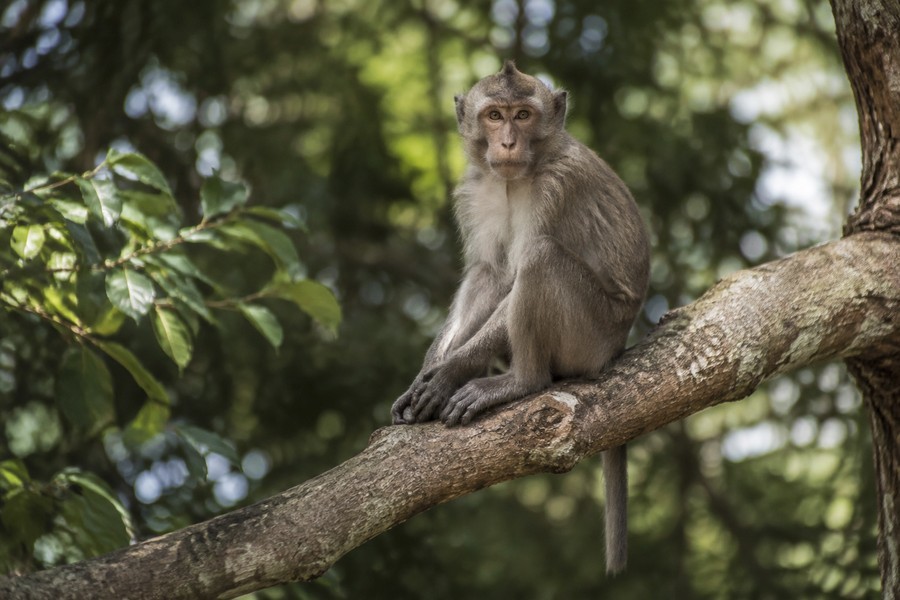
Why Monkeys and Apes Might Have Their Own "Pets"
Many people share their homes with dogs, cats, or other animal companions. It is easy to think that keeping pets is a uniquely human habit. However, humans are not the only creatures that like to bond with other species. A scientific review suggests that monkeys and apes also form close friendships with different kinds of animals.
Researchers recently gathered and studied hundreds of cases where primates interacted with other species. Their findings show that these relationships are much more common than anyone previously thought. Monkeys and apes have been seen carrying, grooming, playing with, and even adopting animals from entirely different species.
A Close Look at the Research
To understand how common these behaviors are, scientists looked at a large amount of information. They analyzed 303 different cases of cross-species interactions. This information came from three main areas:
- Scientific papers and records written by animal experts
- Surveys filled out by dozens of primate researchers
- Public stories and reports of unusual animal friendships
The results showed that primates all over the world are reaching out to other creatures. These actions go far beyond simple survival instincts. Instead, they show a deep sense of curiosity and social warmth.
Surprising Examples of Animal Friendships
The study highlighted several examples of primates bonding with other animals in the wild. These cases show just how gentle and caring these animals can be:
- Squirrel-petting langurs: In Sri Lanka, researchers observed grey langur monkeys gently petting wild squirrels.
- Playful monkeys and pigs: In China, snub-nosed monkeys were seen playing and spending time with domesticated pigs.
- Adopting a baby marmoset: In Brazil, a group of capuchin monkeys did something even more unusual. They took in an orphaned baby marmoset and raised the tiny monkey as one of their own for several months.
While these behaviors look a lot like how humans treat their pets, scientists warn that they are not exactly the same. However, these interactions do point to ancient traits. These behaviors likely started developing millions of years ago, long before the first humans walked the Earth.
How This Differs from Normal Animal Partnerships
In the wild, different species often hang out together, but they usually do it for practical reasons. Scientists call this mutualism. In these partnerships, both animals get something useful out of the deal. For example:
- Different kinds of fish swim together in giant groups to protect themselves from predators.
- Zebras and ostriches hang out in the grasslands because zebras have a great sense of smell, while ostriches have excellent eyesight. Together, they can spot danger much faster.
The friendships between primates and other animals are very different. When a monkey grooms a squirrel or plays with a pig, there is no obvious reward. The monkey does not get extra food or safety. This suggests that the desire to connect with other species comes from a place of genuine curiosity and friendliness, rather than just a need to survive.
The Roots of Human Empathy
These findings help us understand our own history. The researchers believe these behaviors might be the early building blocks of human-animal friendship. By studying how monkeys and apes interact with other species, we can learn more about how empathy and social flexibility evolved in our own ancestors.
For a long time, people believed that only humans could form deep, caring bonds with other species. This study shows that our closest animal relatives also have a remarkable capacity for kindness, tolerance, and caregiving toward creatures that are very different from themselves.
Helping Animals in Captivity
This research is not just about understanding the past. It can also help animals living today. Many wildlife sanctuaries and zoos keep different species of animals in the same living spaces. Knowing how primates naturally interact with other animals can help caretakers design better, safer environments for them.
By understanding which animals get along and why, caretakers can make sure that captive animals live happier, more active lives. It shows that a little bit of curiosity and friendliness can go a long way, both in the wild and in sanctuaries.