
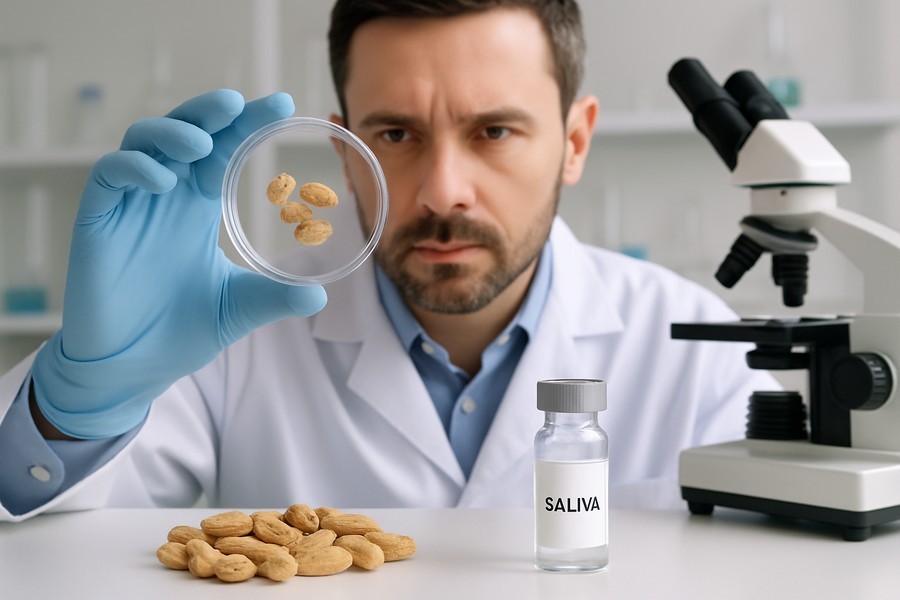
Human Saliva Could Help Combat Peanut Allergies
Microorganisms found in human saliva and digestive system have been discovered to effectively neutralize proteins that cause allergic reactions to peanuts. This indicates that our own bodily fluids could potentially contain the needed microbes to combat some of the most harmful peanut allergens. A specific type of bacterium, known scientifically as Rothia aeria ASV 14171, demonstrated the most potential for reducing allergic reactions and could be a key player in future allergy treatments.
"Peanut allergies can lead to serious symptoms such as difficulty in breathing and can even be life-threatening," says a postdoctoral fellow from a Health Research Institute in Ontario. "However, there are some people with peanut allergies who can consume small amounts without having a reaction. We wanted to understand why."
The Challenge of Peanut Allergies
Peanut allergies are very common, especially in Western countries, affecting approximately 2% of the population. They are one of the most likely food allergies to result in unexpected exposure and severe incidents. Each year, between 7% and 14% of individuals allergic to peanuts experience an allergic reaction.
Unfortunately, about one-third to one-half of these annual episodes include anaphylaxis: an extreme immune system response that can cause skin rashes, nausea, significant drops in blood pressure, and difficulty breathing. Worse still, peanut allergies are more likely than other food allergies to persist into adulthood, extending these risks for up to 80% of the children who are diagnosed with this allergy.
Two proteins in peanuts, known as Ara h 1 and 2, have been identified as the primary allergenic compounds responsible for these severe immune system responses. To find out which common digestive bacteria could best neutralize these proteins, scientists used lab mice with peanut allergies and individual bacteria taken from human mouths and small intestines.
Finding the Allergy Fighters
Given the speed at which a peanut allergy can develop, the researchers concentrated on the bacteria present in human saliva. They examined samples from 13 volunteers who had no reported food allergies. They also tested bacteria typically found in the small intestine, taken from the mouths of five similarly healthy volunteers.
While bacteria capable of breaking down the Ara h 1 and 2 proteins were found in several genera, including Staphylococcus, Streptococcus, and Veillonella, it was the bacteria from the Rothia genus that proved to be the most reliable defender against these peanut allergen proteins.
Rothia, a prevalent genus in the oral microbiome, was effective against both Ara h 1 and Ara h 2 proteins. One species in particular, Rothia aeria, was exceptionally powerful, virtually eliminating 100% of these allergens in the lab trials.
To corroborate these experimental findings, the researchers referred to a previous study that had tracked the prevalence of various bacteria within the oral and gut microbiome of 120 children suspected of having peanut allergies. This group included 23 non-allergic control patients, 74 allergic patients with a high tolerance for peanut exposure, and 23 with a low tolerance for peanut exposure.
Based on this data, the researchers confirmed that Rothia aeria was significantly more abundant in the saliva of those with no allergic response or a high tolerance to peanut exposure.
"Microbes in the mouth and gut play an important role in digestion," said the co-senior author of the study, who is also a gastroenterologist and associate professor with the Department of Medicine.
"These findings reveal a new connection between the oral and gut microbiome and food allergies. They could help guide future research on prediction and treatment," he added. According to him, these treatments could involve new probiotic therapies with cultured bacteria possibly complementing traditional strategies in which patients are slowly introduced to increasing amounts of the allergen to help their bodies adapt.
