
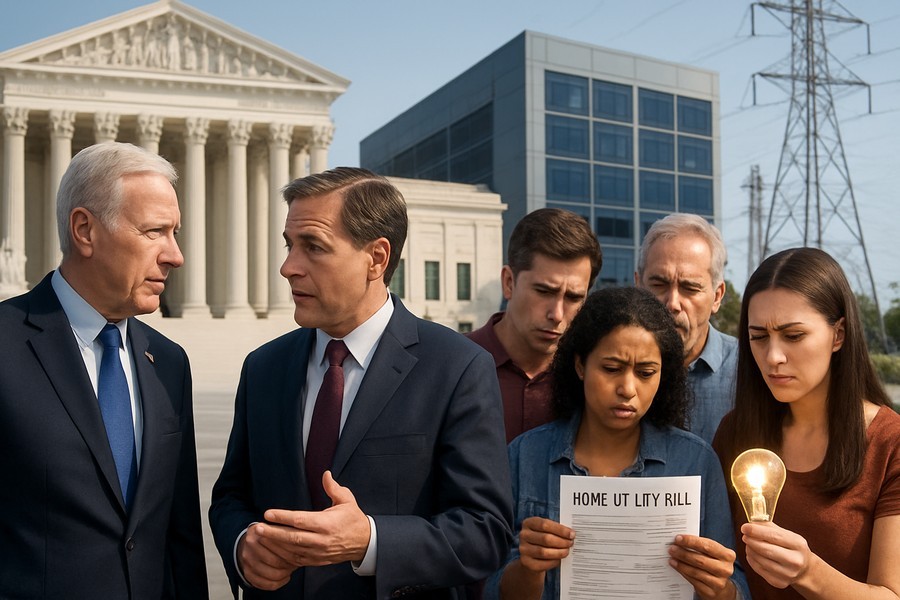
Bipartisan Bill Aims to Protect Consumers from Rising Utility Costs due to Data Centers
Two senators have come together to propose a new law, the first of its kind to be bipartisan, that's designed to stop the increasing electricity costs due to data center operations from affecting consumers. This bill, known as the "Guaranteeing Rate Insulation" or "GRID" Act, is intended to achieve two main objectives.
The GRID Act's Objectives
The first goal of the GRID Act is to ensure that consumers' utility bills don't rise because of data centers. The second is to make sure that regular electricity users get priority access to the grid. The bill also proposes that new data center operators use power from off-grid sources, and existing data centers should make the transition to off-grid sources within a decade.
Furthermore, the GRID Act would require data center operators to publicly share their current and future power usage. This move is aimed at promoting transparency and accountability among data center operators.
Senators' Statements
One of the senators involved in proposing the bill expressed his dissatisfaction with the fact that American families have to bear the brunt of rising electricity costs due to data centers. He stressed that this situation is unacceptable and needs to be addressed urgently.
His counterpart echoed these sentiments, stating that the legislation would prevent tech companies from using artificial intelligence to drain families' finances. He emphasized that families should not be responsible for footing the bill for Big Tech's electricity and infrastructure costs.
Prior Attempts to Address the Issue
The bipartisan effort of these senators follows several initiatives led by Democrats aimed at reducing the impact of data centers on the utility bills of ordinary Americans. These include the "Power for the People" Act, the "SHIELD Act", and the "PRICE Act", among others. Another piece of legislation, the "Protecting Families from AI Data Center Energy Costs Act", was introduced recently to address the same issue.
The Tech Industry's Response
Responses from the tech industry to these efforts have been mixed. Some data center operators, like a major tech company, have shown a willingness to pay more for electricity and are even exploring the possibility of setting up their own independent power sources. However, other companies are against these efforts, arguing that they already pay their fair share of the costs.
State-Level Initiatives
In addition to these federal efforts, state leaders are also taking action. A governor from Pennsylvania, who is a potential presidential contender for the 2028 elections, recently announced a set of guidelines for state data centers. He has called on his state's legislature to convert these guidelines into law to ensure better regulation of data centers and their impact on electricity costs.
Looking Forward
The proposed GRID Act represents a significant step in the ongoing efforts to address the impact of data centers on electricity costs for consumers. As the tech industry continues to grow and evolve, it is crucial to strike a balance between technological advancement and consumer protection. This legislation is a clear indication that policymakers are committed to achieving this balance.
