
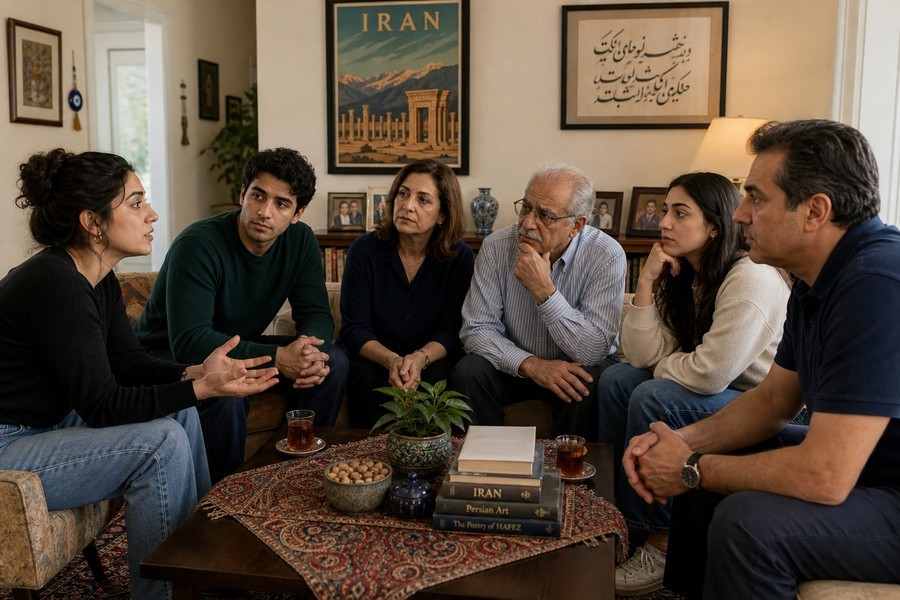
Six Months of Conflict: How the War in Iran Has Divided Iranian Americans
It has been six months since the first military strikes were launched against Iran by the United States and Israel. Since then, the physical, financial, and emotional effects of the conflict have spread far beyond the region. The impact is felt deeply by the large Iranian community living in the United States, where people hold very different views on how the war began and what it has actually achieved.
A Community Split by History and Hope
The Iranian population in America is made up of several generations. Some families arrived decades ago after the 1979 revolution, while others are newer arrivals who recently fled government crackdowns and protests. These different backgrounds have shaped how people view the current fighting.
Some Iranian Americans, especially those who actively oppose the ruling government in Iran, initially welcomed the military strikes. They believed that foreign intervention might be the only way to end the current regime's control. On the other side, many feared the terrible cost of war on innocent people. They warned that civilian suffering and regional chaos would far outweigh any political benefits. This disagreement shows a deep divide over what the future of Iran should look like.
From Early Optimism to Growing Disappointment
At the start of the conflict, some activists expressed strong support for the military action. For example, Arezo Rashidian, a long-time activist in the Los Angeles area who supports the exiled son of Iran's last shah, Crown Prince Reza Pahlavi, hoped the strikes would target military bases and quickly bring down the government. She helped organize local protests in support of change.
However, half a year later, that early hope has turned into disappointment for many who wanted to see a new government. The conflict has not led to the collapse of the regime, leaving many activists feeling frustrated and uncertain about the future.
A Climate of Fear and the Battle Over Sanctions
Inside Iran, the situation remains tense. Contacts and family members of those living abroad describe a quiet but terrifying atmosphere. With the heaviest fighting slowing down, there is a sense that the state's security forces are focusing more on controlling the population.
- Increased Surveillance: People are now very hesitant to speak about politics or past protests because they fear being watched and punished.
- Strict Enforcement: There is a renewed push to enforce strict dress codes, including mandatory hijab laws. Women are being publicly scolded, and businesses are being targeted for dress-code violations.
- Severe Crackdowns: There are widespread accounts of arrests, executions, and other harsh security measures.
Despite the lack of regime change, some activists still push for stronger economic pressure on the government in Tehran. Recently, officials in Washington threatened new measures. Treasury Secretary Scott Bessent explained that these actions would target the complicated networks Iran uses to get around existing trade restrictions.
However, the government's highly anticipated economic measures fell short of what many expected. Instead of launching massive new penalties, the focus was placed on enforcing the rules that were already in place. In response, Iran has warned that it could strike back by targeting regional oil producers and European nations, or even by advancing its nuclear program.
The Human Cost and Fractured Trust
For other Iranian Americans, the enthusiasm for war was deeply upsetting. Aria Rostami, a museum worker in New York who grew up in the Iranian-American community of Southern California, felt hurt when he saw people cheering for military action in the streets. He believes that supporters of the war were given unrealistic expectations about what military force could achieve.
The conflict has changed how he views his own community. In the past, hearing someone speak Persian or meeting a fellow Iranian brought a sense of connection. Now, he feels a sense of caution and doubt, wondering where others stand politically.
He also questions the idea that military intervention would work out better in Iran than it has elsewhere. He points to the heavy toll of past conflicts over the last two decades as a warning:
- The war in Iraq
- The conflict in Afghanistan
- The intervention in Libya
While he understands that those who supported the strikes are hurting and want change, he believes they were misled about the reality of war. This ongoing division shows that even thousands of miles away from the conflict, the pain and disagreement run deep.