
Minneapolis Immigration Clampdown Takes Toll on Somali Enterprises
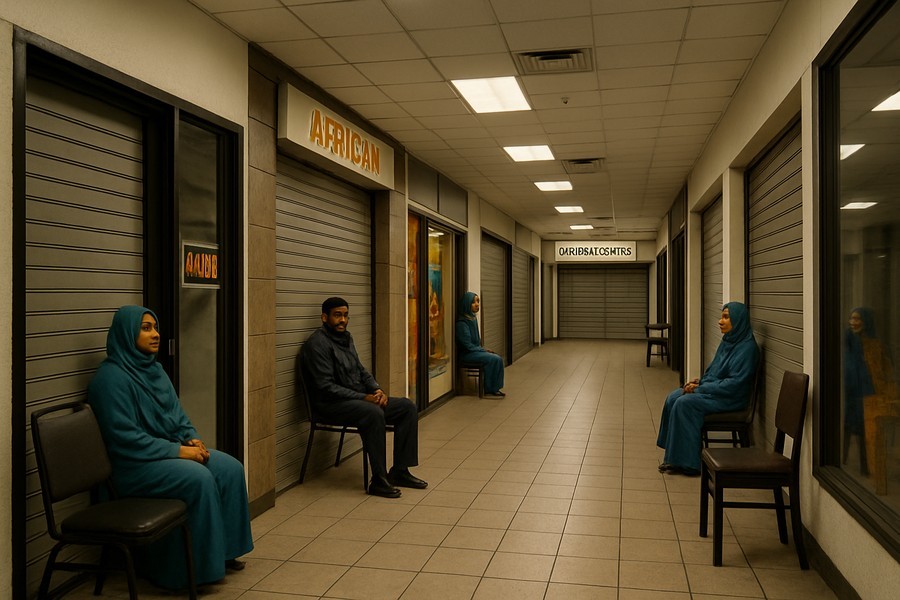
It's a melancholic scene in Minneapolis as several Somali-run businesses remain shut. A large complex, known for its diversity of Somali-run operations, has been eerily calm and empty.
Once bustling with activity, this complex in south Minneapolis is home to over a hundred small businesses. From outfits and eateries to insurance and financial services, it's a hub of Somali entrepreneurship. Lately, however, the once lively corridors are silent, with only intermittent chatter from neighboring vendors echoing through the halls. While the aroma of freshly fried goods lingers in the air, and the central heating hums alongside the soft recitation of the Quran from some shops, many stores are desolate.
A Ghost Town
Store owners sit in their empty shops, hoping for the occasional customer to stroll in. The increased presence of federal immigration agents has instilled fear among sellers and buyers, citizens and non-citizens alike. Many have chosen not to open their shops, expecting zero customers.
"This has been the condition for the past three weeks," said Abdi Wahid, who assists his mother at her convenience store in the mall. "All stores have been closed."
Community Impact
Aside from being an economic hotspot for the local Somali community – the largest in the U.S - the complex also houses a mosque and Quran classes, serving as a vibrant community center. However, the immigration crackdown, known as "Operation Metro Surge," has had a chilling effect. The fear has spread beyond the Somali community, with many immigrants too scared to go to work or even leave their homes.
The President's derogatory comments about the Somali community following a recent government fraud case involving Somali defendants have added fuel to the fire. Targets of the President's harsh words, the community is feeling the brunt of his deportation agenda. This climate of fear has significantly affected local businesses. For instance, Abdi Wahid's store once had 15 to 20 customers during early afternoons, but now struggles to attract even one.
Widespread Fear
The fear is not limited to immigrants. Even citizens are wary of visiting Somali businesses, particularly after the infamous killing of Renee Good and the immigration raid at a local high school. Wahid believes this has deterred many people from visiting the mall, fearing they could be targeted "just because of their race."
A high-ranking homeland security official stated that law enforcement makes arrests based on "reasonable suspicion" under the fourth amendment. She stressed that immigration status, not skin color, race, or ethnicity, makes someone a target for enforcement.
Business Fallout
Bashir Garad, who runs a travel and accounting agency, has seen his customer base practically vanish. His existing clients are canceling planned trips, fearing they might not be allowed back into the country. "They are witnessing a lot of unlawful things happening in the city," he said. "They think some bad things may happen to them." Despite being U.S. citizens, most of his East African clients are hesitant to travel.
Another entrepreneur, Ibrahim Dahiye, who owns an electronics store, has also felt the impact of the crackdown. He said his business has suffered a $20,000 monthly dip, and he's now pooling funds to pay the rent. His employees are too scared to report to work. As a precaution, he carries his passport with him at all times.
"I don’t know what we can do," Dahiye said. "We put our faith in Allah, but we feel helpless."