
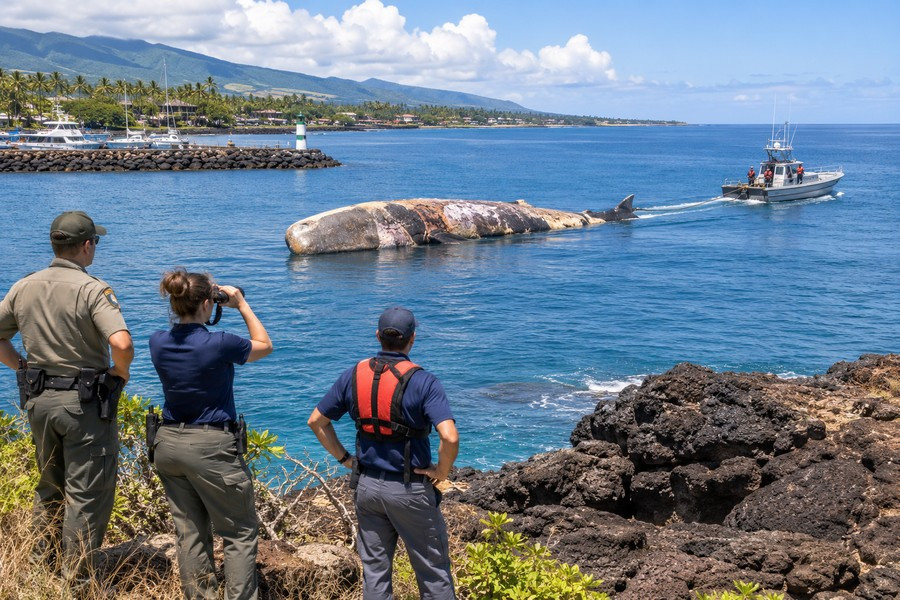
Sperm Whale Remains Prompt Safety Warning Along Kona Coast
A decomposing sperm whale that drifted along the Kona Coast has created possible health and safety dangers for people using the ocean. The public is urged to stay away from the whale and any pieces that may have broken off.
Carcass Moved Away From Harbor
The whale was first seen floating near the coast before it reached the entrance to Honokōhau Harbor. On Wednesday evening, trained wildlife responders and state conservation and boating officers worked together to tow the carcass offshore.
A local boat operator who is trained to respond to whale entanglements also helped with the effort. Other partners took part, and Hawaiian cultural practitioners advised staff during the response. The exact location of the whale is not being shared.
The carcass was already badly decomposed, and pieces broke away before and during the tow. Some people had gone into the water near the whale, touched pieces, or taken them away. Sharks were also gathering to feed, making the area especially dangerous.
Stay Clear of the Water and Debris
Decomposing whales may carry diseases that can pass from animals to people. Pieces of the carcass could also drift back toward shore as storms, wind, and strong ocean currents move through the area.
People should not swim, dive, paddle, or approach by boat near the carcass or any whale remains. Even pieces found by themselves along the coast may be part of the same whale and should be left alone.
- Keep out of the water near whale remains.
- Do not approach the carcass by boat or board.
- Do not touch, move, or take any part of the whale.
- Give sharks and other wildlife plenty of space.
Respect for the Whale
Hawaiian cultural practitioners described the sperm whale, known in Hawaiian as palaoa, as sacred and connected to Kanaloa. They asked people to show respect by giving the remains space and allowing nature to take its course.
They also urged the public not to dive near or through the remains. Whale bones, known as iwi, and teeth, known as niho, should be left where they are.
Taking Whale Parts Is Illegal
All parts of the whale are protected, whether still attached to the carcass or found separately in places where it was seen. State law and federal wildlife protections prohibit people from removing whale body parts or bones.
Conservation officers will keep watching the situation and coordinating with wildlife experts and Hawaiian cultural practitioners. The public can help by staying away from the remains, leaving them untouched, and following safety guidance along the Kona Coast.