
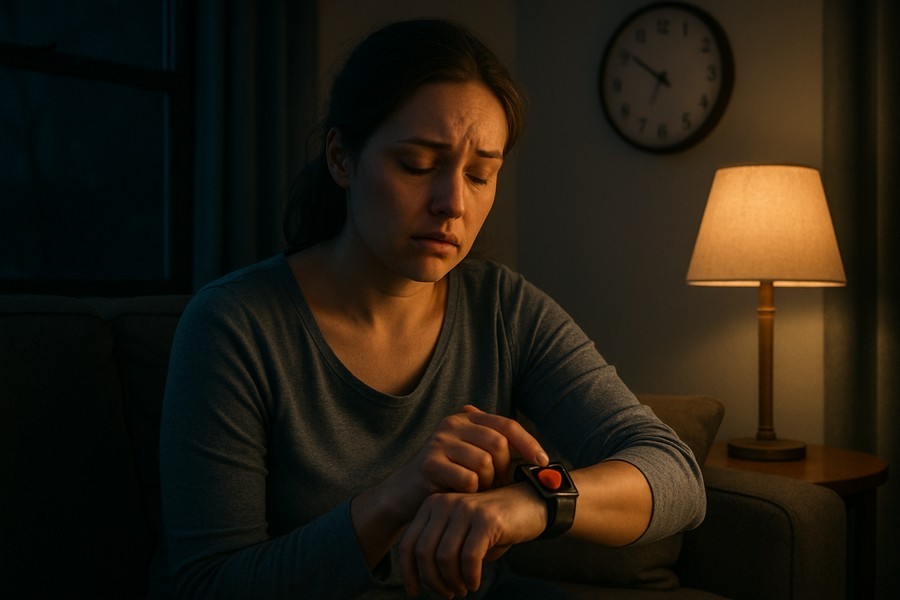
Heart Health Concerns for Night Owls
Do you find yourself more active and productive when the sun goes down? If so, you might want to keep a closer eye on your heart health. Recent research suggests that individuals who prefer staying up late, known as "night owls", may have a higher risk of heart disease. However, experts reassure us that there are preventative measures that can be taken to maintain a healthy heart.
The Study
The new research focused on middle-aged and older adults, particularly women, who are more active in the evenings. This group seems to have a higher risk of heart issues compared to those who do not have a strong preference for morning or evening activities. The study analyzed information from over 322,000 adults from various regions.
Participants of the study were asked to identify their natural sleep-wake timing, also known as their chronotype, which could be categorized as morning, intermediate, or evening types. This categorization was based solely on individual self-reported preferences, not specific wake or sleep times.
What are Chronotypes?
Chronotypes are a way to describe a person's natural rhythm for sleep and daily activities, whether they are early risers, night owls, or somewhere in between. Adults who are evening chronotypes, or even those who wake up early, could be at a higher risk if their internal body clocks do not align with work schedules and other outside factors.
The Findings
While previous studies have mainly focused on single risk factors like smoking or high blood pressure, this research used a comprehensive checklist known as Life's Essential 8. This checklist includes maintaining a healthy diet, being active, not smoking, getting quality sleep, managing weight, cholesterol, blood sugar, and blood pressure. Each component is scored from 0 to 100, with higher scores indicating better cardiovascular health. These scores are then averaged to create an overall health score for each individual.
The research found a strong correlation between night owls and poorer overall cardiovascular health. Night owls were found to be more likely to have unhealthy habits or risk factors such as a poor diet, less exercise, or smoking. This correlation was even stronger in women.
Compared to the intermediate group, night owls were about 79% more likely to have poor overall cardiovascular health and a higher risk of heart attack or stroke.
Interestingly, people who identified as early birds were 5% less likely to have poor heart health and habits compared to those in the intermediate group.
Chronotypes and Cardiovascular Health
The timing of sleep, meals, and light exposure, which can be varied for night owls, are also associated with increased cardiovascular disease risk. Over a span of almost 14 years, night owls had a 16% higher risk of developing cardiovascular disease, such as a heart attack or stroke, compared with intermediate chronotypes.
However, this study was observational, meaning it cannot prove that being a night owl directly causes poorer cardiovascular health or increased cardiovascular risk. More research is needed to confirm these findings, particularly in younger individuals.
Advice for Night Owls
Even if you are a night owl, it's not all bad news. Experts suggest that focusing on modifiable risk factors, such as improving sleep, quitting smoking, and maintaining a healthy lifestyle, could help reduce the risk for heart disease. Night owls should not try to change their natural sleep-wake timings, but focus on controlling these factors instead.
Other recommendations include getting enough sleep, keeping consistent sleep and wake times, getting some exposure to morning light, and regular physical activity. Regular checks for blood pressure, cholesterol, and blood sugar are also important. And if you smoke, quitting is one of the most effective ways to protect your long-term heart health.