
Severe Weather Wreaks Havoc on Temporary Settlements in Gaza
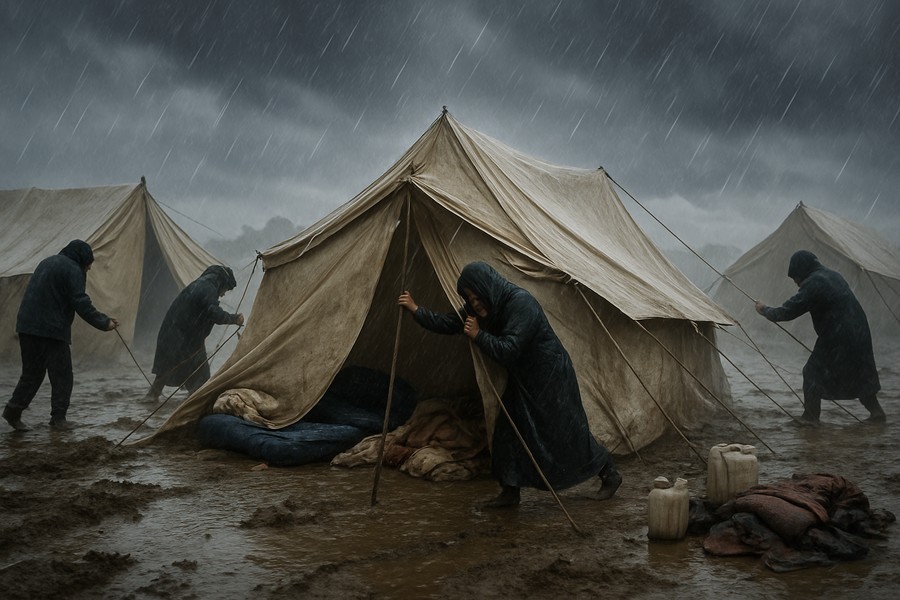
The Abu Asi family, a family of seven, spent a restless night in their makeshift tent in southern Gaza's Khan Younis as a severe storm hit the area. Heavy rain and strong winds battered their flimsy shelter, causing water to seep in and drench their sleeping area and belongings.
When the worst of the storm hit in the middle of the night, the family was left in a desperate situation, their bedding and clothing soaked as the water leaked in.
Challenges of Winter in Makeshift Shelters
Winter is a challenging time for the two million residents of the region. Many live in temporary shelters that provide little protection from the elements. These shelters are often damaged or destroyed by the harsh weather, leaving residents exposed to the cold.
"Our tent does not protect anything. It can't keep our bedding dry or our children safe. It was completely flooded," said Nida’a Abu Asi, the mother of the family, her husband trying to remove the water from inside the tent while barefoot in the cold.
Storms Cause Significant Damage
A representative of the local Civil Defense explained that recent storms have caused great harm, particularly to the tents set up near the coastline. Thousands of these shelters, home to displaced people, have been damaged or destroyed by the combination of heavy rain and strong winds.
The recurring storms are causing humanitarian crises. One major issue is the inability to bring in construction materials needed for more durable housing, leaving people to live in unsafe tents.
The region has experienced a long-standing ban on construction supplies, due to concerns that the materials could be used for both civilian and military purposes.
Living Conditions After Years of Conflict
Despite a delicate truce, hundreds of thousands of people are living in makeshift tents following years of conflict that destroyed critical infrastructure. This situation has led to overcrowded conditions with minimal sanitation and drainage.
The severe cold has even led to fatalities, with health officials reporting that four infants have died due to the extreme winter conditions.
Inadequate Aid and Difficult Living Situations
Many people are barely getting by, with aid still being restricted. Displaced families are tired, hungry, and cold, struggling to survive in very tough conditions.
While aid has been brought into the region, including hundreds of thousands of tents, tarpaulins, blankets, and warm clothes, it's clear that more is needed.
Officials are aware that increasing aid efforts is a critical priority, as the entry of essential supplies is still being denied. "These are people trying to survive winter in extremely fragile conditions," said one official.
Third Winter in Displacement
This is the third winter that the local residents are spending in displacement. According to one official, the available shelter items are not sufficient. Although the situation is better than during wartime, the population has been severely weakened over the years, making their living conditions increasingly challenging.
While there's no longer constant fear of death, the levels of suffering are still extremely high.
Dispute Over Aid
A dispute over winter aid has arisen as numerous humanitarian organizations have been suspended for not complying with new vetting rules. These organizations play a crucial role in providing healthcare and other services in the region.
Critics argue that the new rules are arbitrary and could put staff at risk. Some believe that the suspensions will lead to a loss of expertise and trust in the community, making an already difficult situation even worse.
More Bad Weather on the Horizon
With more rain and strong winds predicted for the coming days, those living in tents are being warned to take precautions. One resident, a father of 13, has dug a trench outside his tent in the hope of redirecting the water away from his home.
"The tent collapsed on my children during the night. We had no choice but to seek shelter in a neighboring tent. This is a situation no human being can endure," he said.