
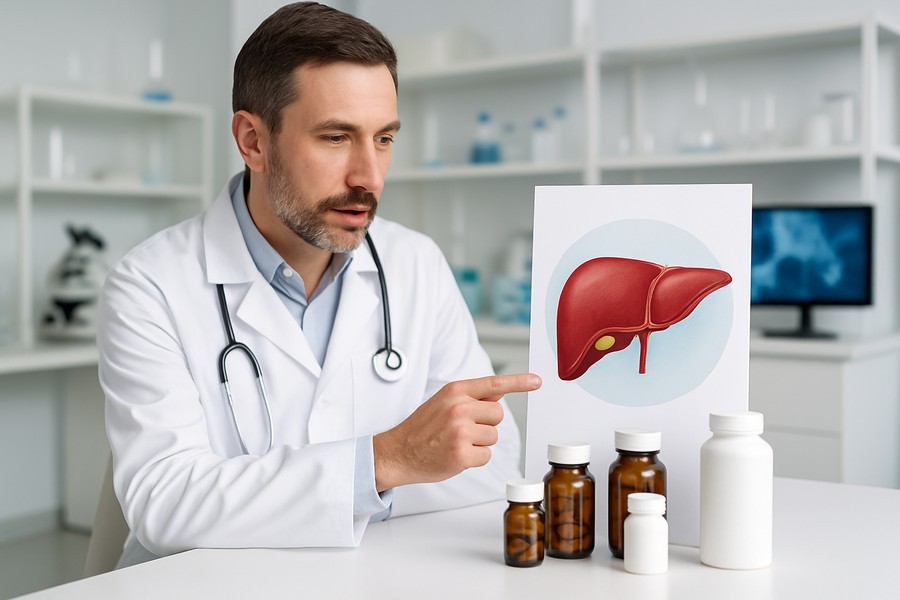
Groundbreaking Study Reveals Potential Treatment for Fatty Liver Disease Using Existing Medications
Scientists have made a promising discovery in the battle against fatty liver disease. A recent study carried out at a prestigious university in Barcelona found that two readily available drugs could significantly decrease liver fat in animal testing. Moreover, administering these two drugs together seemed to not just boost liver health but also lessen related cardiovascular risks.
With current treatment alternatives for this condition being limited, these findings could pave the way for a treatment approach that might be safer and more effective than many experimental treatments.
The Significance of Repurposing Existing Medications
Most experimental drugs for metabolic dysfunction-associated steatotic liver disease (MASLD), previously known as fatty liver disease, have failed in clinical trials, often because of safety concerns. This has led scientists to consider drug repurposing, which involves using drugs that have already been approved for other conditions.
This method can be quicker, more affordable, and safer, particularly for early stages of MASLD that typically do not manifest symptoms. "Our focus has been on these initial stages with the intention of preventing the disease's progression to more severe stages. However, for a drug to be used in these early stages, it must have a good safety profile in humans," the lead researcher explains. "That's why we've studied drugs already on the market for other conditions that have proven to be very safe and could potentially benefit MASLD treatment," she adds.
Testing the Drugs on Animal Models
To gain a better understanding of how these drugs function, scientists tested them on both rats and zebrafish larvae. Zebrafish have become a useful model for studying liver disease as their metabolism and liver function have significant similarities with humans, while also allowing for quicker and more cost-effective experiments.
The results were impressive. The combination of these two drugs reversed liver fat buildup caused by a diet high in fat and fructose. In rats, using half doses of both drugs together was just as effective as using a full dose of either drug alone.
Potential Benefits Beyond Liver Health
Not only does this treatment seem to improve liver health, but it may also decrease blood pressure and cholesterol levels. "The treatment lowers blood pressure and cholesterol levels, which could result in a lower cardiovascular risk," the lead researcher emphasizes.
Different Biological Pathways
The study also revealed that the two drugs act through different biological pathways. For the first time, researchers identified a significant role for the PCK1 protein in how one of the drugs reduces liver fat.
In animals with MASLD, levels of PCK1 in the liver were lower than normal. Treatment with this drug restored these levels, altering the liver's nutrient processing.
"This increase in PCK1 diverts the nutrient flow from lipid synthesis to glucose synthesis. This increase in glucose production could be negative if the glucose were exported and accumulated in the blood, as it could lead to diabetes, but we have observed that this is not the case," the lead researcher explains.
Early but Encouraging Findings
Despite the promising findings, the research is still in its initial stages. The results come from animal studies, and more research is required before this treatment can be tested in humans.
"To be transformed into a treatment for MASLD patients, clinical studies would need to confirm that the benefits observed in animal models also occur in humans," the lead researcher notes.
Currently, the team is investigating whether the same drug combination could work in more advanced stages of the disease, particularly when liver fibrosis is present. They are also developing new models that include both liver disease and cardiovascular conditions to see if the benefits extend beyond the liver.