
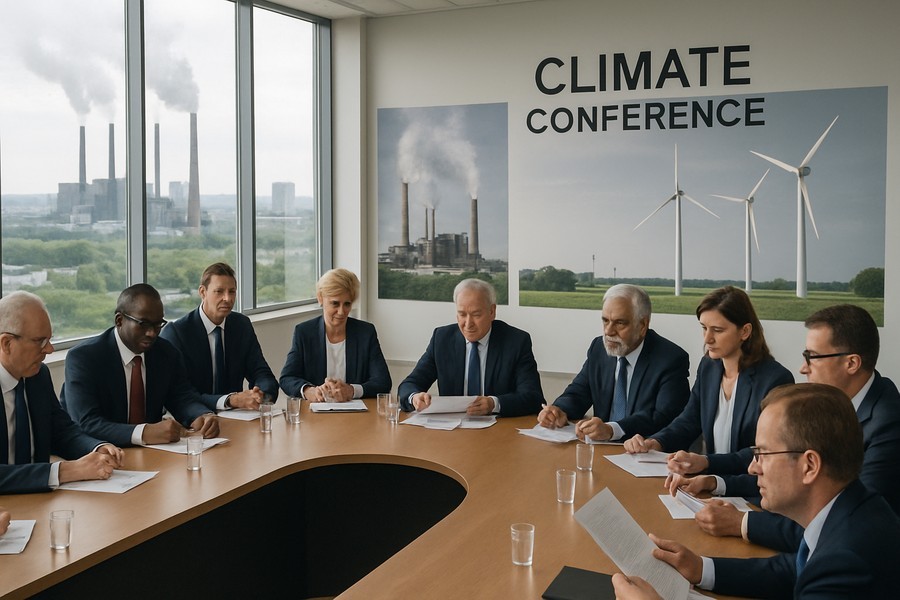
Global Climate Conference Warns of Capitalism's Dangerous Path
World leaders have gathered to discuss the dire implications of our current capitalist model, which is said to be leading us towards war, authoritarianism, and potential annihilation. The primary culprit? The relentless pursuit of fossil fuels.
A Critical Question for Capitalism
The outgoing Colombian president, a former economist and revolutionary, posed an essential question: Can capitalism adapt to a non-reliant energy model? This question comes amidst a climate crisis exacerbated by our dependency on fossil fuels—a dependency that threatens not only humanity but all life on earth.
Transitioning Away From Fossil Fuels
In a coastal city in Colombia, a unique conference is taking place. This global gathering focuses on strategies to move away from fossil fuels. The conference, featuring top officials and government ministers, was preceded by four days of discussions and workshops with academics and civil society members.
Several nations have already begun developing plans to phase out fossil fuels. Last week, Colombia released its preliminary plan. In a significant development, one of the world's most developed nations also unveiled a national roadmap to phase out fossil fuels. This ambitious plan includes a timeline to eliminate coal from its national grid by 2027, end oil dependency by 2045, and stop using fossil gas by 2050.
A New Vision for Power
In a bold statement, the climate envoy from the aforementioned developed nation declared their aspiration to become an "electro-superpower." They plan to supplement their major reliance on nuclear power with renewable energy sources, aiming to export green energy to neighboring nations in the future.
The Role of Debt in Climate Action
As the conference delves into detailed discussions on action timelines and advancing low-carbon technologies, one message stands out: Addressing debt must be a crucial part of any global climate action plan. Many countries in the global south are being forced to expand fossil fuel production to manage their increasing debt.
The debt crisis in these countries is escalating. In Africa alone, debt has doubled in the past five years to over a trillion dollars. Rising interest rates, partly triggered by fossil fuel crises, and escalating food and fuel prices are exacerbating the situation.
The Struggle of Debt-ridden Countries
Countries grappling with debt can't afford vital imports like medicine, fertilizers, and technology without the revenue from fossil fuel exports. It's a complex issue tied to each country's economic dependency and the need to maintain their economies.
Many representatives from the global south shared similar concerns, citing that high debt repayments and soaring interest rates have made it challenging to invest in renewable energy sources.
Calls for Debt Forgiveness
Several activists have called for debt forgiveness. They argue that a just transition to a low-carbon economy is impossible while global south nations remain burdened by unsustainable, predatory, and illegitimate debts. A significant portion of this debt, they claim, didn't benefit the people and has instead harmed both the population and the environment.
Looking Toward Financial Reforms
While this conference won't result in new financial aid promises to assist developing nations out of their debt traps, it may spark new ideas for financial reforms. This could include subsidy reforms to redirect the annual $1.5 trillion in fossil fuel subsidies towards more sustainable initiatives.
Experts also suggest that countries should work to "cut off the financial oxygen for fossil fuels" through banking regulation reforms. This includes preventing the fossil fuel industry from assessing its climate risk, thereby holding them accountable for their contributions to climate change.