
The War's Impact on Global Supply Chains
The ongoing conflict in Iran has caused a ripple effect on global trade, going beyond the oil sector and impacting a wide range of commodities. This includes pharmaceuticals from India, semiconductors from Asia, and products derived from oil like fertilizers from the Middle East.
Sea Cargo On Hold
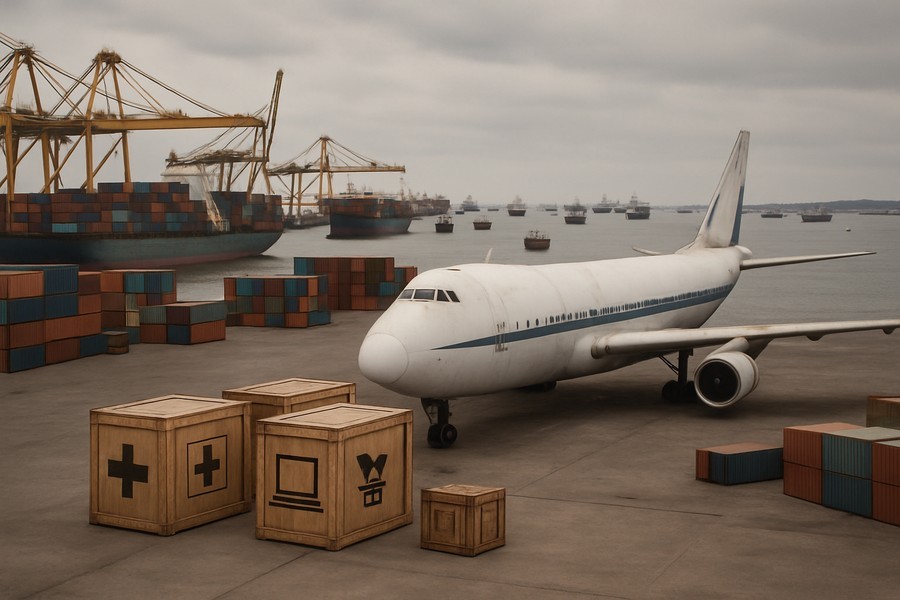
Thousands of cargo ships are either stranded in the Gulf or forced to take a much longer detour around Africa's southern tip. As a result, air cargo from the Middle East is also grounded. The extended duration of the war could potentially lead to shortages and price surges in various goods.
Experts suggest that despite representing a small percentage of the global ship tonnage, the idle or waiting ships could cause a domino effect leading to congestion in other areas. The supply chain is often compared to a long train where if one car derails, it can create a domino effect impacting the other cars. This military action, despite affecting only a small number of ports, can have a significant impact on the total supply chain.
Plan to Resume Trade and Oil Movement
Recently, there has been a proposal to get oil and trade moving again through the key Strait of Hormuz. This involves providing political risk insurance at a reasonable cost for tankers carrying oil and other goods through the Persian Gulf. The insurance is meant to protect firms against financial losses caused by unstable political conditions, government actions, or violence. If required, the Navy could escort oil tankers through the Strait of Hormuz, using its fleet of destroyers and smaller combat ships.
Possible Delays for Various Goods
A diverse range of products are shipped through the Mideast region. Apart from the 20% of global oil, products made with natural gas like petrochemical feedstock (used in plastic and rubber production) and nitrogen fertilizer also come from the Middle East. Pharmaceuticals from India and semiconductors and batteries from Asia, all of which are transported through the region, could face possible delays.
Increased Costs Due to Limited Routes
Instability in the region has affected transit in the Red Sea and the Suez Canal, prompting shipping companies to reroute their traffic around Africa's Cape of Good Hope. This detour adds about 10-14 days to the journey and approximately $1 million extra in fuel per ship. As a result, shippers have started adding fuel and "war risk" or "emergency conflict" surcharges to their clients, leading to overall increased costs.
Air Freight Under Strain
Air cargo has also been affected due to closed airspace and airports in several Middle Eastern countries. The major airlines in the Middle East, which operate fleets of cargo aircraft, have been heavily impacted. These airlines also transport goods in the belly of their passenger planes. High-value goods like pharmaceuticals, electronics, and perishables that are usually transported by air could face significant disruption. The potential disruption to the economy increases the longer these airports remain closed.
Adapting to Disruption
Despite these upheavals in the supply chain, industry insiders believe that the sector will adjust. In recent years, it has faced significant disruptions from events like COVID supply shortages and other Middle East conflicts. Thus, the industry has become more agile and adaptable. The current situation may be unprecedented, but disruption is not a new concept for the industry.