
Top Court Rejects Prohibition on Controversial Therapy for LGBTQ+ Youths in One State
The highest court in the land recently struck down a prohibition on controversial 'conversion therapy' for LGBTQ+ children in one state. This state is among nearly two dozen others that have declared this controversial practice unlawful.
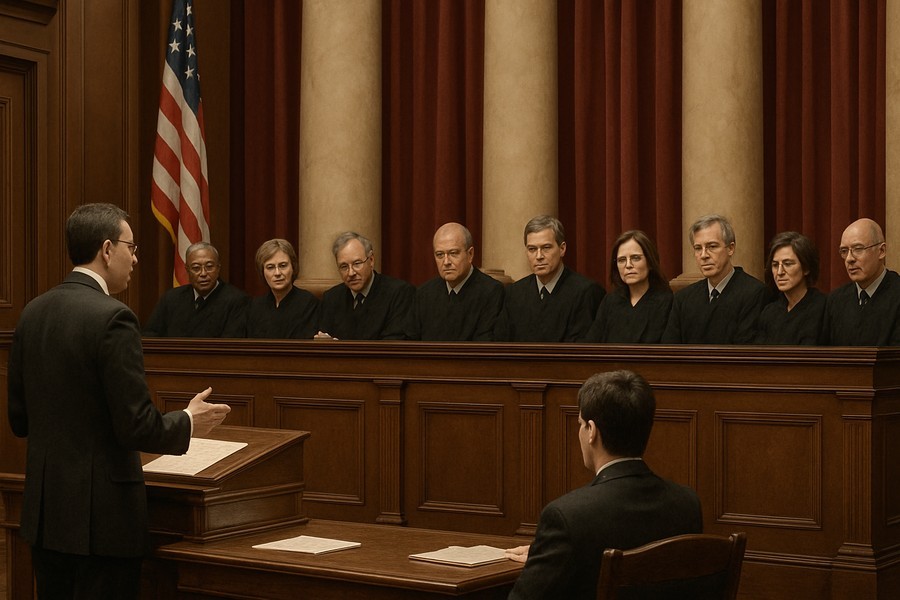
With a substantial majority, the court sided with a counselor of Christian faith, who posited that the law against such therapy infringes upon First Amendment rights. The justices were in concurrence that the law could potentially impede free speech and have deferred its examination to a lower court, under a stringent legal standard that few laws successfully pass.
Views of the Justices
In the court's view, the law potentially discriminates based on viewpoint, which is a violation of the First Amendment. This Amendment serves as a safeguard against the imposition of any form of orthodoxy in thought or expression. This perspective was shared by justices from both conservative and liberal camps.
One of the justices posited that a similar prohibition could not be imposed on therapy intended to affirm a minor's sexual orientation or gender identity. The justice argued that the state's suppression of one side of the debate, while supporting the other, presented a clear constitutional issue.
However, a lone dissenting opinion emerged, arguing that states should retain the right to regulate health care, even if it inadvertently limits speech. The justice warned that this ruling might hamper states' abilities to regulate medical care provision in any capacity, terming it as a potentially dangerous precedent.
Repercussions of the Ruling
This ruling follows a series of recent decisions where the justices have supported claims of religious discrimination while casting doubt on LGBTQ+ rights.
The counselor at the center of this case, with backing from the previous presidential administration, argued that the law unjustly prevented her from providing voluntary, faith-based therapy. She insists her approach is distinct from outdated 'conversion therapy' practices such as shock therapy, and the ban makes it difficult for parents seeking therapists open to discussing gender identity unless the counseling supports transition.
The state, on the other hand, claimed its law does permit extensive discussions about gender identity and sexual orientation and provides exceptions for religious ministries. It argued that the law only prohibits therapy attempting to 'convert' LGBTQ+ individuals to heterosexuality or conventional gender norms - a practice that has been scientifically debunked and associated with substantial harm.
The state maintained that its law doesn't infringe upon the First Amendment as therapy is a distinct form of speech, being a type of health care that the state bears a responsibility to regulate.
Critiques and Reactions
Advocates for LGBTQ+ individuals have denounced both the ruling and 'conversion therapy'. They argue that despite the court's decision, the practice remains dangerous and has been rejected by leading medical associations nationwide. They further emphasize that therapists causing harm through this practice will still face legal repercussions.
The contested law, enacted a few years ago, includes penalties such as fines and license suspensions, though no penalties have been imposed to date. This ruling is anticipated to render similar laws in other states unenforceable eventually.
At this time, almost half of the states in the country have laws prohibiting health care providers from offering 'conversion therapy' to minors, with a few others having some restrictions. This case came before the high court after a regional court upheld the law. Another regional court, however, had previously struck down similar bans in another state.