
Unearthing Lives Lost in Rubble
Hovering over a span of debris in northern Gaza, a drone captures the aftermath of a devastating event. This location was home to many before it was reduced to rubble, turning houses into unmarked graves.
A team of workers has begun the heart-wrenching task of recovering bodies that remain beneath the wreckage, starting with one of the most catastrophic sites of the conflict. This place, once a five-story apartment building, was obliterated, taking the lives of over 132 individuals from the same family who were seeking refuge there.
30-year-old survivor, Ola, speaks of the anticipation and dread of this moment: "Every day, we've been yearning to retrieve our martyrs, to pay them respect, to put them to rest. It felt as though they were crying out to us from beneath the rubble: 'We are here.'"
It's estimated that around 8,000 bodies are still trapped beneath wreckage scattered across Gaza.
One Machine Against a Mountain of Rubble
The local civil defense team chose this site for their initial major recovery operation. The northern region was one of the areas most severely affected by the bombardment.
According to Iyad, the team leader, he receives countless pleas daily from families desperate to recover the remains of their loved ones. However, there is only one working excavator available for this task in Gaza. "The scale of the need is overwhelming. One functioning excavator is simply not enough," stated Pat, a representative for a humanitarian organization.
Israel is obstructing any major recovery efforts until certain conditions are met, citing potential security concerns.
Following the Trail to the Lost
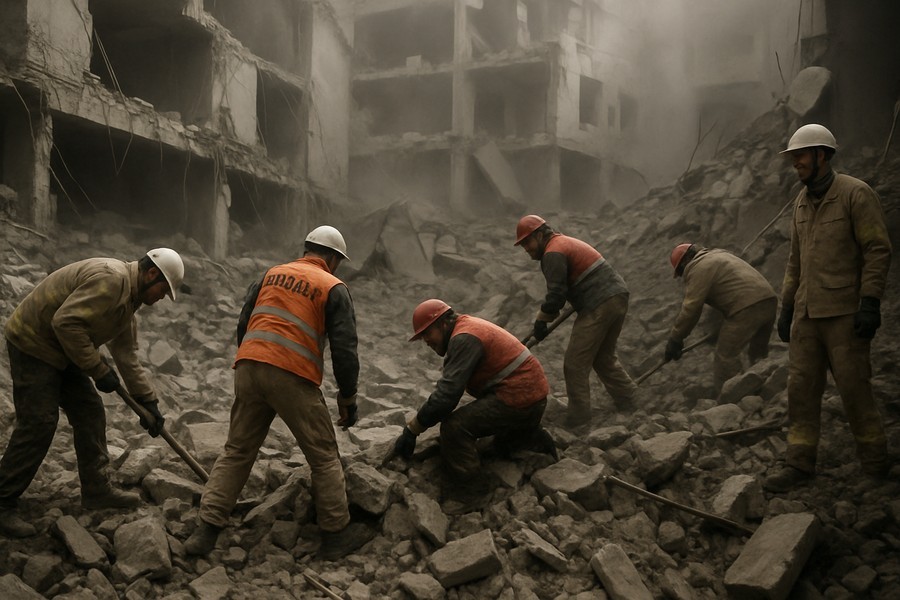
As the machinery lifts the massive slabs of concrete and twisted metal, the grim work commences. Rescue workers drop to their knees, relying not on their sight but their sense of smell, sniffing the air to track down the lost.
After 90 minutes of painstaking labor, the first body is found — 60-year-old Shawqi. His identity is confirmed by his jacket. What remains is merely a skeleton, dressed in the clothes he wore in his final moments.
With no DNA testing available in Gaza, identification relies solely on the memory of survivors. "It's like searching for a needle in a haystack," Ola mentioned. "We wait for the moment they say they found someone. Our hearts tighten: who could this body be?"
By the end of the first day, a mere four bodies are retrieved from the ruins.
A Brutal Reminder of Life's Fragility
On the second day, the excavator delves deeper into the heart of the collapsed building. More victims are discovered, trapped in their final moments of life. Among them, a mother clutching her baby, and a young man identified only by his hair and a broken pair of glasses.
Ola, one of the few survivors, has spent the last year and a half painstakingly documenting all the victims from her family. She reflects on the cruel irony of her own survival, outliving so many of her family members. "The ones who died are the survivors. The ones who survived are the dead," she said.
Some are Still Missing
On the final day of the mission, the team recovers 26 more bodies, bringing the total to 50. However, the harsh reality is that 20 family members are still missing, buried too deep in the rubble to be reached.
Ola's father, Moeen, sits quietly among the ruins. His brother's body was not among the recovered. "I couldn't say goodbye, I couldn't help, and I feel helpless," he said.
For many, this event has reopened old wounds, reminding them of the family they've lost. "I never understood what the word genocide meant until my entire family was killed all at once, in a single moment, in the blink of an eye," said Aya, another member of the family.
A Final Resting Place
At the end of the search, family members and rescue workers stand behind 50 white body bags laid out in the dirt, reciting prayers. Then they go to the cemetery. Survivors dig new graves and lower the bags of bones — bags that weigh almost nothing but mean everything to them.
Meanwhile, the excavator moves on to the next collapsed house, where another family has been patiently waiting their turn to recover their loved ones' remains, so the victims can finally rest in peace.