
The Race for AI Supremacy Isn't Over Yet
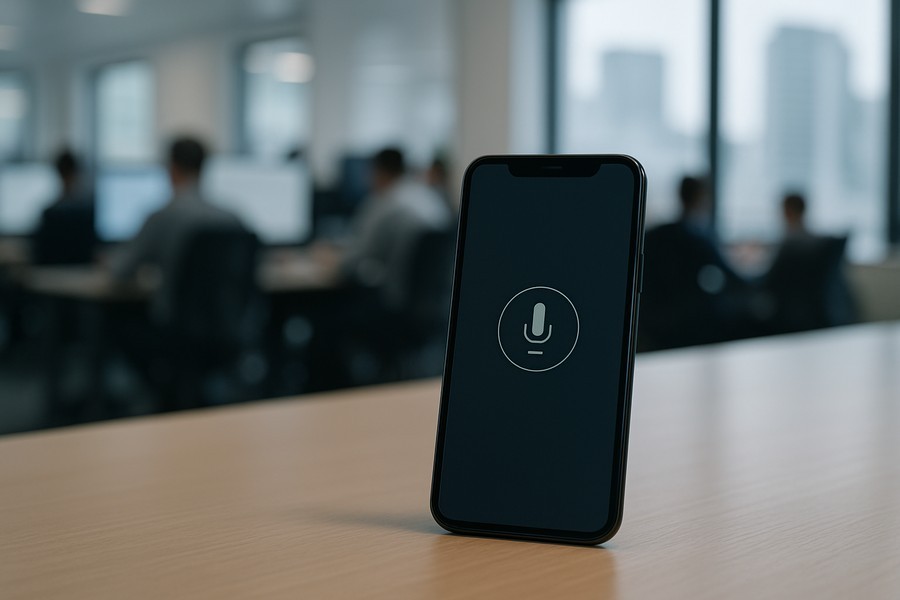
One of the world's leading tech companies stumbled in its attempts to create a more sophisticated version of its voice assistant. Despite this setback, the company continued to excel in its primary mission: selling smartphones. Now, it's relying on outside technology to power its anticipated voice assistant upgrade, suggesting that it may have lost the artificial intelligence (AI) battle. However, the real test lies ahead, and this tech giant isn't out of the race yet.
A Rocky Start
The company's foray into advanced AI didn't exactly go smoothly. Its new smartphone model was touted as being designed for this upgraded AI, but the feature was noticeably absent when the device first shipped. Although incremental improvements were rolled out over the following months, the much-anticipated intelligent voice assistant never appeared. High-ranking officials confessed that they had to go back to the drawing board, leadership roles were reshuffled, and it seemed like a significant failure on the company's part.
However, it doesn't appear that people are ready to abandon their smartphones for those powered by a different tech company's AI-enhanced Android devices. Recent market research indicated that demand for the company's latest smartphone models was strong, with pre-orders exceeding those of the previous generation. It was even referred to as the "global smartphone market leader" with a 10% year-on-year growth in market share. Interestingly, the company's AI feature was less prominent in its latest model's marketing than in the previous one.
Strategic Moves
The company's delay tactics have worked so far, but nowadays, investors expect regular AI updates. As a result, the company had to devise a plan, and by the latter half of the year, rumors began to circulate that it might be looking at external partners rather than creating its own AI models. This wouldn't be a complete departure from their previous strategy; the company already allowed users to access third-party language models directly from its operating system. However, this recent development isn't just about providing a quick way to chat with a voice assistant on a smartphone. It's about building a more intelligent voice assistant using another tech giant's models, which would be hosted on the company's private cloud computing platform. If and when this advanced voice assistant is launched this year, it will contain a considerable amount of another company's technology.
A New Direction or a Misjudgment?
Some might argue that this was a smart business decision, but does it align with the company's philosophy? The company's CEO once stated on a 2009 earnings call, "We believe that we need to own and control the primary technologies behind the products we make…" This belief guided the company's push to develop its own silicon, which has undoubtedly been a successful strategy. But this recent move suggests that the company either doesn't view AI models as a primary technology or has made a grave error in judgment about AI's significance in the next wave of technological advancements.
Indeed, the company doesn't control every aspect of its smartphone. It hasn't created its own search engine, wireless network, or social media platform. These services run on its device, but they aren't integral to the smartphone's identity. AI could end up following the same trajectory. There are indications that the company has shifted from encouraging developers to adopt its own app development framework to using a third-party developed platform as the foundation for new features. The specific AI models used may not matter as much if they can effectively accomplish tasks. But the company's success in the AI sphere will largely depend on the products it creates around AI, starting with its voice assistant.
The Real Test
The true challenge for the company is to transform its AI into a product that people genuinely want, rather than one they feel indifferent about. It needs to fulfill its long-standing promise to turn its voice assistant into more than just a tool for setting timers. The company is known for creating beautiful products, but can it do so without controlling its own models? Can it outpace other competitors who are also vying for dominance in the AI space? The real work begins now.